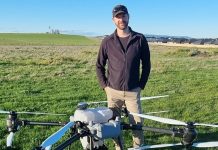

Danny Elassad did not plan for drones to become his full-time career. He began flying to capture new angles for his landscape photography, but the more time he spent in the air, the more serious the work became.
‘I fell into drones through photography,’ he says. ‘Getting a drone in the air opened up a whole new world.’
He applied for his aviation reference number (ARN), gained his remote pilot licence (RePL) and soon stepped into the commercial drone sector.
Building a drone career
When Danny joined Hoverscape, he found himself surrounded by aviation culture. The company was founded by 3 commercial airline pilots and already operated with a strong set of procedures.
‘Working in that environment shaped a lot of my approach to safety and decision-making,’ he says.
As he built experience, Danny became the pilot people relied on for complex jobs. Today he is the company’s chief remote pilot and general manager.
Flying in complex environments
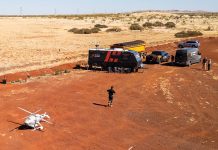
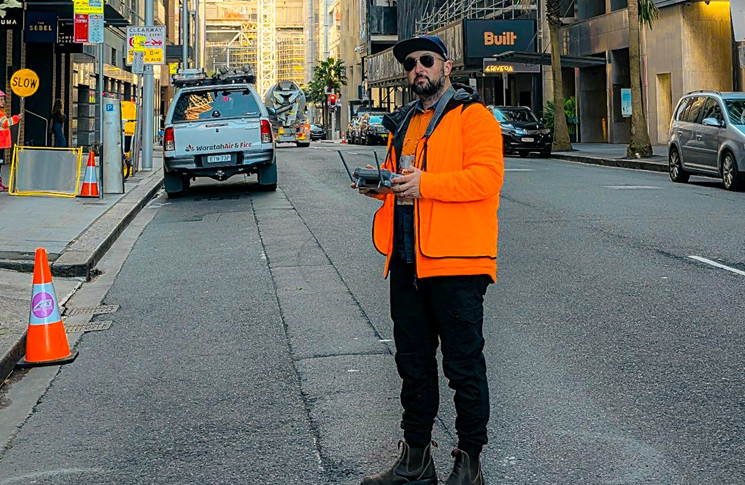
Much of Danny’s flying takes place in locations that can shift minute to minute. He often works in busy city centres, active construction zones and spaces with heavy pedestrian movement.
‘The biggest risks are people entering the operating area, fast-changing site conditions and unexpected ground or airspace activity,’ he says.
Many jobs place him near cranes, powerlines and rooftop equipment. Photogrammetry adds another layer of complexity. It requires accurate grid patterns, long straight legs and consistent conditions.
Safety first
Danny plans every flight carefully, manages risks on site, briefs his team, and uses clear zones and pauses operations to stay safe.
He treats every operation as a fresh risk assessment. Before a job begins, he studies the airspace, surrounding hazards, weather and site activity. He often conducts a walk-through to understand wind effects, lighting, reflective surfaces and pedestrian flow. On site, he works with spotters and pedestrian management teams to maintain predictable operating areas. He uses rolling exclusion zones, clear communication and conservative flight envelopes to keep each flight safe and controlled.
Danny’s pre-flight routine is methodical. He checks his plan, confirms take-off and landing zones and briefs the team. ‘Nothing goes in the air unless everyone understands the plan and the boundaries,’ he says. If a job does not fit within approved procedures, he redesigns the task or obtains the necessary authorisations before flying.
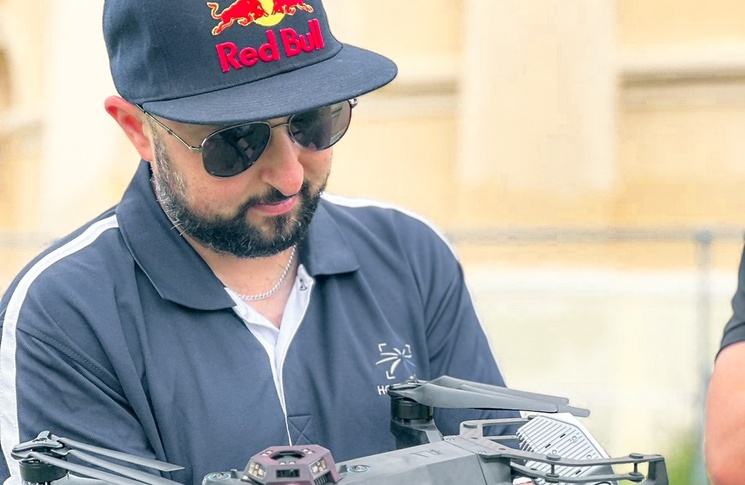
High-workload flights also demand strong situational awareness. Danny breaks each job into tasks. The aircraft, the camera and the environment are separate responsibilities. ‘If all 3 demand attention at once, something gets missed,’ he says. Spotters help maintain awareness, and when he is working solo, he builds in deliberate pauses to stop flying, scan the area and then continue.
Danny’s safety tips for other flyers
Danny sees common traps among newer flyers, most notably rushing. ‘A lot of new flyers get caught up in the excitement of taking off and forget they’re sharing airspace with crewed aircraft,’ he says.
To build safer habits, he encourages pilots to:
- use a CASA-verified drone safety app
- complete a 360-degree scan before every flight
- keep take-off and landing areas clear
- set a correct return-to-home height
- land with 20 to 30 per cent battery remaining.
These simple checks help pilots slow down and stay ahead of the risks.
After years of flying in demanding environments, Danny has one message for every pilot. ‘Your drone might be small, but the responsibility isn’t,’ he says. ‘If you’re ever unsure, don’t launch. A delayed flight is always better than a risky one.
If you would like to feature in Drone Flyer Diaries, please email us.