
Runway incursions remain a safety risk at controlled aerodromes. A runway incursion occurs when an aircraft, vehicle or person enters a runway without a clearance, creating a risk of collision or disrupting traffic flow.
‘The proximity of aircraft during a runway incursion determines air traffic control’s response. If there is no aircraft on final approach or cleared to land, the risk is lower,’ an Airservices Australia spokesperson says.
‘However, if an aircraft has been cleared to land (the most pressing threat) then they will be instructed to go around. This is the same response for an aircraft on final if required – depending on how close to the runway the aircraft is, there may be time to depart the lining up aircraft before the aircraft on final is cleared to use the runway.’
A runway incursion can involve several scenarios. It may include an aircraft lining up without clearance, a vehicle crossing the runway, or another aircraft or object entering the runway environment. For example, if an aircraft has been cleared to land and another aircraft taxies onto the runway and lines up for departure without clearance, air traffic control will instruct the landing aircraft to go around.
‘The risk increases when an aircraft is on very short final and cleared to land and another aircraft enters the runway without being detected by air traffic control or the pilot on final.’
Data from the Australian Transport Safety Bureau (ATSB) shows more than 1,100 reported incursions at controlled aerodromes between July 2003 and January 2025. This highlights that even with air traffic control, taxiing at controlled aerodromes can present a safety risk.
Runway incursions happen when pilots do not stop at a holding point, cross an active runway without clearance, or exit via another runway after landing. At any aerodrome, this can place aircraft in conflict and disrupt traffic flow.
Why busy aerodromes carry higher risk
Chris Hondros is Head of Operations at Airflite Flying College at Jandakot. The airport that experiences more runway incursions than most due to the complex movement area and a high level of training activity, which increases the risk of runway incursions.
‘Most runway incursions don’t come down to one big mistake. They’re usually the result of a few smaller errors,’ he says.
‘Loss of situational awareness is a big one. High workloads or distraction often cause it. We see pilots taxiing on expectation rather than clearance, giving incomplete or incorrect readbacks, or maybe losing situational awareness on the ground.’
Metropolitan Class D aerodromes such as Jandakot and Moorabbin are often more prone to runway incursions due to their design and the large volume of training flights at these facilities.
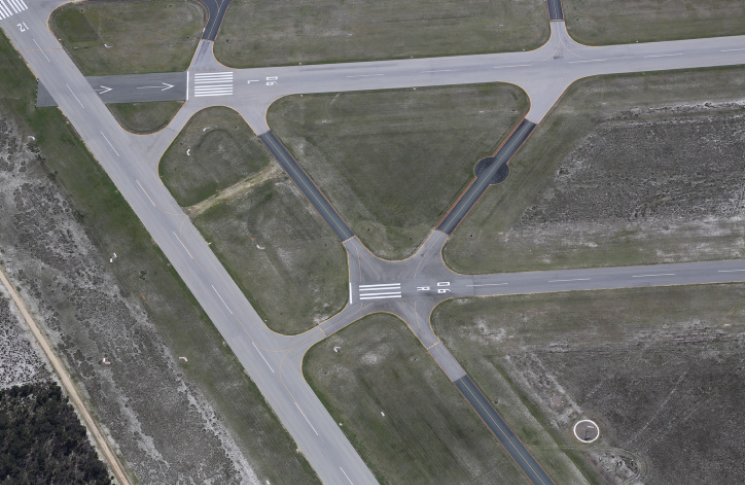
At Jandakot, the problem areas are near the southern apron where runways 06L and 12 intersect, and where taxiway Sierra crosses the threshold of 06R. Pilots need to maintain strong situational awareness at all times.
‘Jandakot is a very busy and complex aerodrome,’ Hondros cautions. ‘You’ve got multiple runways, high circuit density, training aircraft, helicopters and jets all operating at the same time.
‘There is also a large population of student and low-hour pilots. It means workload and task saturation are real factors.
‘Things happen quickly at Jandakot and if you’re not fully ahead of the aircraft and the clearance, the risk increases.’
Moorabbin has 5 runways, 5 hotspots and 10 locations where runways intersect. It’s a scenario that could see a pilot negotiating a clearance that includes crossing runways 04/22, 17L/35R and 17R/35L.
In the centre of the aerodrome is a triangle where 3 runways converge near taxiway Bravo. This layout can cause confusion and lead aircraft to taxi along an active runway rather than taxiway.
Words of advice
Airservices Australia has a library of information about runway incursions. Their many tips for avoiding an incursion can be distilled down to this:
- plan the taxi, including checking NOTAMs, ATIS and aerodrome diagrams
- understand taxiway markings and signage
- keep your eyes outside the cockpit as much as you can
- don’t take shortcuts
- listen and comply with clearances
- ask for progressive taxi instructions or tell air traffic control if you are unfamiliar
- make sure you have a clearance to enter, cross or taxi on any runway or overshoot area
- keep a lookout for other aircraft and vehicles
- stay alert until shutdown.
Chris Hondros offers this advice.
‘The biggest thing I’d say is remove assumption from the equation,’ he says. ‘Never taxi unless you’re clear on what you’ve been instructed to do. Read back runway-related instructions accurately and in full. If you’re unsure, stop and ask.
‘After landing, don’t rush to exit or cross. Take the time to orient yourself and confirm the clearance. If air traffic control hasn’t explicitly cleared you to cross a runway, then you’re not cleared.’
Resources for controlled aerodromes and operations
Controlled aerodromes and operations resources are a focus of CASA’s ‘Your safety is in your hands’ campaign. For more guidance, tools and tips, be sure to visit the pilot safety hub.