
It’s easy to think of the release to service step as ‘just paperwork’. But if you’ve ever found a stray rag, a loose zip-tie tail, or a missing pen lid after the job is closed out, you’ll know how quickly that thinking can come back to bite.
If you are a maintainer signing a certificate of release to service (CRS) under Part 145 rules, you are also required to know certain parts of Part 42 of CASR. This article will assist you to comply with the requirements of CASR 42.330.
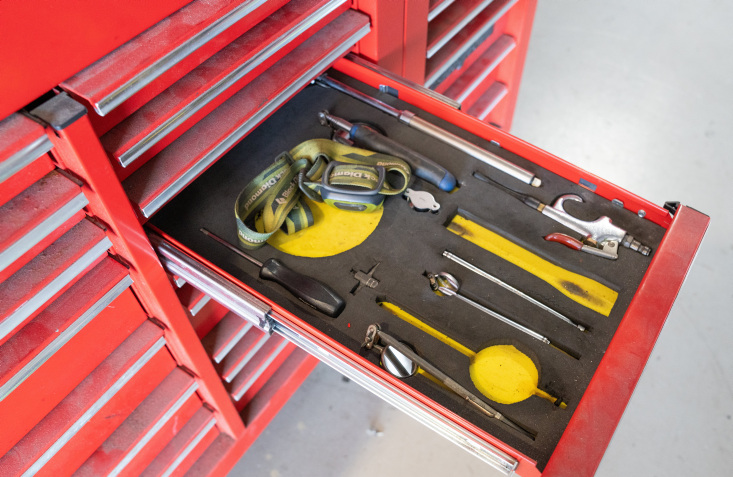
For aircraft and aeronautical products maintained under Part 42, the expectation is simple: nothing you used to do the job – and nothing that doesn’t belong – should be left behind in the aircraft or in the aeronautical product. Most of us jump straight to tool control, shadow boards and test equipment. That’s essential – but it’s only half the story.
Before you issue a CRS, make sure you’ve removed every tool, every piece of equipment, and anything else that’s ‘extra’, for example, not part of the aircraft or product – from the work area and the item you’ve maintained.
In day-to-day maintenance, the biggest risk usually isn’t the calibrated torque wrench or the test set – those are typically controlled and counted. The bigger traps are the small, disposable, personal and ‘temporary’ items that don’t sit neatly inside a tool control system:
- tape and backing paper
- spare tool batteries
- your mobile phone
- rags and paper towel
- lockwire offcuts
- swarf and rivet tails
- zip-tie ends
- plastic bungs and caps
- apex bits
- sealant nozzles and cartridges
- paint brushes
- marker pens and lids
- gloves
- labels
- packaging
- removed fasteners
- replaced parts waiting to be quarantined.
Left behind, any one of the abovementioned can migrate, jam a mechanism, block a drain, contaminate a system, abrade wiring, or – at the very least – create doubt about whether the job was finished the way you intended.
This is an individual responsibility, but it’s also something your organisation’s systems can either support or make harder than it needs to be. Three reminders to keep the whole team aligned:
- Part 145 approved maintenance organisations (AMO): need procedures that make it practical for certifying employees to clear the aircraft/product of tools, equipment and other extraneous items before release. Tool control is one piece; so are good housekeeping standards, consumable control, FOD walks, independent inspections (where appropriate), and clean handovers between shifts and work packs.
- Aircraft CRS signatories (e.g. LAMEs): when you sign the CRS, you’re backing that the maintenance area and the aircraft have been left free of tools, equipment and anything else that shouldn’t be there. In heavy maintenance, you may be signing at the end of work completed by several people – so look for evidence: documented stage checks, sensible area inspections, and positive confirmation that each person has left their area clean and accounted for.
- Component maintainers signing Form 1: the same idea applies on the bench. A tidy workbench doesn’t automatically mean the inside of the unit is clean. Count-backs, careful control of cleaning media, good parts segregation, and (when needed) an internal inspection/borescope check can prevent a component coming back with hidden debris inside.
One practical habit that works: treat the ‘last step before release’ as its own task, not something you squeeze in while reaching for the pen. Do a quick reset and ask yourself:
- What did I bring in?
- What did I create?
- What did I remove?
- What could move if the aircraft is towed, vibrated, pressurised, or cycled?
Check pockets and personal items (torch, pen, knife, phone, earplugs/hearing protection) and be extra suspicious of ‘temporary’ helpers (tape flags, bungs, masking, protective covers, loose hardware on a string). If anything is missing, pause and go looking. A delayed CRS beats a hidden FOD risk every time.
At the end of the day, this isn’t just a ‘tool check’ expectation – it’s what good maintenance looks like before release to service. Procedures help, but each of us still owns the condition we leave behind. If we widen our focus from controlled tooling to everything extraneous, we cut down rework, make life safer for the next person who opens the panel, and – most importantly – maintain the safety of flight.
‘Last step’ checklist
- Tools and test equipment: all accounted for; and that includes no loose adapters, leads, probes, or calibration caps left behind.
- Consumables and disposables: remove tape/flags, backing paper, rags, paper towel, gloves, wipes, applicators, brushes, mixing sticks, sealant nozzles/cartridges, masking and protective films.
- Metal/plastic debris: swarf, rivet tails, lockwire offcuts, cotter pin ends, safety wire snippets, zip-tie ends—area vacuumed/wiped as appropriate.
- Hardware and parts: no ‘temporary’ fasteners left; removed parts segregated and tagged; replaced parts not left in bays or on structure.
- Covers, bungs, caps: all installed items are intentional; all temporary bungs/caps removed; drains and vents clear.
- Personal items: pockets checked (torch, pen, knife, phone, earplugs); nothing stored in aircraft spaces.
- Area/zone check: visual and tactile scan of the work zone; check common traps (stringers, cable runs, under floor panels, control runs, bilges, behind clamps).
- Functional risk check: ask what could migrate or jam with vibration or operation (controls, pulleys, linkages, fans, valves, doors).
- Handover evidence: if multiple people are involved, confirm documented stage checks/inspections are complete before CRS/Form 1.
- If in doubt: stop, search, and escalate – do not certify until the missing item is found or formally resolved
- Ensure: you have followed the AMO’s procedures to account for tooling, equipment and anything else prior to signing the CRS.
If you are unsure what you need to do, please contact us.