
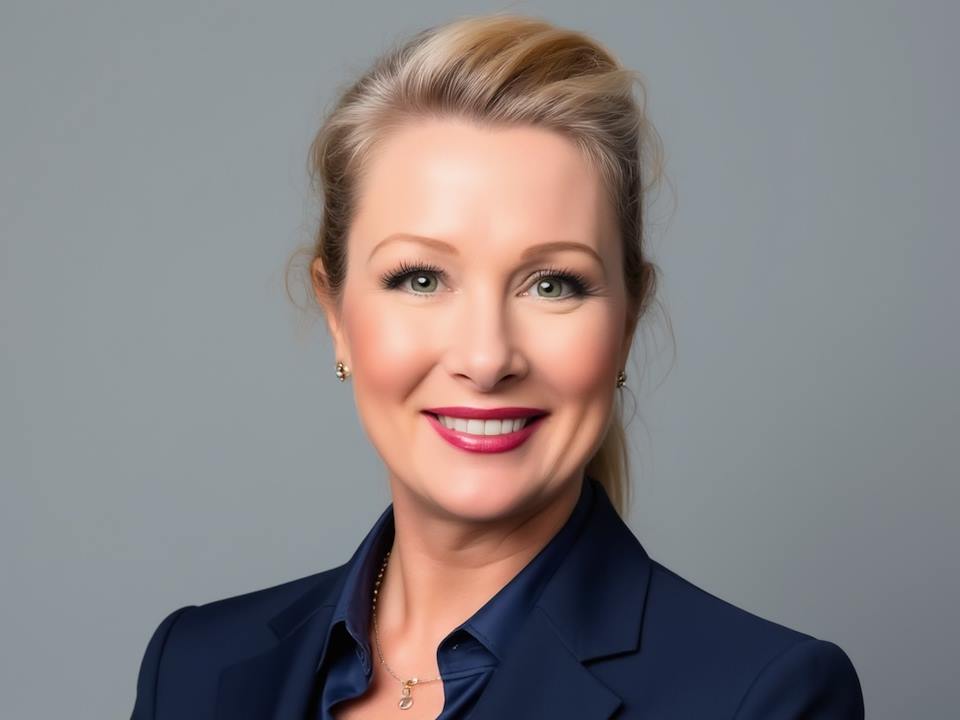
There are times when Tracy Lamb wonders if it isn’t all a dream. In her career she has seen many magnificent sunrises from the flight deck of an airliner, flown movie stars in corporate jets to remote tropical islands, worked with lawmakers in the halls of power of Washington DC, and earned a PhD in aviation safety and human factors. It’s been a long journey from Innisfail, North Queensland where the self-described ‘scrawny blonde-haired freckle-faced kid’ grew up among the sugar cane fields.
In 1993 Lamb took her first flight at Coolangatta Airport, Queensland, instantly falling in love with aviation. This love was quickly tempered by the deaths of several friends in general aviation (GA) crashes, and her passion for flight evolved into deep respect for this high-consequence activity. She spent 11 years as a flight instructor, charter pilot and Angel Flight volunteer. She gained her airline transport pilot licence, finished her MBA and joined Virgin Australia flying the Boeing 737-NG. She self-financed courses in auditing and safety investigation and became an adjunct professor teaching safety systems at Melbourne’s RMIT University.
After more than 7,000 flight hours, she left the flight deck to develop projects including commercial drone safety systems in Europe and aviation audits in the Arctic Circle. Her roles have included vice president of regulatory and safety, chief executive officer, chief safety and quality officer, with remotely piloted aircraft systems and advanced air mobility companies. She was the first woman to be appointed chair of the board of directors of the Radio Technical Commission for Aeronautics; this came after serving aviation standards development for over 15 years, including serving on numerous International Civil Aviation Organization (ICAO) panels. She is officially designated as an ICAO subject matter expert and is a fellow of the Royal Aeronautical Society.
Lamb’s current role at Boeing is enterprise human factors functional engineer, flight deck and crew operations. In this role she focuses on flight deck systems and how pilots may perform in the flight decks of tomorrow. This represents tight collaboration with systems engineering, software, test, certification and leadership.
Lamb left Australia in 2014 for the UK but has lived in the United States since 2016. Over that time her speech has acquired a subtle North American rhotic r pronunciation, noticeable on certain words when she discusses certain technical subjects. But it vanishes, like morning mist from a cane field, when she talks about Australia.
You began your aviation journey in Australia and now hold global leadership roles across commercial aviation, autonomy and aerospace safety. How did that happen?
I began in general aviation in Australia in the early 1990s, instructing, flying charter and building hours the traditional way. That foundation shaped everything that followed. GA teaches you humility, situational awareness and respect for operational variability.
From there, I transitioned into airline operations, eventually flying the Boeing 737 NG for Virgin Australia, Boeing 757-200 Combi and 767-200 and 300 freighters in international passenger and cargo operations. Those experiences, from regional trips to long-haul, have given me a unique systems-level view of aviation risk.
You learn quickly that safety is not abstract – it is deeply practical and sadly, deeply personal. After losing several friends and colleagues through preventable aviation accidents, the complexity of human factors in safety became a passion.
And the aviation industry is becoming safer. Boeing’s 2024 statistical summary of commercial jet airplane accidents show that over the past 2 decades, the commercial aviation industry has had a 40% decline in the total accident rate and a 65% decline in the fatal accident rate, all while departures have increased by more than 20%.
Over time, my research shifted from how we operate safely to why people trust aviation at all. That question ultimately led me into safety leadership, regulatory engagement and doctoral research in human factors and trust in emerging technologies.
You learn quickly that safety is not abstract – it is deeply practical and sadly, deeply personal.
What do you find most interesting in aviation safety?
Safety became very personal early in my career. As pilots, we operate inside complex systems, procedures, automation, training and culture. But I began to notice that the most significant safety outcomes weren’t just technical; they were human, influenced by factors such as fatigue, emotions, bias, pride, personal interactions and fear. Many of these are captured in training programs. As humans we have physiological and cognitive influences that can cause catastrophic outcomes. I was, and still am, fascinated by this.
Why do some crews speak up and others don’t?
Why does trust erode after certain events, for pilots and passengers?
Why do highly trained professionals sometimes over rely, mistrust or mishandle automation?
Why do so many mishaps have causal roots in misaligned or inappropriate assumptions?
My PhD and other research explored the phenomenological and cognitive dimensions of trust and safety, and how individuals perceive, experience and treat risk, especially in autonomous and advanced aircraft systems. I became fascinated with how trust is cultivated, misplaced, exaggerated, lost and shaped. This is particularly vital as technology advances faster than people and the operational culture evolves. Trust is a complex phenomenon on its own, when you consider it from the individual, within an organisation, within industry, trust between regulators and organizations and trust from the passenger and customer perspective.
Over nearly 30 years in aviation, how has the nature of risk evolved?
The most significant shift is that risk is becoming increasingly opaque. In one of my research presentations, I refer to this as the ‘spooky unknown unknowns’. We know what risk we can imagine, even if they are low probability or almost impossible, but we don’t know what we can’t imagine. If we can’t imagine it, we can’t mitigate the risk.
Early in my career I learnt hazards were easily imaginable – weather, mechanical issues, fuel, terrain. Today, many risks are embedded within software – the coding, automation layers, latency, cyber exposure, data dependencies and AI-enabled systems.
We are no longer just managing mechanical reliability and drawing off established safety and human factors knowledge. We are managing complex socio-technical ecosystems and the interfaces and interactions between those systems.
Automation has improved safety enormously – TCAS, fly-by-wire, predictive maintenance – these are remarkable advances. But over-reliance and trust factors introduce new latent risks including skill erosion, reduced manual proficiency, cognitive complacency and misunderstanding or lack of understanding of system boundaries.
The challenge now isn’t technology itself – it’s the speed of its evolution, governance and transparency and our ability as humans to adapt and keep up with change management.
Over-reliance and trust factors introduce new latent risks including skill erosion, reduced manual proficiency, cognitive complacency, and misunderstanding
How are emerging risks such as cyber threats and GPS spoofing (GPS deception) being addressed?
I’m fortunate to work within an organisation that invests deeply in customer safety and long-term system integrity. Boeing’s approach is not reactive, it’s anticipatory, and I have joined at a time when focus is really shifting to that predictive innovative stance.
Emerging risks such as GPS spoofing, cyber intrusion, vehicle-to-vehicle deconfliction and latency (slow response to commands) in low-altitude environments require integrated solutions across hardware, software, regulatory collaboration and operational training.
We are seeing increasing complexity, diversity and volumes of air traffic in low-altitude airspace, especially as advanced air mobility (AAM), personal air mobility, uncrewed systems and traditional GA begin to share environments. That requires robust separation standards, resilient navigation architectures, layered safety assurance and human proofing of automation and autonomy.
What I value most is Boeing’s collaborative model coupled with the people, the most amazing professionals, scientists, engineers and experts. It is exciting to me to work with the penultimate minds in the industry. (I still pinch myself to make sure it’s real.) We work alongside our airline customers, regulators, operators and international partners to ensure safety innovation remains aligned with operational reality.
With aviation, advanced aviation and even commercial space operations quickly evolving, what should the GA community be aware of for critical for safe integration?
The integration challenge isn’t only technological, it’s cultural and systemic. GA culture matters enormously. In many areas, GA operations and operators need to be resilient, engaged and in many cases, just as innovative when it comes to safety management systems (SMS), pilot and operator training and technology. The spooky unknown unknowns are not confined only to commercial operations or operators. We are all agents within a very complex ecosystem. AAM, commercial space and autonomous aircraft operations need to consider and respect the lived experience and human factors involved in GA operations.
Asia-Pacific, and Australia specifically, are particularly important regions for advancing AAM because of geographic scale, remote operations and mixed-use airspace conducive to entry into service. We must avoid assuming that autonomy will automatically make systems safer without understanding how people interact with them.
Can traditional SMS adapt to autonomous operations?
Traditional SMS frameworks remain fundamentally sound. Back in 2012, I enjoyed participating in CASA implementation guidance through its SMS Toolkit. I believe CASA has done excellent work providing even more updated dedicated material on safety risk management, safety assurance and human factors and human performance. This reinforces that effective SMS is not merely compliance-based, but grounded in organisational culture, non-technical skills and human systems integration.
However, the work must continue, and I point to NASA’s contributions to the in-time aviation SMS designed for our emerging highly automated environments. We must take a systems approach to safety assurance and cannot rely solely on reactive reporting. We need predictive analytics, system health monitoring, algorithm governance and AI-risk architecture.
I often refer to this as evolving toward Integrated advanced safety management systems. We must cater for the autonomy and required level of human oversight, with regulatory transparency that all coexist within a unified assurance structure.
The key is maintaining human accountability and transparency even as automation expands.
Workforce shortages and rapid training throughput are global concerns. How do we ensure depth of knowledge isn’t lost?
The issue of workforce shortage and training demand are some of the most pressing issues in aviation. Boeing’s 2025 Pilot and technician outlook anticipates 3.4 million new aviation personnel are needed to support the global commercial fleet over the next 20 years, with 41,000 coming from the Oceania region. With this demand, there is a need to meet learners where they’re at, to create competent pilots and maintainers.
It’s important to note Boeing has been integrating competency-based training and assessment and evidence-based training methodology into type, recurrent and supplemental training since 2021. The training approach improves technical skills but also fosters critical non-technical competencies like problem-solving and decision-making, with the goal of a more resilient pilot.
Improving training is about deep operational judgment or ‘cognitive resilience’ that is built through lived experience. With these training methodologies, we’re engineering this through simulations and scenario-based training.
The quality of the training is the key here. The goal is to generate ‘deep learning’ so pilots can manage the unknown and unanticipated effectively and safely, not just surface rote learning or a superficial understanding.
Equally important is mentorship. Aviation has historically been an apprenticeship profession. We cannot lose that depth of tacit knowledge as generational transitions accelerate.
AI is increasingly influencing maintenance, flight operations and planning. What governance safeguards are essential?
Not only AI, but technology that supports the AI, has tremendous potential, especially for predictive maintenance, sensor-driven diagnostics and critical path management in MRO environments. For example, the use of autonomous inspection algorithms and analytics deployed on small, unmanned aircraft systems (drones) is now being recognised as saving millions of dollars in aircraft downtime and maintenance costs, compared to traditional methods. The digital tools are making aircraft safer, identifying surface damage and weakness on aircraft structures more effectively, building prediction models and digital twins from their results. But AI must operate within strong oversight frameworks, and humans need to provide that governance.
Recall again my ‘spooky unknown unknowns’. It is essential to have data transparency, validation, auditability and regulatory engagement. Hidden algorithmic bias or unvalidated predictive outputs could – and likely will – introduce new risks we have not yet imagined.
How is Australia viewed globally in aviation safety?
Australia has long been respected for pragmatic, high-standard safety governance. The strong framework of duty of care and legal due diligence is something I think other countries can learn from. CASA’s engagement with industry, combined with Australia’s operational diversity from regional GA to international long-haul. and the increasing achievements in AAM and commercial space, makes me incredibly proud of the industry I grew up in. Our uniquely Aussie ‘can do’ attitude creates a strong safety culture foundation. I am both a proud US and Aussie citizen and love seeing the collaboration across the Pacific.
As low-altitude autonomy expands across the Asia-Pacific, Australia is well positioned to contribute thought leadership, particularly in integrating GA, AAM and remote operations responsibly.
What ultimately drives your work in aviation safety?
Trust is aviation’s most valuable asset.
Across nearly 3 decades, as a pilot, safety leader and researcher, I have learnt safety is not simply about compliance or technology. It is about how humans govern complexity, how transparently we manage risk and how deliberately we steward change.
As autonomy and AI reshape our industry, innovation must be matched by accountability. At Boeing, I see firsthand the engineering rigour and customer partnership required to ensure emerging technologies strengthen that trust. Automation will advance and systems will evolve. but human responsibility remains constant.
If we protect that balance – innovation with stewardship, progress with transparency – the future of aviation will not only be more capable, but it will also remain worthy of the confidence society places in it. That stewardship is not optional. It is our obligation to the generations who will inherit the skies we are shaping today.
Safety is not simply about compliance or technology. It is about how humans govern complexity.