
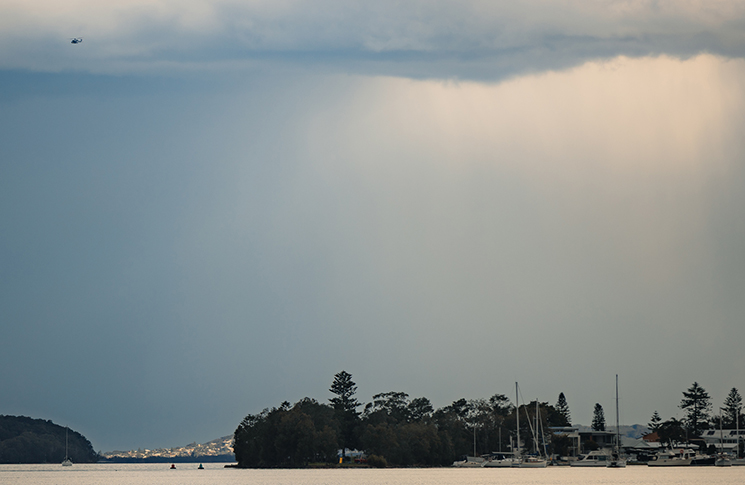
- What dangerous phenomena can affect your helicopter when flying near a thunderstorm?
- severe wind shear and turbulence
- hail
- lightning
- all of the above
- A thunderstorm is forecast in the TAF at your destination. What time buffer is required on the forecast timings for the thunderstorm?
- 30 minutes either side
- 60 minutes either side
- no buffer is required if the forecast is a TAF3 and your ETA is within the first 3 hours of the validity period of the TAF3
- (a) or (c), if applicable
- How is cloud height shown on a GAF?
- above ground level in 1,000 ft increments
- above mean sea level in 1,000 ft increments
- above mean sea level in 500 ft increments
- above the aerodrome
- How is cloud height shown in a TAF?
- above ground level in 1,000 ft increments
- above mean sea level in 1,000 ft increments
- above mean sea level in 500 ft increments
- above the aerodrome
- In a low-level grid point wind and temperature (GPWT) forecast, how is the wind direction given?
- degrees magnetic
- degrees true
- When flying at or below 10,000 ft, where can you find forecast information about moderate icing conditions?
- in a SIGMET
- in an AIRMET
- in a TAF only
- in an ATIS broadcast
- You are flying your helicopter in the outback during a drought. You need to land in a paddock where a lot of vehicles had been moving around. What possible problem could you experience on landing?
- dynamic rollover
- mast bumping
- brownout
- rotor droop
- An authorised weather forecast must cover the whole period of the flight and include a wind and temperature forecast. When at or below 10,000 ft AMSL, what other item is required?
- a flight forecast
- a graphical area forecast (GAF)
- a significant weather (SIGWX) forecast
- (a) or (b)
- What actions can help you avoid inadvertent VFR flight into IMC?
- do not depart when weather is marginal
- during flight, ensure a defined horizon above the terrain and below the cloud exists
- during flight, turn back or divert before it becomes impossible to do so
- all of the above
- You are planning a night VFR flight. What are the en route cloud forecast amount and height requirements?
- ≤ SCT at LSALT
- ≤ SCT at LSALT + 500 ft
- ≤ SCT at LSALT + 1,000 ft
- ≤ BKN at LSALT + 1,000 ft