

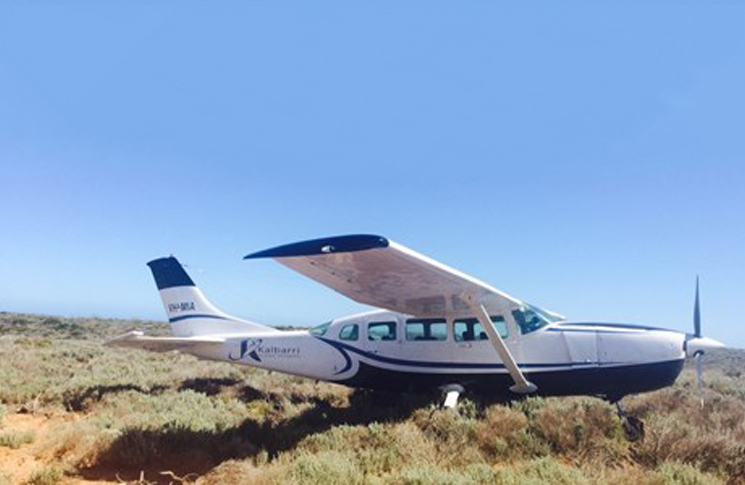
The case of a Cessna 207 that overran an outback runway by one metre reinforces one of aviation’s oldest proverbs: nothing is more useless than runway behind you. The aircraft on a scenic flight was involved in a runway excursion on East Wallabi Island in Western Australia in 2018.
On 16 September, the Cessna pilot took off from Kalbarri airport on a scenic flight to East Wallabi Island with three passengers on board. Before landing, the pilot overflew the island and noticed the windsock was indicating an easterly wind, which was a crosswind for both runways. The pilot decided to join runway 36 on the mid-crosswind leg of the circuit and touched down abeam of the taxiway halfway along the 630-metre runway. This would normally give enough runway length to stop the aircraft (the C207 has a published ground roll of 224–233 metres, depending on model), however on this occasion, the aircraft overran the runway end by one metre. The aircraft was not damaged and there were no injuries to the pilot or passengers.
East Wallabi island does not have its own weather forecasting service but weather observations from North Island, 20 km north-west of East Wallabi island, indicated the wind was from the south at 8 knots. The ATSB said this indicated that there was a tailwind when the aircraft landed.
The ATSB found that the pilot’s decision to land the aircraft adjacent to the taxiway reduced the stopping distance available. Using the full runway strip, would probably have allowed the pilot to stop the aircraft on the runway. The investigation was unable to determine if the pilot had misread the windsock, or if there had been a change in wind direction.
The ATSB said, ‘landing with a tailwind could result in an increase in the required landing distance by 21 per cent for the first 10 knots of tailwind. For some smaller general aviation aircraft, the landing distance required will increase by 10 per cent for every 2 knots of tailwind. One way of reducing the chances of landing with a tailwind is to include a check of the windsock during pre-landing checks and to conduct a go-around if a tailwind is detected.’

Comments are closed.