

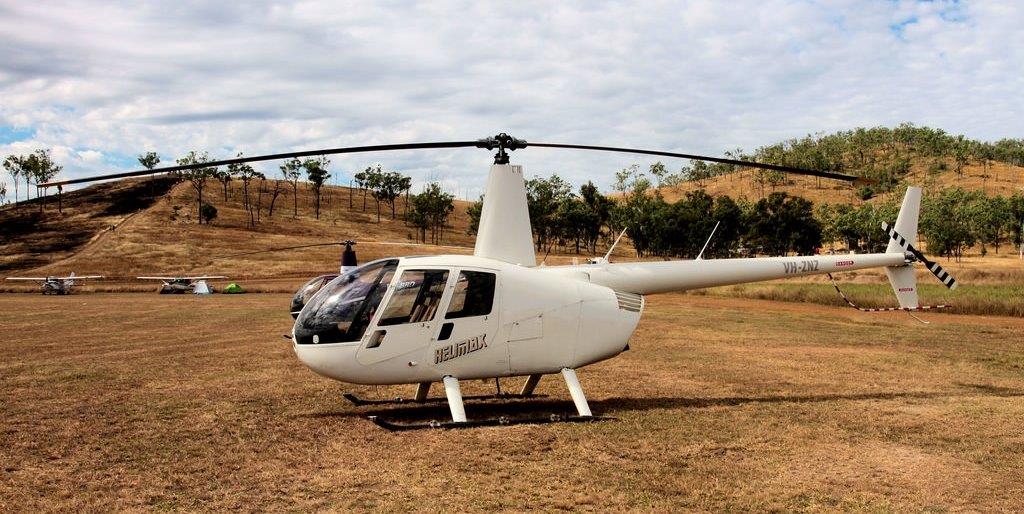
The Australian Transport Safety Bureau (ATSB) is reminding pilots of the importance of carrying an impact-activated emergency locater transmitter (ELT) following the crash of a Robinson R44 in Queensland in 2016. The potential lifesaving importance of impact-activated transmitters is one of few clear lessons from a mysterious crash.
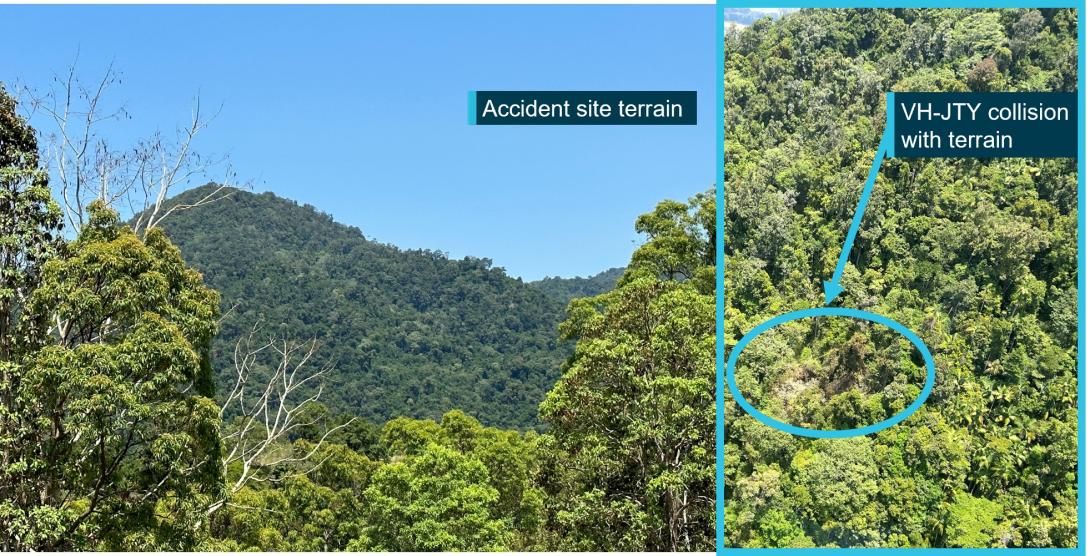
On 18 November the helicopter was on a charter flight with one pilot and one passenger on board when it crashed into dense rainforest 41 km north-west of Mossman after one of the main rotor blades stuck and separated a section of the tail cone. After the strike, the helicopter descended almost vertically, hitting the ground nose low and to the left. The passenger was killed but the seriously injured pilot was rescued.
The ELT activated on impact. When the Australian Maritime Safety Authority (AMSA) detected a signal, they initiated a search and rescue and as a result, the helicopter wreckage was located 1 hour 48 minutes after the initial detection of the signal.
The pilot, who was placed in an induced coma, could not remember anything about the crash.
The ATSB found there was low engine power and rotor speed at the time of the tail strike, which was likely the result of a main rotor blade stall soon after the helicopter took off. However, the ATSB was unable to determine what caused the blade stall. It examined overpitching of the main rotor blades, loss of engine power or loss of rotor drive, but could not find conclusive evidence for any of these scenarios.
It could not be determined if wind and turbulence contributed to the accident but the ATSB stresses the importance for pilots to consider the effect of the terrain on weather forecasts, which could result in a helicopter not achieving its predicted performance.
The ATSB contrasted the rapid rescue of the pilot with the crash of a helicopter in 2017, where the survivors were unable to reach a manually triggered emergency position indicating radio beacon (EPIRB). About the 2016 R44 crash the ATSB said, ‘The activation of the transmitter on impact was the trigger to start the search and rescue operation, and recover the pilot, who may otherwise have not survived.’



Comments are closed.