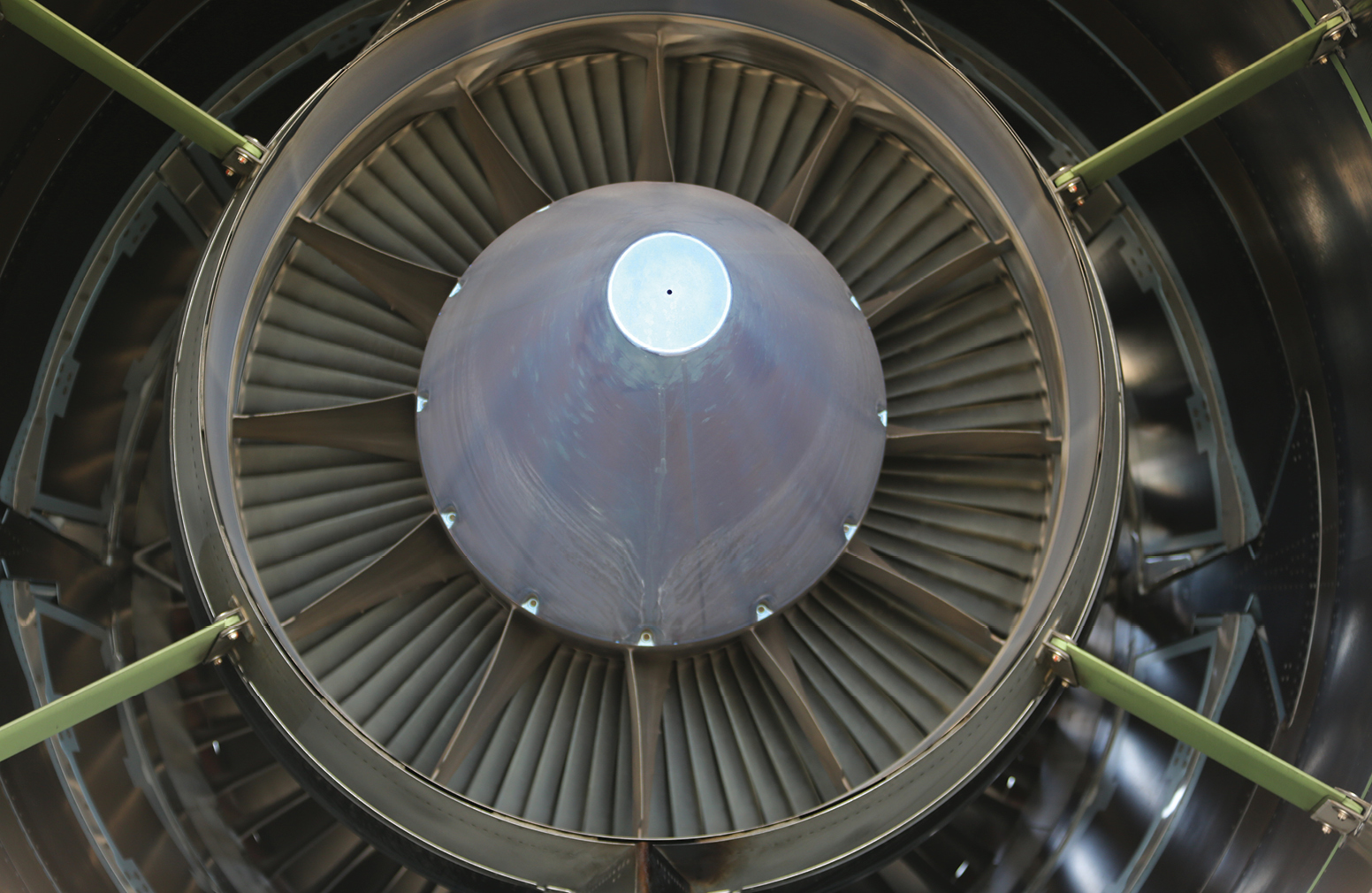
Selected international accidents and incidents 4 January to 29 March 2024

Sources: Aviation Safety Network, Aviation Herald, MAK, BFU UKAAIB, BEA, BFU, NTSB, DGAC

2 January

  • Aircraft: Airbus A350-900/de Havilland Canada DHC-8-300
  • Location: Tokyo Haneda Airport, Japan
  • Fatalities: 5
  • Description: Airliner collided with Japan Coast Guard aircraft which had taxied onto runway after misunderstanding. Runway stop bars unserviceable according to NOTAM published on 25 December. All but captain of DHC-8 killed. All passengers and crew successfully evacuated from A350, despite intense fire which destroyed aircraft.

7 January

  • Aircraft: Cessna 421C Golden Eagle
  • Location: Near Valledupar, Colombia
  • Fatalities: 1
  • Description: Air ambulance crashed soon after take-off near runway and caught fire. Six occupants survived.

14 January

  • Aircraft: Kubicek BB85Z
  • Location: Near Eloy, Arizona, US
  • Fatalities: 4
  • Description: Hot air balloon carrying skydivers fell to earth with deflated envelope. NTSB investigating.

18 January

  • Aircraft: Fokker 50
  • Location: Ceel Barde, Somalia
  • Fatalities: 1
  • Description: Aircraft carrying humanitarian aid struck a house near aerodrome, killing one pilot. Preliminary reports indicate landing gear problem.

20 January

  • Aircraft: Dassault Falcon 10
  • Location: Topkhana, Afghanistan
  • Fatalities: 2
  • Description: Air ambulance on multi-stop flight from Thailand to Russia made forced landing in mountainous area after reported low fuel and dual engine flame-out. There were 4 survivors.

23 January

  • Aircraft: BAE Jetstream 32
  • Location: Near Fort Smith Airport, Canada
  • Fatalities: 6
  • Description: Aircraft carrying diamond miners crashed about 1 km from runway soon after take-off. A passenger survived.

26 January

  • Aircraft: Airbus A320-200
  • Location: Phoenix-Mesa Airport, Arizona, US
  • Fatalities: 0
  • Description: Aircraft encountered multiple bird strikes on rotation and returned to departure airport. Investigation found damage to both engines.

7 February

  • Aircraft: Hawker 900XP
  • Location: Near Westwater, Utah, US
  • Fatalities: 2
  • Description: Aircraft on positioning flight after maintenance entered rapid descent. Manufacturer’s post maintenance requirements included stall warning and systems check.

13 February

  • Aircraft: Blackshape Gabriel
  • Location: Near Kampung Tok Muda, Selangor, Malaysia
  • Fatalities: 2
  • Description: Tandem two-seat general aviation aircraft experienced in-flight break up.

18 February

  • Aircraft: Glider
  • Location: Lake Station Airfield, South Island, New Zealand
  • Fatalities: 1
  • Description: Glider crashed on landing.

20 February

  • Aircraft: Bell 429 GlobalRanger
  • Location: Central Halmahera, Indonesia
  • Fatalities: 3
  • Description: Helicopter on flight to mining camp crashed into forest under unknown circumstances.

21 February

  • Aircraft: Cessna 172K Skyhawk
  • Location: Baragwanath Airfield, South Africa
  • Fatalities: 2
  • Description: Aircraft with instructor and student was conducting circuits when it entered a stall/spin during a go-around

11 March

  • Aircraft: Boeing 787-9 Dreamliner
  • Location: Tasman Sea
  • Fatalities: 0
  • Description: LATAM Airlines flight bunted into sudden descent, injuring more than 50 occupants, including 12 taken to hospital on landing in Auckland.

21 March

  • Aircraft: Beechcraft C90 King Air
  • Location: Near Yarumal, Colombia
  • Fatalities: 4
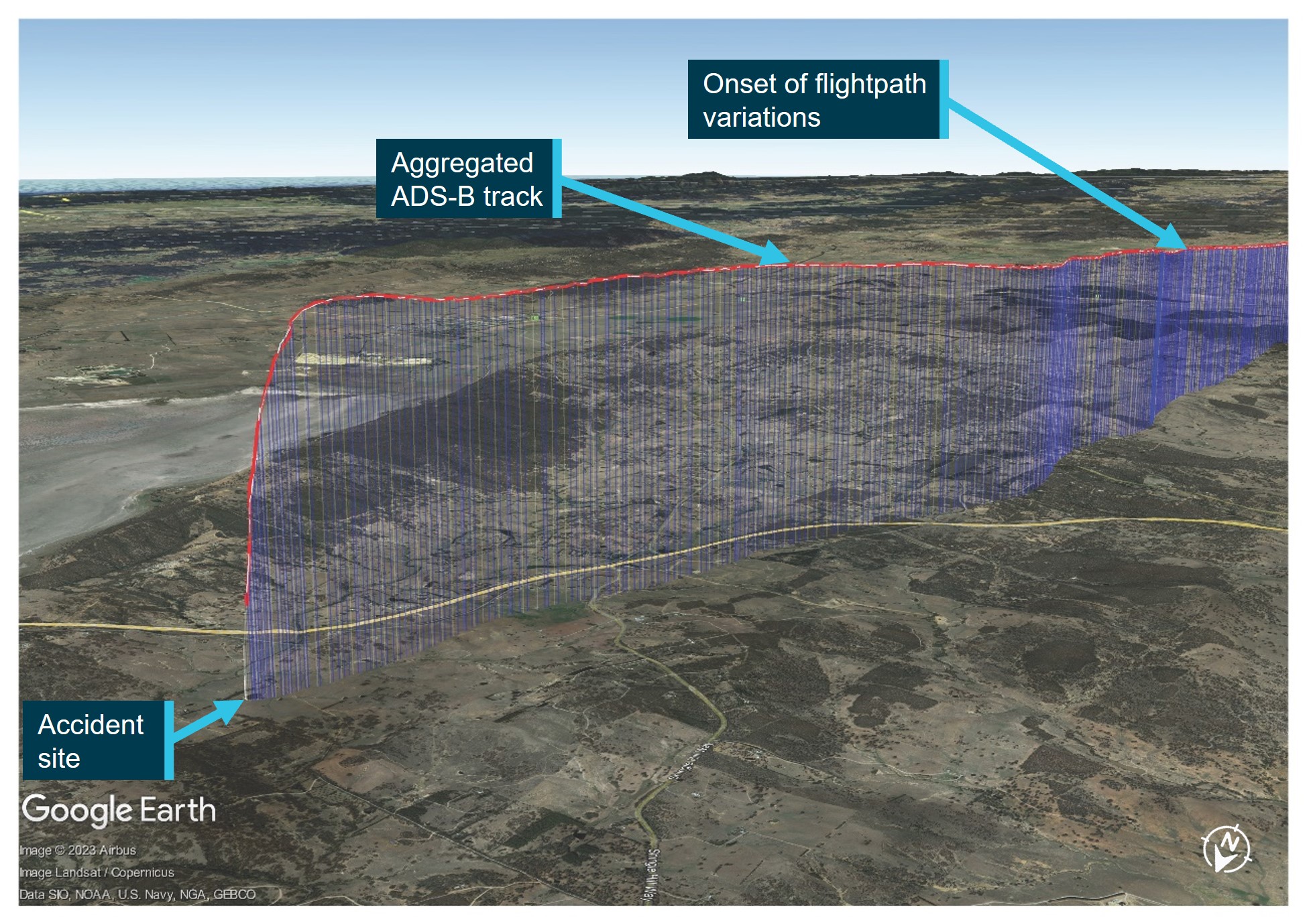
  • Description: Air ambulance crashed during cruise flight. ADS-B data ends at 11,000 ft in seemingly normal descent.

25 March

  • Aircraft: Mooney M20K 252 TSE
  • Location: Near Northeast Florida Regional Airport, US
  • Fatalities: 2
  • Description: Aircraft crashed while returning to departure airport with an open door.

28 March

  • Aircraft: Beechcraft E90 King Air
  • Location: Near Palenque Airport, Chiapas, Mexico
  • Fatalities: 6
  • Description: Chartered aircraft struck hillside on approach to airport.

30 March

  • Aircraft: Socata TBM 960
  • Location: Near Truckee Airport, California, US
  • Fatalities: 2
  • Description: Aircraft crashed on go-around in low-visibility night snowfall, killing tech entrepreneur and wife.
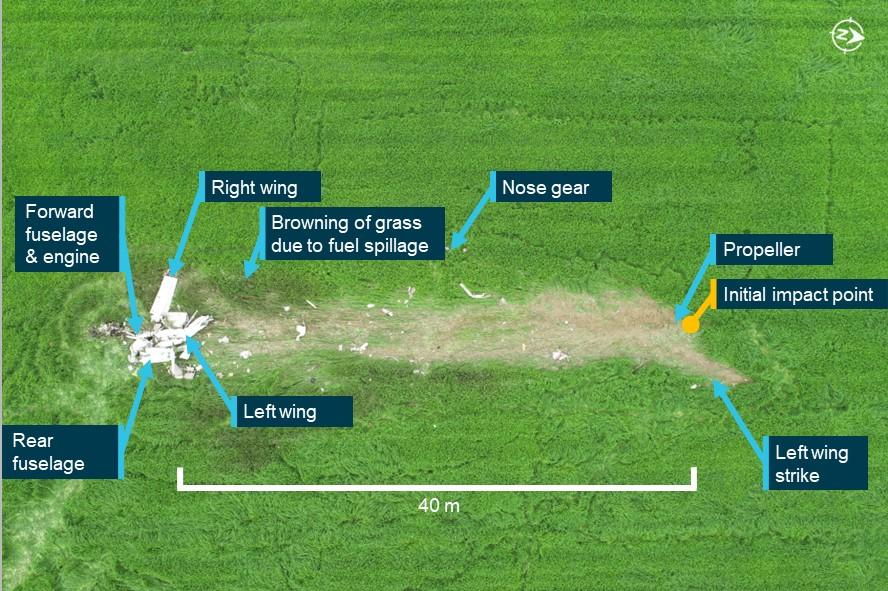
Selected Australian accidents and incidents 4 January to 29 March 2024

Sources: ATSB, Aviation Safety Network, AvHerald, RAAus

4 January

  • Aircraft: BRM Bristell NG-5
  • Location: Orange Airport, NSW
  • Fatalities: 0
  • Description: Student on first solo inadvertently pressed differential toe brake on take-off and lost control. Aircraft undamaged.

6 January

  • Aircraft: Airborne XT 912-B
  • Location: Near Beverley, WA
  • Fatalities: 1
  • Description: Microlight trike crashed under unknown circumstances. Pilot died from injuries.

8 January

  • Aircraft: Cessna 208B Grand Caravan
  • Location: Lizard Island, Qld
  • Fatalities: 0
  • Description: Aircraft overturned during attempted emergency landing following power loss. Two occupants injured.

14 January

  • Aircraft: Tecnam P92 Tail Dragger
  • Location: Near Boonah, Qld
  • Fatalities: 2
  • Description: RAAus-registered aircraft was returning to departure airport when it crashed into a field. ATSB assisting with investigation.

24 January

  • Aircraft: Cessna 172S Skyhawk SP
  • Location: Near Camden, NSW
  • Fatalities: 1
  • Description: Aircraft crashed on downwind-base turn during student pilot’s first solo.

25 January

  • Aircraft: Beech King Air C90A
  • Location: 180 km north of Kalgoorlie Boulder Airport, WA
  • Fatalities: 0
  • Description: During cruise in IMC, the horizontal situation indicator (HSI) failed, resulting in a continuous and uncommanded right turn. The pilot disengaged the autopilot and hand flew the aircraft, resulting in minor controllability issues. Aircraft returned to Kalgoorlie.

10 February

  • Aircraft: Air Tractor AT 502
  • Location: Near Bourke, NSW
  • Fatalities: 1
  • Description: Aircraft crashed during aerial application of herbicide.

12 February

  • Aircraft: Airbus A330-300
  • Location: North-west of Melbourne Airport, Vic
  • Fatalities: 0
  • Description: Smoke in cabin and flight deck during flight to Columbo, Sri Lanka. Aircraft returned to Melbourne and successfully made overweight landing. Inspection found failed air cycle machine in cabin air system.

18 February

  • Aircraft: Van’s RV-9
  • Location: Near Forbes, NSW
  • Fatalities: 0
  • Description: During landing, the engine ran rough then failed. The crew lost directional control of the aircraft which veered off the runway and came to rest inverted. The aircraft sustained substantial damage. The 2 occupants sustained minor injuries.

1 March

  • Aircraft: Zenith CH-801
  • Location: Bunbury Airport, WA
  • Fatalities: 1
  • Description: Aircraft stalled and crashed from about 200 ft on its first flight after home construction. Pilot died in hospital from injuries.

4 March

  • Aircraft: DJI
  • Location: 5 nm from Argyle Aerodrome, WA
  • Fatalities: 0
  • Description: Aerial survey drone lost power and crashed.

8 March

  • Aircraft: Boeing 737 MAX 8
  • Location: Brisbane Airport, Qld
  • Fatalities: 0
  • Description: No.1 engine ingested black cormorant on take-off. Aircraft returned to Brisbane.

8 March

  • Aircraft: Aero Commander 500-S
  • Location: 6 km east of Bathurst Airport, NSW
  • Fatalities: 0
  • Description: During climb, both engines failed due to fuel exhaustion and the pilot made a forced landing in a paddock.

11 March

  • Aircraft: Boeing 777-300ER
  • Location: Sydney Kingsford Smith International Airport, NSW
  • Fatalities: 0
  • Description: Smoke seen coming from right-hand main gear during take-off. Aircraft returned to Sydney where firefighters stood by for its landing.

15 March

  • Aircraft: Bell 47G
  • Location: Nyngan Aerodrome, NSW
  • Fatalities: 0
  • Description: During initial climb, the pilot lost control of the helicopter which crashed and was destroyed by post-impact fire.

25 March

  • Aircraft: Airbus A330-200
  • Location: East of Perth Airport, WA
  • Fatalities: 0
  • Description: Aircraft had engine issue on descent. Engine shut down and single-engine landing made.

29 March

  • Aircraft: Piper PA-32-300 Cherokee Six
  • Location: Casuarina Beach, Darwin, NT
  • Fatalities: 0
  • Description: Aircraft made emergency landing after power loss.

Continuing airworthiness: it’s all about people

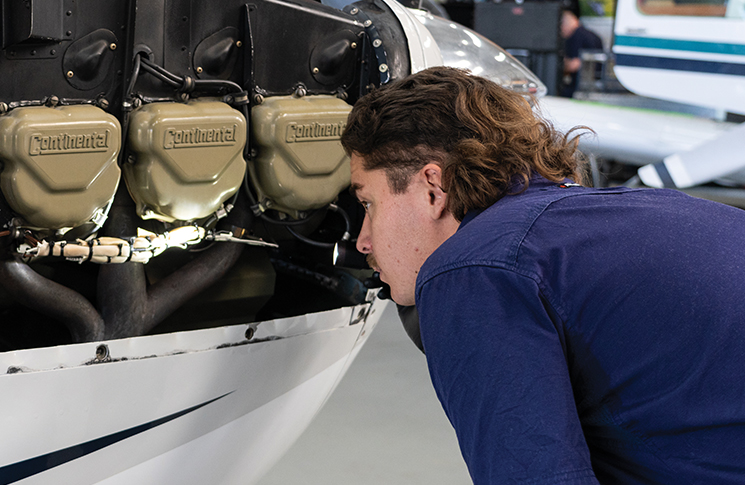
When you become an aircraft owner you enter a relationship, not with the aircraft – all romanticism aside it is no more than an assemblage of metal and other mixed materials – but with the professionals who maintain it. You could think of aircraft maintainers as being analogous to in-laws, these are the secondary relationships that come bundled with the love of your life. One difference though – you do not have the option of ignoring your aircraft maintainer or only nodding to them at family gatherings.

Aircraft differ from motor vehicles in that their major systems must be repaired and maintained by qualified people – licensed aircraft maintenance engineers (LAMEs). Pilots are approved to carry out only a few minor tasks.  However, the responsibility for an aircraft’s continuing airworthiness rests squarely with the registered operator.

In the words of CASA Advisor Circular 1-04v1.0,Registered Operators (RO) are required to ensure that aircraft being used in their operations are maintained in accordance with the applicable sections of Parts 4A to 4D of the Civil Aviation Regulations 1988 (CAR) and they are in a condition for safe operation.’ Similar requirements exist for aircraft maintained under the Civil Aviation Safety Regulations (CASR) Part 42.

In practice most registered operators work closely with their aircraft maintainers to ensure and manage an aircraft’s airworthiness. They defer to expertise, while taking responsibility. It is a relationship of trust and mutual understanding. When a LAME says ‘I’ve noticed something else that needs attention,’ it is very different from a waiter asking, ‘would you like chips with that?’. They are not upselling but keeping their part of the agreement with you to maintain the aircraft’s airworthiness.

The aircraft’s structure, total and component hours, compliance with airworthiness directives (ADs) and history are aspects of the deal that need professional attention and analysis.

Staying current on ADs is the operator’s responsibility, not the responsibility of the maintenance organisation.  And while your in-laws cannot (usually) order you around, a has not to issue a maintenance release unless all required maintenance has been carried out.  Indeed a maintenance organisation or LAME is not allowed to  issue a maintenance release unless all required maintenance has been carried out.

Not that it should ever come to that, listening to their concerns is taking your own safety seriously.


Further information:


Selected international accidents and incidents 1 October to 29 December 2023

1 October

  • Aircraft: Cessna 177RG Cardinal
  • Location: Lake Placid Airport, US
  • Fatalities: 2
  • Description: Aircraft had apparent engine problem and co-pilot announced return to airport but aircraft crashed short of runway.

4 October

  • Aircraft: Boeing 757-236
  • Location: Chattanooga Metropolitan Airport, US
  • Fatalities: 0
  • Description: FedEx aircraft had failure of left hydraulic system soon after take-off and turned back to departure airport. Landing gear failed to extend and alternative extension system also failed. Aircraft made belly landing.

6 October

  • Aircraft: Piper PA-34-200 Seneca
  • Location: Chilliwack, Canada
  • Fatalities: 3
  • Description: Aircraft on VFR training flight crashed on go-around, killing pilot, instructor and passenger. Witnesses saw aircraft enter right bank that continued until aircraft was inverted and nose-down.

12 October

  • Aircraft: Robin DR 400
  • Location: Sea near Corsica, France
  • Fatalities: 4
  • Description: Aircraft crashed 100 m from coast on initial climb from Propriano airfield.

16 October

  • Aircraft: Cessna 208B Grand Caravan
  • Location: Near Placencia Airport, Belize
  • Fatalities: 2
  • Description: Suspected narcotics smuggling aircraft struck electrical transformer soon after take-off at night, in light rain and fog. Aircraft stolen after security guard at airport tied up at gunpoint.

21 October

  • Aircraft: Sport Copter Vortex M912
  • Location: Omaka Airport, New Zealand
  • Fatalities: 1
  • Description: Gyrocopter crashed under unknown circumstances, killing sole occupant.

29 October

  • Aircraft: Cessna 208B Grand Caravan
  • Location: Rio Branco-Placido, Brazil
  • Fatalities: 12
  • Description: Aircraft crashed into wooded area immediately after take-off.

31 October

  • Aircraft: Robinson R44
  • Location: Plateau Wickers, Réunion
  • Fatalities: 4
  • Description: Aircraft appears to have struck a rock face on island in Indian Ocean. Pilot reported difficulties shortly before crash.

1 November

  • Aircraft: Learjet 35A
  • Location: Cuernavaca Airport, Mexico
  • Fatalities: 4
  • Description: Air ambulance overran 2,881-metre runway on landing and went down a steep embankment.

2 November

  • Aircraft: Cirrus SR20
  • Location: Near Sankt Andrä im Lungau, Austria
  • Fatalities: 4
  • Description: Aircraft crashed en route into wooded area near autobahn in rainy and windy conditions. Witnesses saw aircraft in steep dive. Ballistic parachute not deployed.

12 November

  • Aircraft: Aero Vodochody L-29 Delfin
  • Location: Aeroclub Villa Canas, Argentina
  • Fatalities: 2
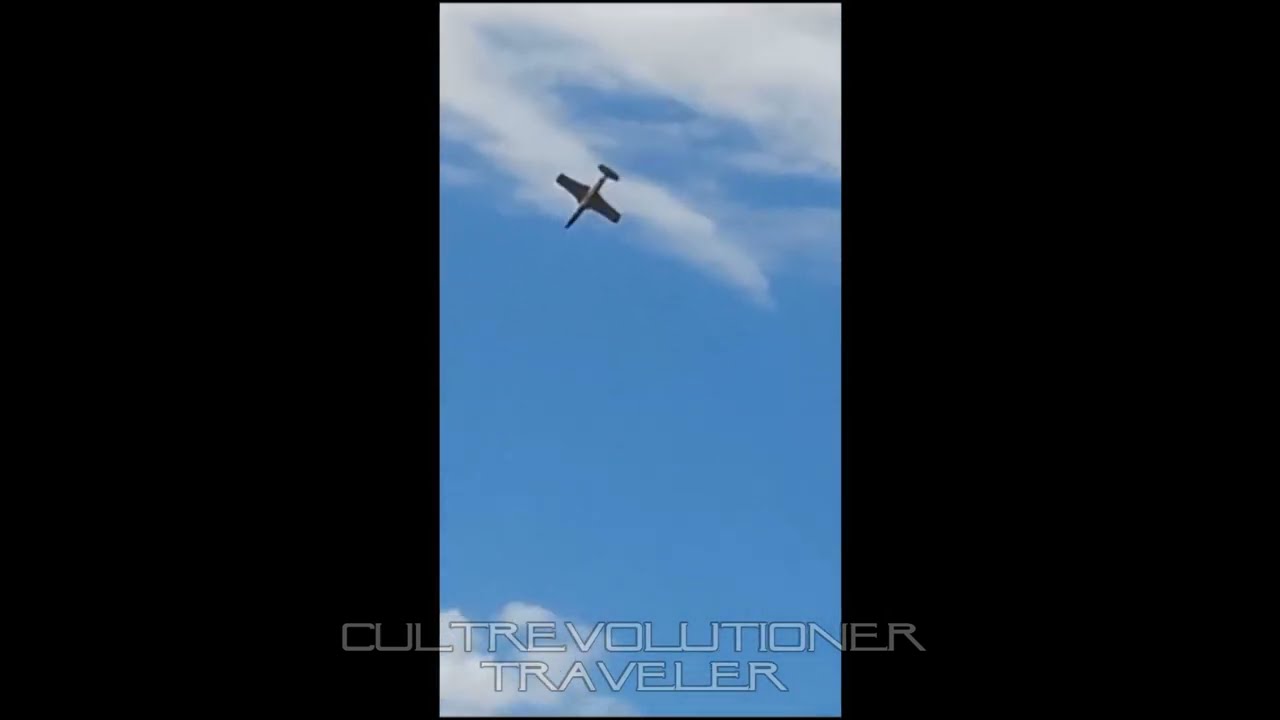
  • Description: Videos show jet warbird making low-level victory roll in aerobatic display that, at the top of roll, became a dive.

25 November

  • Aircraft: Rockwell Commander 112B
  • Location: Kasberg Mountain, Austria
  • Fatalities: 4
  • Description: Instrument-rated pilot and passengers died in collision with mountain under unknown circumstances.

1 December

  • Aircraft: Piper PA-32-260 Cherokee Six
  • Location: Sea near Guadeloupe
  • Fatalities: 5
  • Description: Aircraft crashed into sea under unknown circumstances.

2 December

  • Aircraft: Cessna T210M Turbo Centurion
  • Location: Guayaibi, Paraguay
  • Fatalities: 4
  • Description: Aircraft struck tree during take-off and was destroyed.

16 December

  • Aircraft: Cessna 172G Skyhawk
  • Location: Near Independence State Airport, US
  • Fatalities: 3
  • Description: Student and 2 instructors killed when aircraft struck wires during landing attempt in low visibility.

23 December

  • Aircraft: Van’s RV-10
  • Location: Jaboticabal, Brazil
  • Fatalities: 5
  • Description: Aircraft crashed en route under unknown circumstances and was destroyed by fire.

29 December

  • Aircraft: Air Tractor AT-502A/ Cessna 182Skylane TC
  • Location: Near Carletonville, South Africa
  • Fatalities: 3
  • Description: Aircraft collided during air-to-air photography session.

Sources: Flight Safety Foundation, Aviation Safety Network, Aviation Herald, MAK, BFU, UKAAIB, BEA

Selected Australian accidents and incidents 1 October to 19 December 2023

1 October

  • Aircraft: powered paraglider
  • Location: Mypolonga, SA
  • Fatalities: 0
  • Description: Engine reported to have failed and aircraft seen
    in spiral dive before hitting ground. Pilot suffered pelvic and
    leg injuries.

6 October

  • Aircraft: Cirrus SR22
  • Location: Near Gundaroo, NSW
  • Fatalities: 4
  • Description: Aircraft entered rapid descent about 12 minutes after take-off from Canberra and crashed, killing all onboard.

8 October

  • Aircraft: Cessna 172N Skyhawk
  • Location: Near Merriton, SA
  • Fatalities: 2
  • Description: Aircraft struck powerline on approach and crashed.

13 October

  • Aircraft: Robinson R22
  • Location: Western Sydney, NSW
  • Fatalities: 0
  • Description: Instructor and student heard bang during forced landing practice 12 nm west of Bankstown Airport. Helicopter did not respond to command for more engine power. One person slightly injured in collision with terrain.

19 October

  • Aircraft: Jabiru J160
  • Location: Palgrave, Qld
  • Fatalities: 1
  • Description: Burning wreckage of aircraft discovered in field after apparent incident in cruise flight.

26 October

  • Aircraft: Robinson R66
  • Location: Sea off Hawks Nest, NSW
  • Fatalities: 1
  • Description: Helicopter went missing on overwater leg of flight from Jindabyne, NSW. Wreckage found on 28 October. Bodies of pilot and dog passenger missing.

28 October

  • Aircraft: Socata TB20 Trinidad
  • Location: Pioneer Valley, Qld
  • Fatalities: 2
  • Description: Aircraft crashed into wooded mountainous terrain in national park.

4 November

  • Aircraft: Gulfstream 695A Jetprop Commander 1000
  • Location: 38 nm south-east of Cloncurry, Qld
  • Fatalities: 3
  • Description: Survey aircraft made rapid descent from cruising altitude of FL280 and crashed.

5 November

  • Aircraft: Gyrocopter
  • Location: Goulburn Weir, Vic
  • Fatalities: 1
  • Description: Aircraft crashed under unknown circumstances, killing pilot and injuring passenger.

10 November

  • Aircraft: Cessna 421C Golden Eagle II
  • Location: Sea, east of Mooloolaba, Qld
  • Fatalities: 0
  • Description: Crew of aircraft on ferry flight to Pago Pago, American Samoa, reported engine issue and advised return to Sunshine Coast Airport. Aircraft unable to maintain altitude and ditched about 30 nm from coast. Crew of 2 took to life raft and were rescued by helicopter as aircraft sank.

14 November

  • Aircraft: Robinson R22
  • Location: Walhallow Station, NT
  • Fatalities: 0
  • Description: Engine failed during mustering and helicopter crashed soon after. Minor injuries to pilot.

19 November

  • Aircraft: 2 x SIAI-Marchetti S.211
  • Location: Port Phillip Bay, near Mornington, Vic
  • Fatalities: 2
  • Description: Warbird aircraft collided while filming promotional video. One aircraft crashed into sea, killing pilot and camera operator, the other returned to land at Essendon.

24 November

  • Aircraft: SwissDrones SDO 50
  • Location: Near Chinchilla, Qld
  • Fatalities: 0
  • Description: Remotely piloted aircraft became unresponsive to control inputs and crashed, resulting in substantial damage.

7 December

  • Aircraft: Robinson R22
  • Location: Near Mataranka, NT
  • Fatalities: 1
  • Description: Mustering helicopter crashed under unknown circumstances.

12 December

  • Aircraft: Just Highlander
  • Location: Lilydale, NSW
  • Fatalities: 2
  • Description: Light sport STOL aircraft struck power lines, crashed and burned. Pilot had flown B787s.

17 December

  • Aircraft: Jabiru J160-C
  • Location: Wongulla, SA
  • Fatalities: 0
  • Description: Pilot following Murray River at 1000 ft saw flock of pelicans above and to left of flight path. As aircraft drew level, pelicans dived in front of aircraft, one hitting windscreen and smashing it. Pilot made emergency landing in nearby field.

19 December

  • Aircraft: Sling 2
  • Location: Heck Field, Qld
  • Fatalities: 0
  • Description: Aircraft landed long and passed over humped runway intersection, becoming airborne again. Aircraft came down heavily, damaging nose wheel and propeller, before veering right to stop next to runway.

Sources: ATSB, RA-Aus, Flight Safety Foundation

Selected international accidents and incidents 3 July to 30 September 2023

3 July

  • Aircraft: Piper PA-28R-200 Cherokee Arrow II
  • Location: Near Serra do Mar, Paraná, Brazil
  • Fatalities: 3
  • Description: Aircraft crashed during cruise for unknown reasons. Wreckage discovered on 7 July.

8 July

  • Aircraft: Cessna 550 Citation II
  • Location: Near French Valley Airport, California, US
  • Fatalities: 6
  • Description: Aircraft made go-round and crashed on second approach about 4 am local time. Fog layer over runway at
    the time.

10 July

  • Aircraft: Robinson R44
  • Location: Near Kakanda, Democratic Republic of Congo
  • Fatalities: 3
  • Description: Helicopter on reconnaissance flight described as having been pushed into ground by strong wind.

11 July

  • Aircraft: Airbus Helicopters H125 Écureuil (AS 350B3e)
  • Location: Near Solukhumbu, Nepal
  • Fatalities: 6
  • Description: Aircraft on sightseeing tour of Mt Everest crashed under unknown circumstances, killing pilot and 5 Mexican tourists.

20 July

  • Aircraft: Bell 206L-4 LongRanger IV
  • Location: Near Wainwright Alaska, US
  • Fatalities: 4
  • Description: Wreckage of charter helicopter found in lake surrounded by featureless tundra terrain in the Alaska North Slope region.

22 July

  • Aircraft: Shijiazhuang Y-5B(D)
  • Location: Luobei County, China
  • Fatalities: 2
  • Description: Chinese-made version of Antonov AN-2 biplane crashed during aerial application, killing both pilots.

23 July

  • Aircraft: Antonov An-26
  • Location: Port Sudan Airport, Sudan
  • Fatalities: 9
  • Description: Soviet-made aircraft crashed on take-off. Child reported as sole survivor.

25 July

  • Aircraft: Canadair CL-215
  • Location: Near Platanistos, Greece
  • Fatalities: 2
  • Description: Amphibious firefighting aircraft’s wingtip float struck tree during water drop, causing yaw and impact with ground.

28 July

  • Aircraft: Cessna 650 Citation VII
  • Location: Sea near Veracruz, Mexico
  • Fatalities: 3
  • Description: ADS-B data shows aircraft made rapid descent
    into sea 3 minutes after take-off.

6 August

  • Aircraft: Sikorsky S64/Bell 407
  • Location: Cabazon, California, US
  • Fatalities: 3
  • Description: Helicopters involved in aerial firefighting collided. Crew of Bell killed, Sikorsky crew unharmed.

15 August

  • Aircraft: Robin DR400/140B Dauphin 4
  • Location: Loire River, near Lavau-sur-Loire, France
  • Fatalities: 3
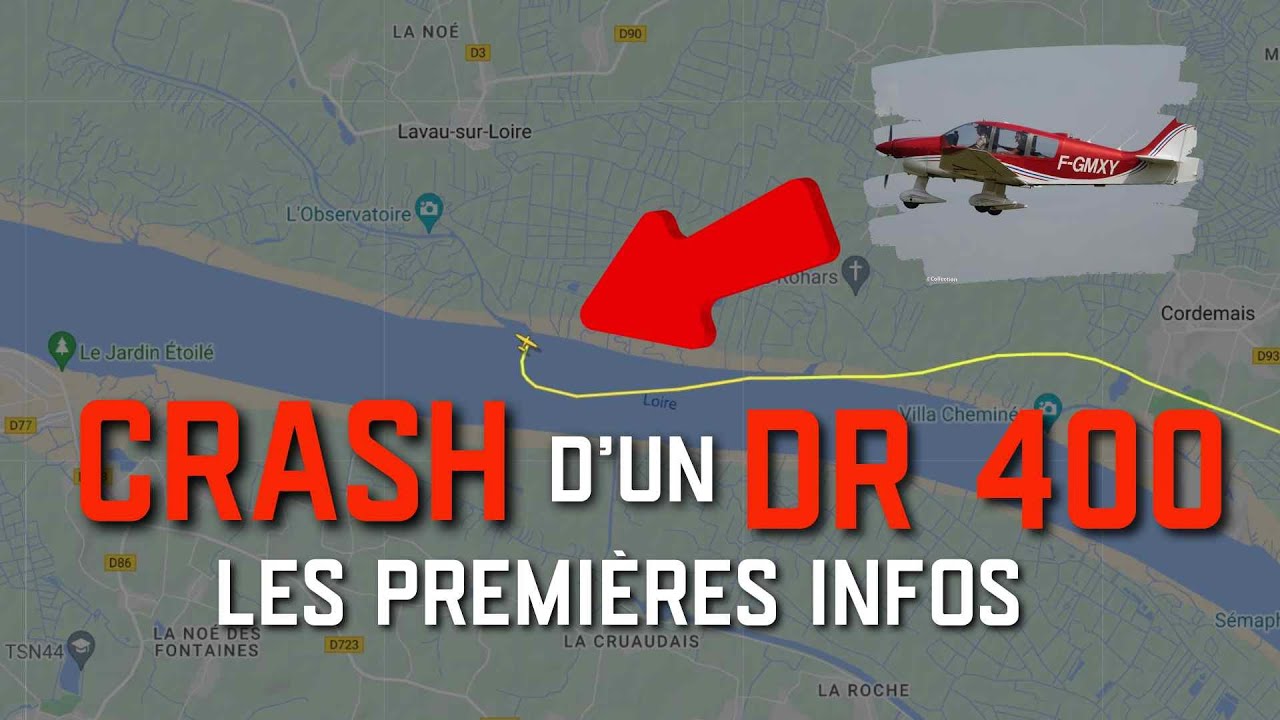
  • Description: Aircraft followed river before sudden descent
    into water.

23 August

  • Aircraft: Embraer EMB-135BJ Legacy 600
  • Location: Near Kuzhenkino, Russia
  • Fatalities: 10
  • Description: Aircraft exploded in cruise flight for unstated reasons. First fatal accident to occupants involving type. Intensive speculation surrounding cause and nature of crash.

28 August

  • Aircraft: Eurocopter EC 135T1
  • Location: Pompano Beach, Florida, US
  • Fatalities: 1 and 1 on ground
  • Description: Emergency medical service helicopter had in-flight engine failure and fire, resulting in partial separation of tail boom and rotating descent. Aircraft crashed through roof of residence, killing occupant. One member of medical crew on aircraft killed.

4 September

  • Aircraft: Eurocopter AS 350B3 Ecureuil
  • Location: La Higuera, Mexico
  • Fatalities: 4
  • Description: Helicopter owned by gas utility struck powerlines and crashed.

10 September

  • Aircraft: North American T-28A Trojan
  • Location: Börgönd Airport, Hungary
  • Fatalities: 2
  • Description: Warbird making display flight lost altitude while performing aileron roll following low pass over runway and struck ground. Three people on ground injured by burns.

16 September

  • Aircraft: Embraer EMB-110P1 Bandeirante
  • Location: Barcelos Airport, Amazonas, Brazil
  • Fatalities: 14
  • Description: Aircraft crashed after runway overrun while landing in heavy rainfall.

25 September

  • Aircraft: Airbus A320
  • Location: Near Jamaica
  • Fatalities: 0
  • Description: Airliner hit severe turbulence at FL340, injuring 8 onboard. ADS-B data shows sudden 800-foot climb.

30 September

  • Aircraft: Tecnam P2002 JF
  • Location: Near Doskey, Kazakhstan
  • Fatalities: 2
  • Description: Aircraft crashed on training flight.

Sources: Flight Safety Foundation, Aviation Safety Network, Aviation Herald, MAK,
BFU, UKAAIB, BEA

Selected international accidents and incidents 2 April to 27 June 2023


2 April

  • Aircraft: Airbus Helicopters EC130
  • Location: Near Chelsea, Alabama, US
  • Fatalities: 2
  • Description: Emergency medical service helicopter sent to collect a hiker with chest pains and breathing problems appeared to lose control while several feet above landing area and crashed, killing pilot and one of 2 medical crew. Hiker taken to hospital by other means.

2 April

  • Aircraft: Cirrus SR22 GTS X G3 Turbo
  • Location: Oxbow, Oregon, US
  • Fatalities: 2
  • Description: Aircraft entered steep descent from cruise flight and crashed in IMC. Icing conditions indicated in area. Witness saw empty parachute descending through cloud.

5 April

  • Aircraft: Bell 505 Jetranger X
  • Location: Sea near Hai Phong, Vietnam
  • Fatalities: 5
  • Description: Sightseeing helicopter lost contact 5 minutes after take-off and crashed on tourist flight (normal length 10 minutes). No survivors.

11 April

  • Aircraft: Glasair GlaStar
  • Location: Kidwell Airport, Nevada, US
  • Fatalities: 2
  • Description: Owner of amateur-built aircraft (powered by modified Subaru car engine) and spouse were returning to Iowa. Aircraft returned to departure airport after 11 minutes where it turned and made rapid descent, striking ground.

26 April

  • Aircraft: Cessna U206G Stationair II
  • Location: Near Santa Ana del Yacuma Airport, Bolivia
  • Fatalities: 5
  • Description: Aircraft reported to have broken up in flight. Spin and crash captured on video.

30 April

  • Aircraft: Tecnam P92 Echo
  • Location: Near Moià Airfield, Barcelona, Spain
  • Fatalities: 4 (2+2)
  • Description: Two Tecnam P92 aircraft collided, killing all on board.

1 May

  • Aircraft: Cessna U206G Stationair II
  • Location: Meta department, Colombia
  • Fatalities: 3
  • Description: Aircraft crashed into rainforest after reporting intermittent partial power loss. Four indigenous children on board used knowledge of local foods and other skills to survive and were found on 10 June.

10 May

  • Aircraft: Learjet 36A
  • Location: Sea near San Clemente Island, California, US
  • Fatalities: 3
  • Description: Crew reported odour in cabin and smoke or fluid seen trailing from aircraft, which was on civilian contract to US Navy. Crew declared emergency and flew to San Clemente for landing. Last transmission from aircraft was at 9,000 ft on descent. Aircraft made series of descending turns before striking sea.

14 May

  • Aircraft: Boeing 747-4R7F
  • Location: Findel Airport, Luxembourg
  • Fatalities: 0
  • Description: Freighter encountered technical issues soon after take-off. Crew dumped fuel to reduce maximum landing weight; right-hand landing gear bogie broke on landing and aircraft came to stop on runway.

20 May

  • Aircraft: Viking Air DHC-6 Twin Otter 400
  • Location: Pacific Ocean west of Half Moon Bay, California, US
  • Fatalities: 2
  • Description: Aircraft on ferry flight to Hawaii crashed after turning back.

27 May

  • Aircraft: Cessna 172
  • Location: Maturín-José Tadeo Monagas International Airport, Venezuela
  • Fatalities: 2
  • Description: Aircraft crashed on training flight, killing instructor and student.

4 June

  • Aircraft: Cessna 560 Citation V
  • Location: Near Montebello, Virginia, US
  • Fatalities: 4
  • Description: Business jet on flight from Tennessee to Long Island crashed in wooded area about 2 hours after loss of radio contact. Pilot did not repond to ATC instruction to level at FL330 and aircraft levelled at FL340. It followed a track consisted with flight plan for 2 hours before entering rapid descent. Military aircraft intercepted but aircraft did not respond to their radio calls, manoeuvres or deployment of flares.

14 June

  • Aircraft: Mooney M20R Ovation 2 DX
  • Location: Watertown, Wisconsin, US
  • Fatalities: 1
  • Description: Aircraft on IFR flight took off, climbed wings-level into cloud but soon after began a series of climbing and descending turns, recorded by ADS-B. Final record was descent at 13,504 ft/min with a 56 degree right-wing-down roll angle. Aircraft seen to crash into field.

20 June

  • Aircraft: Rockwell Sabreliner
  • Location: Zulia, Venezuela
  • Fatalities: Unknown
  • Description: Forty-two-year-old aircraft bearing fake Mexican registration intercepted and shot down by Venezuelan military which presumed it to have been on an illegal flight.

23 June

  • Aircraft: Cessna 208 Caravan 675
  • Location: Near Elelim, Papua, Indonesia
  • Fatalities: 6
  • Description: Aircraft crashed enroute in steep wooded terrain.

27 June

  • Aircraft: Curtiss P-40E Warhawk
  • Location: Near Ravalli County Airport, Montana, US
  • Fatalities: 1
  • Description: Warbird crashed for unknown reasons soon after take-off.


Sources: Flight Safety Foundation, Aviation Safety Network, Aviation Herald, NTSB, BFU, BEA, MAK

Selected Australian accidents and incidents 6 July to 21 September 2023

6 July

  • Aircraft: Saab 340B+
  • Location: Shellharbour Airport, NSW
  • Fatalities: 0
  • Description: Scheduled flight was backtracking on runway after landing when crew noticed Piper PA-28 taking off towards them. Crew took avoiding action resulting in lateral runway excursion.

7 July

  • Aircraft: Quickie Q200
  • Location: Tyabb Airport, Vic
  • Fatalities: 0
  • Description: Home-built aircraft was substantially damaged in runway excursion.

14 July

  • Aircraft: DAMODA Newton 2.2 drone swarm
  • Location: Docklands, Melbourne, Vic
  • Fatalities: 0
  • Description: During a drone light show, many aircraft within
    the swarm experienced uncommanded movement, resulting in fail-safe mode activations, collisions with water and each other, and one aircraft escaping the geo-fence. The incident destroyed 440 drones.

21 July

  • Aircraft: Piper PA-31-350
  • Location: Essendon Airport, Vic
  • Fatalities: 0
  • Description: Aircraft struck 4 runway edge lights on take-off, which was abandoned.

28 July

  • Aircraft: Jabiru J430/Piper PA-25-235 Pawnee
  • Location: Caboolture Aerodrome, Qld
  • Fatalities: 2
  • Description: Pawnee making landing and Jabiru on take-off collided over runway, killing occupants of the Jabiru.

30 July

  • Aircraft: Jabiru SP 2200
  • Location: Brentwood, SA
  • Fatalities: 0
  • Description: Aircraft collided with horse on take-off. Aircraft flipped inverted. Pilot injured, passenger uninjured, horse
    later died.

6 August

  • Aircraft: Robinson R22
  • Location: Near Gascoyne Junction, WA
  • Fatalities: 0
  • Description: Helicopter made hard landing and was damaged.

7 August

  • Aircraft: Robinson R44 Astro
  • Location: Limmen National Park, NT
  • Fatalities: 0
  • Description: Pilot lost control of helicopter on take-off and it crashed. Minor injuries, substantial damage.

12 August

  • Aircraft: Gyroplane
  • Location: Allworth, NSW
  • Fatalities: 1
  • Description: Aircraft struck tree killing one of 2 people onboard and injuring the other.

23 August

  • Aircraft: The Airplane Factory Sling
  • Location: Heck Field, Qld
  • Fatalities: 0
  • Description: Aircraft struck hedge on landing approach and came to rest inverted.

5 September

  • Aircraft: Robinson R22
  • Location: Near Halls Creek, WA
  • Fatalities: 0
  • Description: Helicopter struck tree during mustering and crashed. Pilot seriously injured, aircraft destroyed by
    post-crash fire.

6 September

  • Aircraft: Boeing 737-800
  • Location: Over northern NSW
  • Fatalities: 0
  • Description: Brisbane-Melbourne scheduled flight had almost reached cruise altitude when the aircraft’s rudder trim was inadvertently activated, causing a yaw and roll to the left. Pilot flying attempted to correct the roll through autopilot heading inputs. Shortly after, the autopilot was disconnected and the aircraft returned to normal flight. BANK ANGLE alert sounded during incident.

7 September

  • Aircraft: Airbus A330
  • Location: Tullamarine Airport, Vic
  • Fatalities: 0
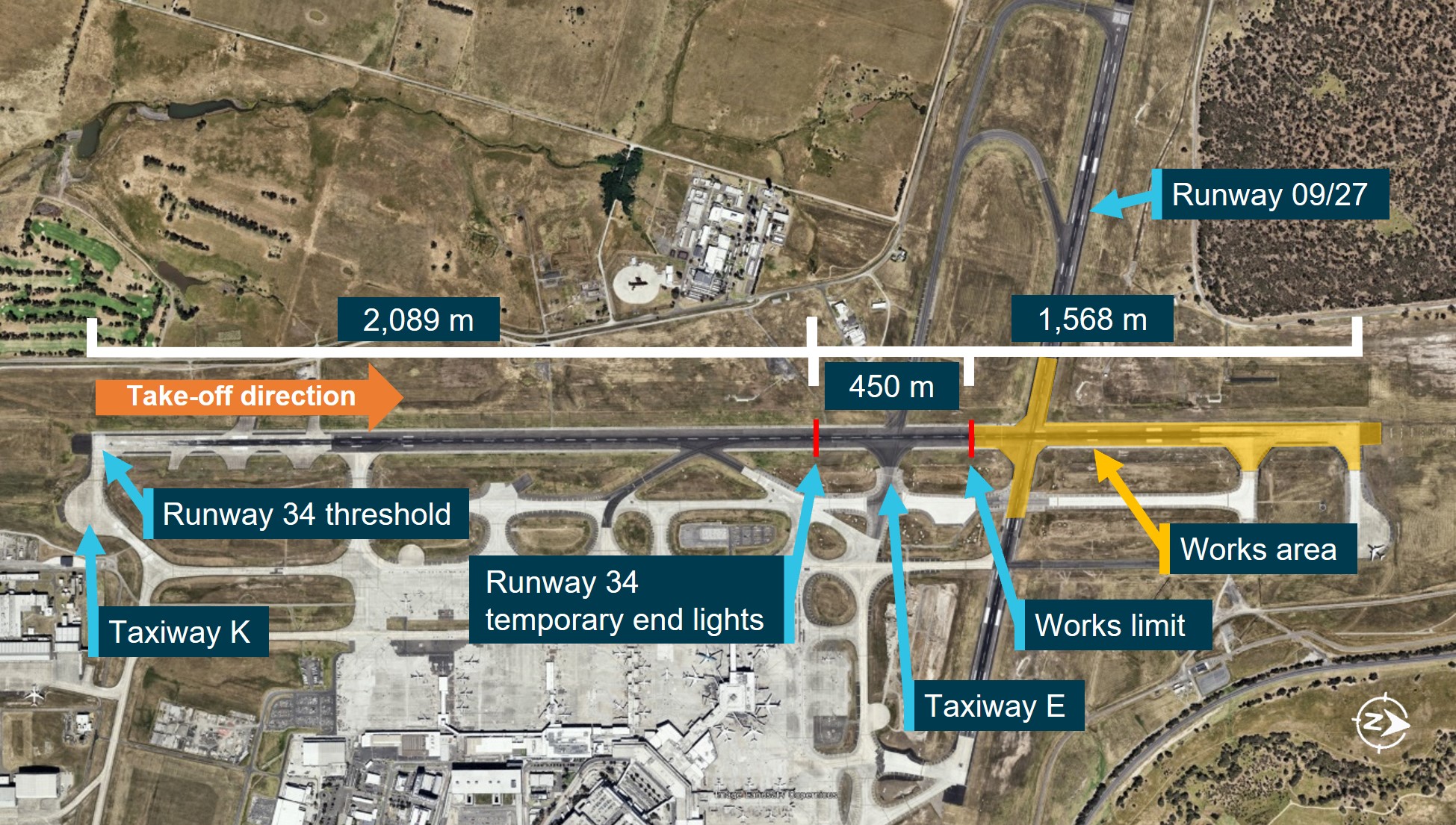
  • Description: During night take-off from runway 34, which was temporarily shortened for works, the aircraft reportedly rotated past the temporary displaced threshold, resulting in jet blast affecting people and objects in the work area. No injuries.

12 September

  • Aircraft: DJI drone
  • Location: Albany, WA
  • Fatalities: 0
  • Description: Survey drone lost power, crashed and was substantially damaged.

18 September

  • Aircraft: Boeing 787-9
  • Location: Tullamarine Airport, Vic
  • Fatalities: 0
  • Description: As in the 7 September incident, runway 34 was temporarily shortened for works. During night take-off, the aircraft reportedly rotated past the temporary displaced threshold, resulting in jet blast affecting people and objects in the work area. No injuries reported.

20 September

  • Aircraft: Bell 204B
  • Location: Near Aratula, Qld
  • Fatalities: 0
  • Description: Helicopter descended into dam while firefighting. Pilot escaped from cockpit before aircraft sank.

21 September

    • Aircraft: Guimbal Cabri G2
    • Location: Bankstown Airport, NSW
    • Fatalities: 0
    • Description: Helicopter had mechanical failure on training flight and crashed. No injuries, substantial damage.

Sources:: ATSB, RA-Aus, Flight Safety Foundation

This is a list of civil aviation accidents/incidents. However, Flight Safety Australia pays tribute to the 4 Australian military personnel killed in the crash of an Australian Army MRH-90 Taipan helicopter on 28 July and the 3 United States military personnel killed in the crash of a US Marine Corps MV-22B Osprey on 27 August.

Drone Flyer Diary – Elisha Chandra

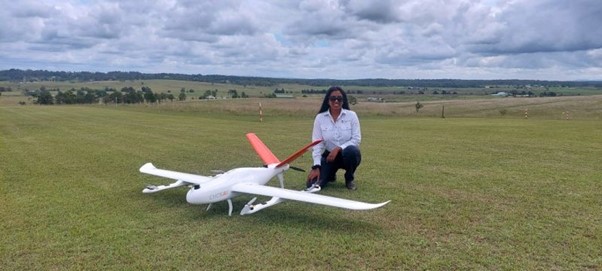
In a quiet cafe on a warm day in Kuala Lumpur, Elisha Chandra sits cross-legged, sipping coffee with her travel companions. Her recent travels have taken her to Japan, Philippines, Indonesia, and now Malaysia.

‘One of the best parts is meeting other travellers who have their own drones. They always ask, ‘Can you teach me how to fly?’ Elisha laughs.

As a drone instructor and consultant, Elisha has built an impressive portfolio of qualifications at a young age. As well as a private pilot licence for crewed aircraft, she holds a remote pilot licence (RePL) with ratings for sub-25 kg multi-rotor, sub-25 kg powered-lift, and sub-7 kg fixed-wing drones. When she returns to Australia, she is planning to add the sub-150 kg multi-rotor rating to her repertoire.

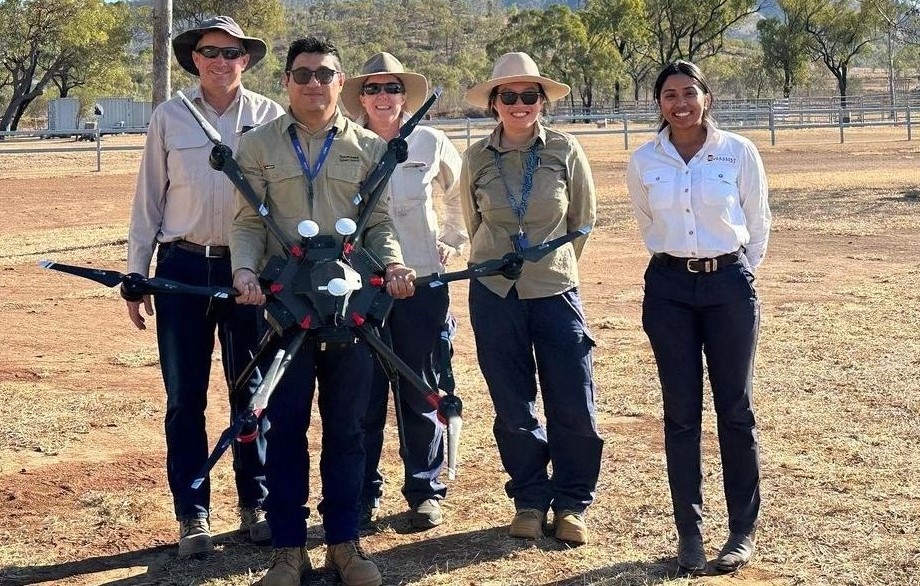
Elisha with the Department of Environment staff (Sources: Aviassist)

‘Growing up in Central Queensland, I caught the travel bug early from my jet setting parents, which inspired me to pursue a bachelor’s in aviation,’ Elisha said.

Across 10 years in the industry, Elisha has flown various drones. This includes several DJI and Quantum Systems models, as well as the P330 and some home-built drones.

Between her travel adventures, she continues to work remotely as a consultant, helping organisations navigate drone legislation and application procedures.

‘As a country kid, I’m familiar with the rural environment; footy fields, bushland, big open spaces. I carefully select safe locations for training with the help of a CASA-verified drone safety app.’

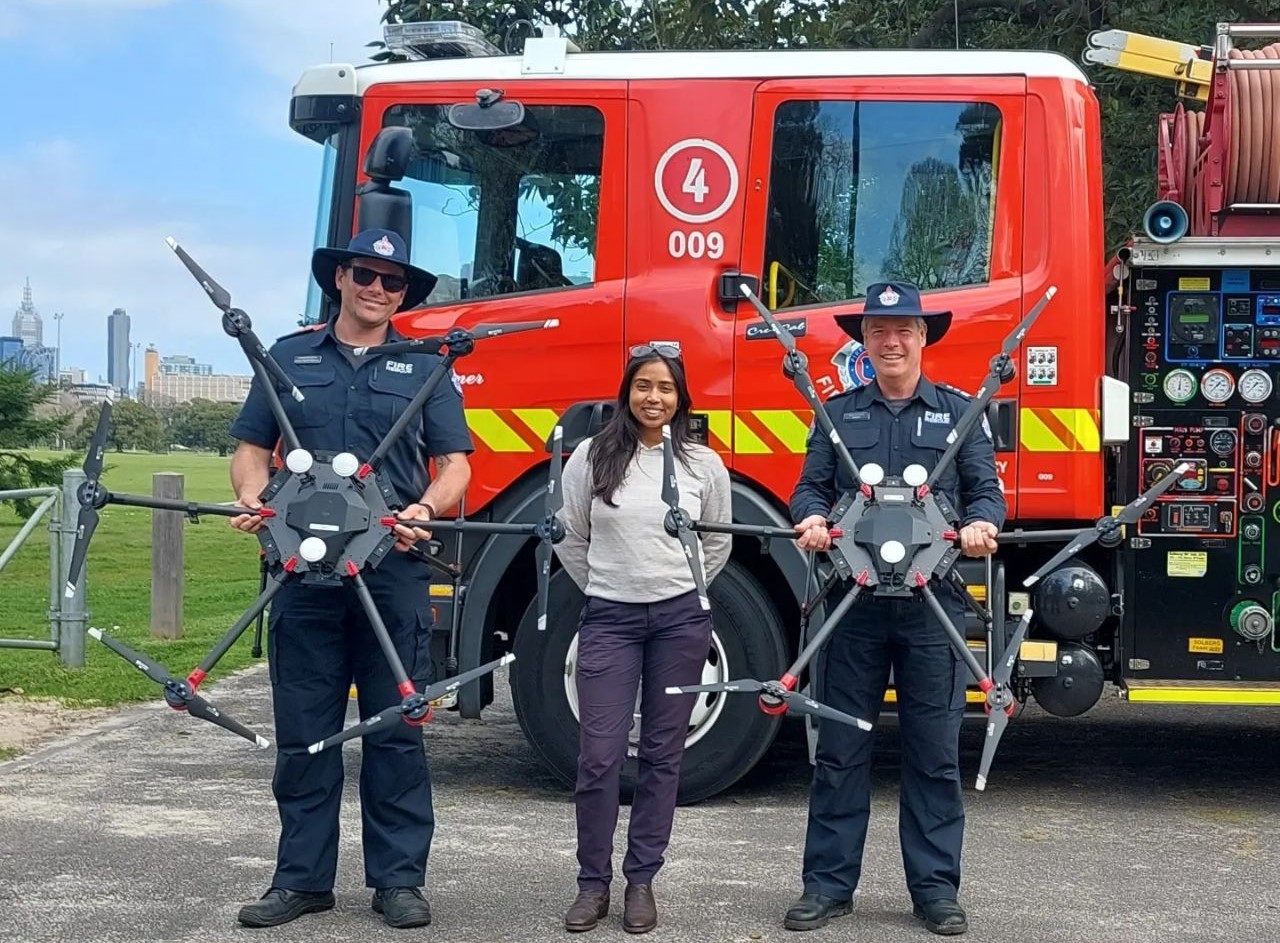
Elisha with members of the Victorian Fire and Rescue team (Source: Aviassist)

In her instructing roles, Elisha lived by a phrase passed down from a former manager and chief remote pilot: Bringing the unknown into the known.

‘Abstract concepts are easier to grasp with everyday examples,’ Elisha explains. ‘For instance, I compare a drone flying track with pushing a broken-wheeled trolley through a shopping aisle. The aisle represents the drone track, the trolley is the heading, and the broken wheel represents the wind. This analogy makes it easier for my students to understand and correct for a windy journey!’

Elisha promotes situational awareness by testing students in different scenarios. Her top safety tip is understanding the systems in your aircraft. Static pressure systems can aid in maintaining height so remote pilots can ensure they remain below 400ft (120m) above ground level. ‘If you understand how they work, you can maintain safe altitudes and manage situations when something goes wrong.’

Elisha continues, ‘The only way to ensure safety and compliance is through education,’ she says. ‘I ask students about the drone work they plan to do after they finish training. Then, I challenge them, ‘How can we do this safely and legally? What resources can we use?’.

Her approach equips students with critical thinking skills essential for their drone careers.

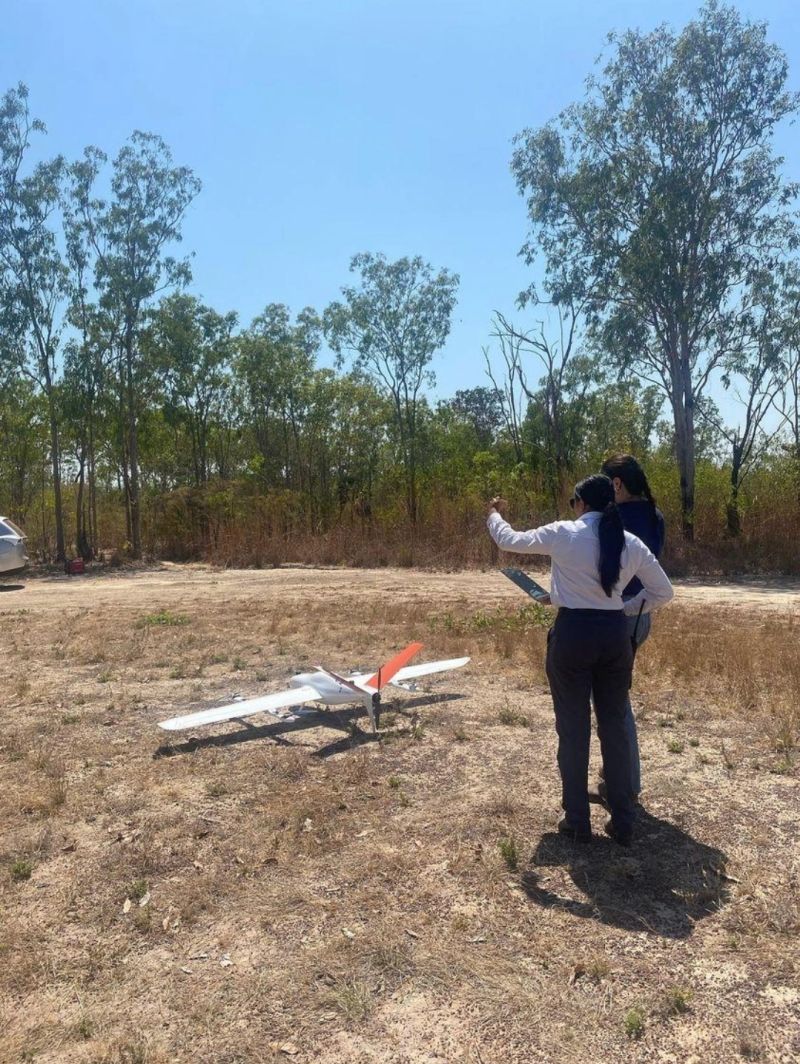
Conducting sub 25kg training for Charles Darwin University’s North Australian Centre for Autonomous Systems team (Source: Aviassist)

To new drone flyers, she offers some good advice. ‘Many people mistakenly buy a cheap drone, thinking they’ll upgrade once they’ve had practice. But those cheaper drones often lack essential systems like a GPS or basic sensors that make flying easier.’

Elisha is optimistic and excited about the future of the drone and advanced air mobility industries. She envisions a future where drone taxis are a reality and sees herself at the forefront of their introduction in Australia.


Maintenance quiz – Spring 2024

For each item, chose the most appropriate response.

  1. On a non-computer-controlled turbofan engine such as a P&W JT15 series, if the pilot leaves the power lever set to climb power, the following will happen:
    1. the fan speed will increase with altitude
    2. the fan speed will decrease with altitude
    3. the fuel flow will decrease with altitude
    4. the fuel flow will remain the same with altitude
  2. A large turbofan engine such as a CFM International CFM56 produces most of its power from the fan when:
    1. at cruising altitude
    2. at sea level
    3. at all altitudes
    4. the core engine is producing more thrust
  3. On a large modern turbofan engine fitted to an airliner, reverse thrust is mainly achieved by:
    1. reversing the core engine on landing
    2. reversing both the core engine and the bypass flow
    3. reversing the bypass flow only
    4. reversing the core first then the bypass in sequence
  4. The reason the Boeing 787 has scalloped cowling trailing edges is:
    1. a marketing tool designed to make the aircraft unique
    2. to stop crack propagation in the aft nacelle
    3. to reduce noise when the engine is in reverse thrust
    4. to reduce ambient noise where the hot exhaust and cool bypass air mix at high velocity
  5. In a free-turbine turboprop engine:
    1. the gas producer section of the engine is not connected physically to the power section of the engine
    2. the gas producer section of the engine is connected physically to the power section
    3. on start-up, the propeller begins to turn as a result of turbine combustion gases passing through the gas producer turbine
    4. on start-up, the power turbine turns the gas producer turbine as the gas producer is downstream from the power turbine
  6. In a free-turbine, turboprop engine such as a P&W PT6 at cruise altitude with torque set to a constant, a dirty compressor may cause:
    1. an increase in ITT
    2. a decrease in ITT
    3. an increase in both ITT and FF
    4. a decrease in FF and an increase in Ng
  7. On Airbus A350 aircraft, there is a characteristic black band around the periphery of the pilot’s windshield. The purpose of the black band is:
    1. purely aesthetic
    2. because the designers wanted to set the Boeing 787 and the Airbus A350 apart as they are similar-looking aircraft
    3. to contribute to easier maintenance of the windshield
    4. to boost efficiency and safety of the aircraft by providing a medium to rapidly adjust temperatures of surrounding skin
  8. Some helicopters have a rotor brake which:
    1. is mandated for engine starting
    2. locks the power section of a turbine engine so the rotor system does not rotate, while allowing the engine to be started
    3. is used at the pilot’s discretion only when embarking and disembarking passengers
    4. allows the rotary components extra time between overhauls
  9. Turbine blade creep is usually caused by:
    1. rotational speed above design limits
    2. thermal shock exceeding design limits
    3. rotational speed and temperature exceeding design limits
    4. turbine blade material below specification
  10. A turbofan engine on a modern airliner that suffers a bird strike may make a popping sound. The sound is caused by:
    1. the engine breaking up internally
    2. the airflow through the bypass duct being disrupted
    3. the compressor section stalling because of damage to that part of the engine
    4. the flame front progression to the tail pipe
  11. A light jet such as a Learjet 35 series lands on a wet runway. After landing, engineers find a ‘flat spot’ on the tyre. This is most probably caused by:
    1. excessive braking leading to a wheel lock-up
    2. an unserviceable ‘anti-skid’ system
    3. a tyre skidding on the wet surface causing steam to be produced and burning the tyre
    4. none of the above
  12. The proposed Part 43 regulations for maintenance of aircraft used in private and aerial work operations are relevant to:
    1. registered operators
    2. aircraft owners
    3. maintainers of aircraft
    4. all of the above
  13. The proposed Part 43 maintenance regulations can be used for private operations of:
    1. sport and recreational aircraft – Part 103 of CASR
    2. balloons and hot air airships – Part 131 of CASR
    3. large drones – Part 101 of CASR
    4. VH-registered aircraft
  14. Under the proposed Part 43 regulations, the person who can perform an annual inspection is:
    1. an A1 LAME working in a Part 145 maintenance organisation
    2. a B1 LAME with an inspection authorisation (IA)
    3. a B2 LAME with an inspection authorisation (IA)
    4. an AMTC (aircraft maintenance technician certificate) holder

To view the answers, go to the next page using the page navigation buttons below.