

by John Raby
There was never a better time to have set out to make your career as an airline pilot than the early nineteen sixties. Many of us had benefited from scholarships granted to improve the flow of young pilots through flying schools and clubs to the expanding airline industry. I benefited from this system and in 1965, with a grand total of 393 hours and no tailwheel experience, I found myself in the right-hand seat of the iconic DC3. The process of transitioning from Cessna and Pipers to my first airliner was long and very comprehensive. The airlines in those days took their commitment to the training and education of pilots very seriously.
The great day came for me in June 1965 when I took my turn in the right seat of the mighty DAC for my first take off. The training/check captain, Ken, was a survivor of the Second World War and had trained many young hopefuls. For me it was to be the day of judgement. Could someone with my limited experience hope to manage such a complicated, large aeroplane? What was it like to have so much power within my white-knuckle grasp? Would I manage as well as my friend who had been the first ‘victim’ that day?
It couldn’t be too bad, I thought, as my colleague had been given a simulated engine failure on his last circuit and seemed, with expert coaching, to have managed it well. I would soon find out as I strapped myself into the already literally hot and sweaty seat.
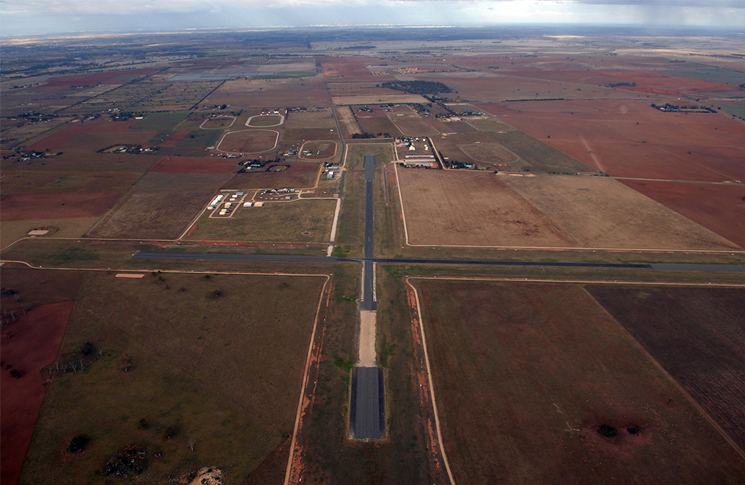
The venue was Bacchus Marsh aerodrome just a short hop from our base at Essendon. We swapped seats as Ken taxied down runway 27 to align us for my first take-off on 09. ‘OK’ Ken said, ‘nice and smoothly on the power application and keep her aligned with positive adjustments to the rudder all the while keeping wings level. You will find the control inputs heavy during the take-off roll compared to your previous types and try and keep the power as even as you can to avoid any tendency to swing.’
So off we went! My first impressions? They are supermen who can fly this beast!
I found I needed large inputs of rudder and even with what I thought was full left rudder and much verbal encouragement from the left seat, we were still headed for the grass. Fortunately, we became airborne as we crossed the runway intersection but certainly not aligned with the runway and continuing, despite my best efforts, to track towards the south.
Then the dreaded call, more of a shout really, from the left seat of, ‘I have it’, and my realisation that I certainly had displayed ‘the wrong stuff’.
Despite the superior skill of my instructor we continued briefly in a flat right turn at low level until his scan of the control settings revealed the rudder trim still set for the engine out condition he had simulated on the preceding circuit. Phew!
We did not discuss the event in our debriefing. Ken was very embarrassed. Not much needed to be said to highlight the power of aerodynamics. However, I took away new knowledge and understanding of the effects and effects of controls which still informs my flying today.
The lesson I learnt that day was that no matter how simple the aircraft you fly, check-list discipline is paramount. Rush is the greatest enemy of flight safety.
Flight Safety Australia looked at the importance of checklists in One thing at a time: a brief history of the checklist in November.
Flight Safety Australia wishes our readers and followers a happy and safe Christmas holiday. We will be back online in early January, after the CASA shutdown.

Comments are closed.