
Aircraft are certified so that they can be evacuated in 90 seconds using half the exits, and crews have extensive training to make this happen in an emergency.
But achieving such a speedy exodus relies on people following instructions and leaving their cabin baggage behind.
When they do – as happened when Japan Airlines Flight 516 erupted in a ball of flame at Haneda Airport after hitting a Coast Guard plane – miracles can occur.
All 379 passengers and crew escaped from the Airbus A350 because flight attendants maintained order and passengers adhered strictly to safety rules by following instructions and ignoring their belongings.
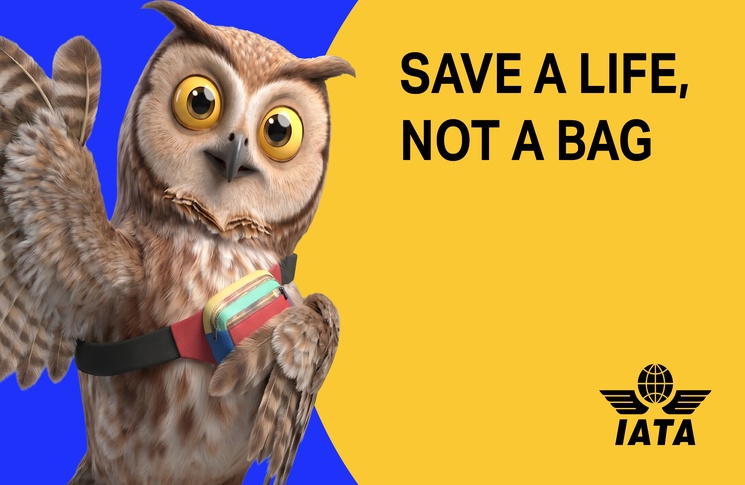
A major new campaign from the International Air Transport Association (IATA), ‘Save a Life, Not a Bag’ aims to encourage and educate other passengers to do the same thing.
Supported by aviation safety regulators globally, the campaign also urges travellers to plan ahead when it comes to where they keep important personal items.
The idea here is that keeping crucial items such as wallets, phones and medications on your person eliminates the urge to retrieve them from overhead lockers.
Maximising survival chances may seem a no-brainer but airlines repeatedly see people grabbing cabin bags, searching for phones or trying to film during an evacuation.
Videos showing people rummaging through overhead lockers or potentially damaging evacuation slides by hurling cabin bags down them can be readily found on social media.
IATA describes the problem as a critical and persistent safety issue and warns it causes dangerous delays, obstructs aisles and exits and can result in injuries, particularly on evacuation slides.
Most people overestimate the time needed for an evacuation with almost 4 in 10 thinking they have 3 minutes or more instead of the 90-second safety benchmark.
The potentially fatal impact of retrieving cabin baggage can be seen in a US Federal Aviation Administration (FAA) report that looked at a scenario where half the passengers try to do so, resulting in an evacuation time 40% longer than the cabin survivability time of 120 seconds during a fire.
‘Taking bags during an evacuation is not a minor issue,’ says IATA Director General Willie Walsh. ‘Every second matters. Even taking one bag can affect the safe evacuation of everyone onboard.’
IATA’s campaign is designed to address research showing a shortfall between the 80% of passengers who claim they know what to do in an emergency and the 61% who say they should leave everything behind.
The campaign aims to avoid fear-based messaging and is supported by a series of safety videos, available in several languages, featuring friendly cartoon animals.
It has 6 safety behaviours the international airline group wants every passenger to remember in the unlikely event of aircraft evacuation:
- Pay attention to crew instructions: During an emergency, cabin crew are trained to guide passengers to safety. Listening carefully and responding immediately can save valuable time.
- Leave all baggage behind: Stopping to retrieve luggage delays everyone behind you. Even a few seconds can make a critical difference during an evacuation.
- Don’t film or photograph: Using phones or stopping to record events can create dangerous congestion and distract passengers from evacuating quickly.
- Keep aisles and exits clear: Large bags and carry-ons can obstruct aisles and emergency exits, slowing down the evacuation process for everyone onboard.
- Don’t take bags onto evacuation slides: Bringing hard or wheeled luggage onto evacuation slides can damage equipment and seriously injure passengers.
- Be prepared: Keep essential small personal items, such as medication, passports, or keys, secured on your person whenever possible. Preparation helps avoid delays in an emergency.
Australia’s Civil Aviation Safety Authority (CASA) is one of the aviation regulators, along with the FAA and European Union Aviation Safety Agency, supporting the ‘Save a Life, Not a Bag’ message.
CASA’s Team Leader Cabin Safety, Julie Parkinson, says the message is consistent with the authority’s existing regulatory requirements and guidance.
‘The message is simple, but one that can save lives,’ she says. ‘It is entirely consistent with the safety information passengers already receive whenever they fly.
‘Cabin crew are trained to direct passengers during an evacuation, and the safest thing passengers can do is follow those instructions immediately and leave all carry-on baggage behind.
‘We welcome initiatives that reinforce these life-saving behaviours and help embed these important safety messages before an emergency ever occurs.’
See more at IATA – Save a Life, Not a Bag.