That gap between what’s said on the radio and what’s actually happening is one of the quieter risks in non-controlled operations. And it gets sharper when runways intersect.
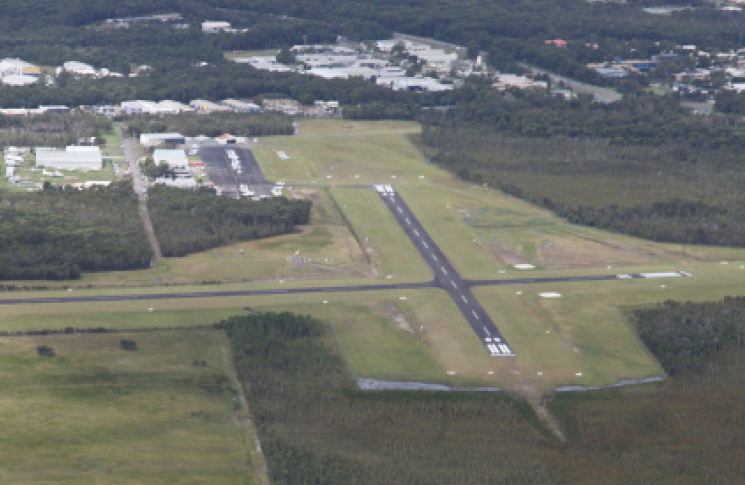
At Mildura Airport in June 2023, a Piper PA-28 lined up for runway 36 while a QantasLink Dash 8 taxied for the intersecting runway 09. Both pilots made their mandatory CTAF calls. Except the PA-28 pilot said, ‘runway 35’ instead of ‘runway 36’, one digit off. This led the Dash 8 crew to conclude the Cherokee wasn’t even at Mildura, since the nearby Wentworth Airport shares the same CTAF. Both aircraft began their take-off rolls. The Dash 8 crossed the intersection approximately 600 metres ahead of the Cherokee.
The call was made. It just landed in the wrong picture.
Three months later, same aerodrome. A Lancair taxied for runway 36 while a Dash 8 taxied for the intersecting runway 09. Both made calls. Neither heard the other. The Dash 8’s Comm 2 antenna was mounted on the underside of the aircraft, quietly degrading every ground transmission it made. The Lancair held short. Separated by timing and good fortune as much as procedure.
Steve Reh, Senior First Grade Instructor and Examiner at Camden and Bankstown Airports, NSW says, ‘I’ve seen this exact thing teaching students at Cessnock, Shellharbour and Camden (before 8am when it’s a CTAF).’
Both YCNK and YSHL have busy cross runways and are hot spots for pilot transmission errors. Without air traffic control monitoring separation, you really need to have your eyes and ears open.
Steve says, ‘I’ve witnessed student pilots and other aircraft in the circuit transmit the wrong runway number, sounding completely confident. What they haven’t realised in that moment is how everyone on frequency has now built a false mental picture. One wrong digit and you’re a ghost in someone else’s circuit.’
When the picture doesn’t line up
Circuit conflicts follow the same pattern. Speed, size, and experience vary. So, by the time the pictures diverge enough to notice, you’re too close for comfort.
At Geraldton in March 2024, a Fairchild Metroliner and a Beechcraft Bonanza began take-off rolls on intersecting runways within 3 seconds of each other. Airport buildings likely blocked sightlines between thresholds. A third pilot tried to help with a relay call, but the details were inaccurate, and both crews misread the situation. They missed each other by 250 to 300 feet of vertical separation.
If another aircraft’s position, speed or radio call does not match what you expected, stop clear of the runway and rebuild the traffic picture before continuing.
Don’t let your error be fatal
It’s easy to make a call, realise it was not quite right, think no-one’s around anyway, and move on. Oops. Done.
But ‘oops’ without a correction means every pilot on frequency has placed you exactly where you said you were. The wrong place. Just because you can’t see them doesn’t mean they’re not adjusting their spacing, their base turn, their take-off timing, around a position that was never accurate.
You can’t see them. They might not be able to see you. And in someone else’s cockpit right now, you’re in the wrong place on an invisible map. Correct it. It takes 5 seconds.
Steve says, ‘A few years back at Bankstown, I was on final with a student when conflicting traffic appeared. Neither we nor the controller had sighted it. Being low-wing, it was hidden right under our noses. I called the go-around on instinct. That instinct was the whole ball game.’
Refresh your training
Seasoned pilots can slip into habits where shortcuts feel harmless after a 1,000 hours. Newer pilots can freeze, nervous about getting the call perfect. Both are understandable. Neither is an excuse. No matter where you sit on the experience spectrum, use the full format every time: location traffic, aircraft type, callsign, position and intentions, then location again.
Say the runway number carefully. One digit is the difference between a clear picture and a near-miss on an intersecting runway.
If you can’t see the aircraft you’re expecting, don’t assume the geometry is fine. Widen the scan. Rebuild the picture. Go-around if needed.
Insufficient communication remains the most common factor in safety incidents near non-controlled aerodromes. But these incidents tell a more specific story: the calls were made and placed in the wrong picture.
A correct call isn’t enough if another pilot can’t place you. The radio starts the picture. The rest is built from what others hear, see and expect.
Resources for non-controlled operations
Non-controlled operations is a focus of CASA’s Your safety is in your hands campaign. For more guidance, tools and tips, be sure to visit the pilot safety hub