
My incident flight happened on a nice summer day during the second cross-country navigation solo for my private pilot licence (PPL) training. The flight was about 2 hours, from Central Coast to Dubbo, NSW. I arrived in Dubbo uneventfully, refuelled the tanks and had a short break before returning.
I started the aircraft and switched on the radios. A few radio calls were going on, one after another and overlapping; however, I hadn’t set the volumes and missed what was said and on which frequency. I adjusted the volumes and continued with ground checks and the run-up.
The day had a light crosswind on the 05/23 runway. Runway 11/29 may have been more appropriate for the wind, but it’s shorter, and the wind was very light, below 5 knots. I was monitoring the traffic and there were no operations I could hear, so I opted for the runway 23 departure.
I began taxing towards 23, with an appropriate taxi call on CTAF. When I arrived at the runway 23 holding point, I checked the final on both sides visually and made a call on CTAF to enter the runway. I did not hear any response, entered the runway and started the take-off roll.
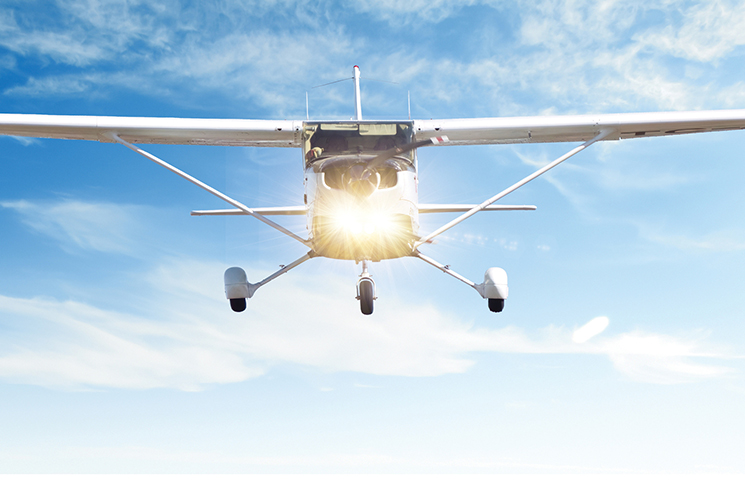
Once airborne and climbing through about 300 feet, I noticed some strange lights ahead of me in the sky. ‘Is it a UFO?’ was the first thought in my head. After a second or two, and as the light dots began to become brighter, I realised this wasn’t a UFO, but another aeroplane approaching me head-on, coming into runway 05!
As I was over 400 feet by then, I made an early turn left to crosswind and continued the departure. I couldn’t see the approaching aircraft but they made a call a short time after asking if I had heard their earlier transmission. I responded truthfully that I didn’t.
I returned to the training base without any further incident.
In retrospect, I can think of the following that led to that near miss.
Dubbo is an uncontrolled airport with CTAF frequency 134.0 MHz. It’s not particularly busy but has about a dozen arrivals and as many departures on a day and is also a base for medical flights. What may have happened is that I missed the earlier call from the aircraft when it was 10 nm out, possibly prior to setting the volumes, and missing what was said and on which frequency.
I had not heard any calls on the CTAF during my run-up, taxi and roll on runway 23. No-one responded to my CTAF calls either, including the aircraft approaching towards 05. I believe I was on the correct frequency as I did receive and respond to the call after the departure.
But as a result of this communication error, both aircraft were on a head-on collision course – upwind 23 and final 05 – and the accident was avoided by my early turn to crosswind.
The root cause is not clear to me. It might have happened that I was transmitting on the wrong radio (COM2 instead of COM1), believing that I was making announcements on the correct frequencies when in fact, I wasn’t. Or it may also have happened that the aircraft arriving did a 10nm call but didn’t call on joining the straight-in final. I will never know for sure.
Lessons learnt
- Double-check the selected frequency and the active transmit radio before you make any call.
- Listen for the aerodrome frequency response unit (AFRU) confirmation tone at a non‑controlled aerodrome so you know you are on the correct CTAF. Some aerodromes do not have an AFRU, so always check ERSA.
- Do not assume radio silence means the circuit is empty and keep scanning all approach paths before you enter a runway.
- Repeat your call and recheck the radio settings when you do not hear expected traffic at a mixed‑use aerodrome.
- Having your landing light turned on during the day, particularly in busy areas, will help other aircraft see and avoid you.
Close calls are contributed by readers like you. They are personal accounts of individual experiences and are not corroborated by CASA. We publish close calls so others can learn from their stories and spark discussions about safety. These stories should not be used to identify individuals or operators.
Listen to close calls where you find all good podcasts.
Controlled aerodromes and operations is one of the special topics on our Pilot safety hub. Refresh your knowledge at casa.gov.au/pilots