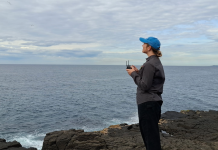
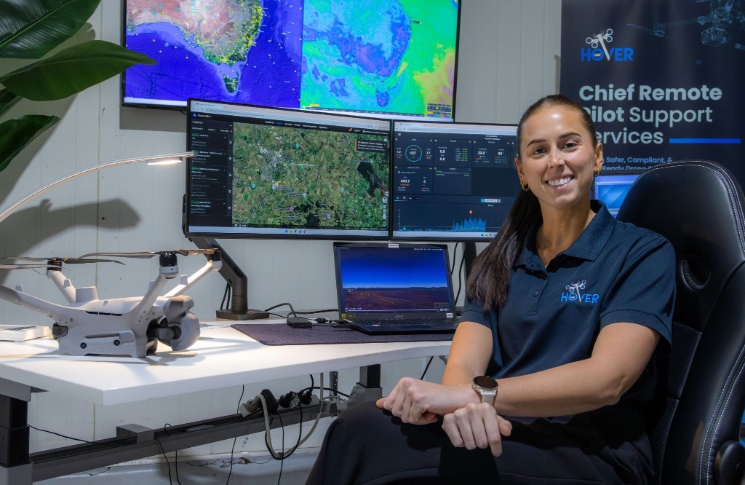
Safe drone operations rely on everyone involved, not just an organisation’s chief remote pilot (CRP). At HoverUAV, senior remote pilot (SRP) Georgia Wall uses her experience and qualifications to plan and conduct operations safely.
Georgia holds an aeronautical radio operator certificate (AROC) and a remote pilot licence (RePL) for drones up to 25 kg. She has also passed the beyond visual line-of-sight (BVLOS) exam.
‘My role includes mission planning, conducting pre-flight assessments, BVLOS operations, conducting training and proficiency checks, as well as supporting our CRPs during more complex operations,’ she says.
Safety is all in the planning
A typical HoverUAV operation starts by reviewing the operational requirements, assessing the airspace and environmental conditions, conducting risk assessments and ensuring all regulatory approvals are in place.
‘During operations, my focus is on always maintaining situational awareness, monitoring any safety risks and ensuring compliance with CASA regulations and client and company procedures,’ Georgia explains.
‘In the RPAS industry, preparation is so important in any type of operation. I like to begin with understanding what the task is and the objectives from the client and then determining the safest and most effective way to achieve the required outcome.
‘This process includes reviewing the airspace, checking weather conditions, risk assessments, confirming aircraft serviceability, emergency response procedures and stakeholder engagement.
‘Good planning is one of the most effective ways to ensure safe and successful operations.’
Georgia’s role varies from day to day. She may update client operations manuals for new operations or regulations. She may also fly interstate to deliver proficiency training or conduct BVLOS operations from the company’s remote operations centre in Burleigh Heads.
Georgia shares her safety experience within HoverUAV and across the broader RPAS industry.
‘A big part of my role involves ensuring operations are conducted in accordance with CASA regulations, operational approvals and established safety frameworks,’ she says.
‘I contribute to the development of safety cases, risk assessments, operational procedures, and supporting documentation that enable safe and compliant RPAS operations.’
Educating for safety
For Georgia, education is as important as operations.
‘I also assist with client training and education, helping our clients understand their responsibilities and the importance of maintaining safe operating practices,’ she says.
‘By promoting best practices and strong safety standards, I help build confidence within the industry and support the continued growth of RPAS operations across Australia.’
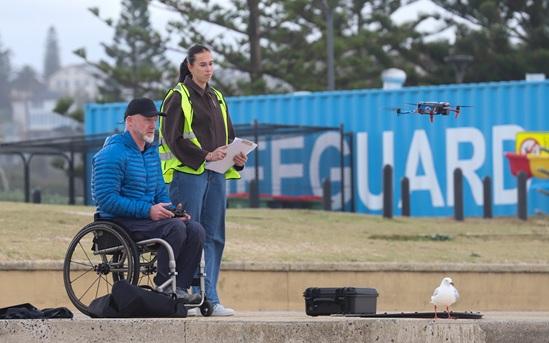
Georgia’s safety tips
- understand the rules and regulations that apply to your operation
- conduct thorough pre-flight planning and risk assessments; check the weather and airspace; keep accurate logs and maintain your equipment
- focus on building a strong understanding of aviation knowledge and the rules and regulations, not just learning how to fly
- understanding how airspace, weather, human factors and operational risks affect each flight will help you become a safer operator
- look for opportunities to gain experience across the industry and learn from experienced operators; the drone industry is specialised and changing quickly; people who prioritise safety and keep learning will be well placed to succeed.
If you would like to feature in Drone flyer diaries, please email us.