
It was a gorgeous blue-sky day, a few fluffy cumulus out for show.
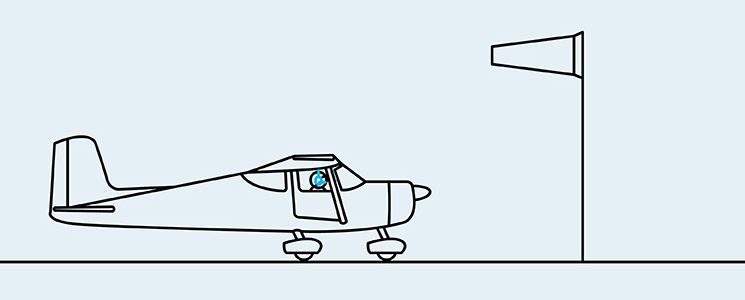
An aircraft taxied past me towards runway 35. I checked all 3 windsocks. Based on the high-performance taildragger I was in, runway 17 was better suited.
The other aircraft called, ‘Tyabb traffic, [callsign] taxiing runway 35 for upwind departure, Tyabb.’
I turned right and made mine. ‘Tyabb traffic, [callsign] taxiing runway 17 for downwind departure, Tyabb.’
The other pilot came back immediately, ‘Sorry, which runway?’
‘Runway 17, I’ll depart after you,’ I replied.
From there it unfolded seamlessly. Even the aircraft entering and joining the circuit added they’d heard the different runway calls and would join for 17.
That’s situational awareness in action.
Without a tower, no-one will step in to tell you aircraft are departing at opposite ends of the same runway because someone missed a call. And since any pilot may choose a preferred runway or direction at a non-controlled aerodrome, runway changes demand attention.
That day worked because everyone listened – and confirmed.
Clear comms, clear picture
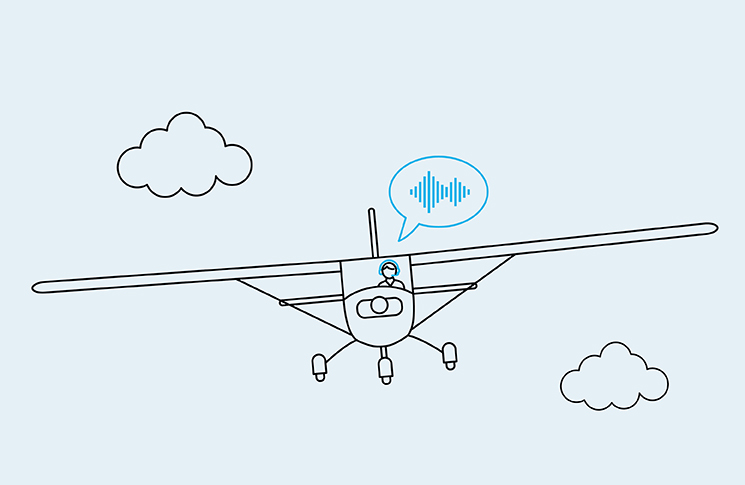
At a CTAF aerodrome, radio calls help build our situational awareness. We hear a runway nomination and build a mental picture. We hear a base call and place that aircraft in space. We hear nothing and assume the airspace is clear.
But the picture we build is only as accurate as the information feeding it.
Transmissions get stepped on. Two pilots may transmit at the same time. Both believe they were heard. Neither realised the call was unreadable.
Reception varies. One aircraft hears the position report clearly. Another hears a broken transmission.
And a brief head-down moment – a checklist, frequency change or chart glance – is enough to miss a call.
Silence does not guarantee an empty sky, yet it’s easy to assume what we hear represents the full story. If the frequency is quiet, consider whether you are on the correct CTAF and whether others can hear you.
Small errors, big consequences
At a non-controlled aerodrome, we operate on trust.
When an aircraft calls, ‘Joining downwind runway 22,’ we place it at circuit height, tracking as expected. We adjust spacing, runway entry and base turns on that assumption.
But what if the call does not match reality?
An example. A pilot reports turning base while still wide. Another aircraft on mid-downwind searches for the traffic but cannot see it. Trusting the call, they continue and turn base themselves – now on converging paths.
No-one is reckless. Each pilot may be flying a pattern suited to their aircraft.
For instance, a larger aircraft may fly wider. A high-performance aircraft may reach base sooner than expected. A slower aircraft may keep it tight. All are legitimate.
The risk appears when we assume everyone is flying the same geometry.
At a CTAF, we interpret position reports through our mental model of the circuit and traffic. When reality does not match that expectation, the shared picture drifts – and separation can reduce.
If you cannot see the aircraft you expect to see, widen your scan. Rebuild the bigger picture. Ask for clarification if needed.
And remember – you can always go around.
Build the picture, then confirm it
Different aircraft can be operating on the same frequency without sharing the same picture of the traffic situation. Rowan Kimber, Manager of CASA’s AvSafety program, says the critical skill is not simply making the call, but building that picture early and updating it as the flight progresses.
‘Listening on the CTAF early gives you time to understand the traffic mix before you make your first call,’ he says. ‘You start to build a picture of which runway is in use, who’s in the circuit and how aircraft are operating. It’s much easier to build that progressively than it is to change frequencies at 10 nm and try to catch up.’
That picture is only useful if it’s tested. When something doesn’t line up, pilots need to act on it.
‘If a transmission is missed, clipped or doesn’t make sense, don’t assume you’ve got the full story,’ Kimber says. ‘Repeating the same call won’t always improve understanding, especially if the original call was unclear or incomplete. It’s okay to ask for more information, or to confirm another aircraft’s position or intentions.’
He says the goal is not just to hear the call, but to understand what it means for the traffic situation. ‘If the picture doesn’t make sense, resolve it before you press on,’ he says. ‘Radio supports good judgement, but it does not replace it.’
Say it clearly
Before pressing transmit, it’s worth thinking about the call. Too often, a pilot hits the button and then works out what they want to say mid‑sentence – filling the frequency with ‘um’ and ‘ah’ while holding up other traffic waiting to broadcast. At a busy aerodrome, those extra
seconds matter.
If you’re unsure or making a less familiar call – even as a seasoned pilot – say it out loud or run through it in your head before transmitting. A clear, concise call helps others understand your intentions and reduces congestion on the frequency. Use standard phraseology and keep calls short and accurate. This helps others build the same picture you have.
Radio isn’t your lookout
Clear calls matter. Accurate runway nomination matters. Listening matters. The radio supports separation but does not create it.
Situational awareness relies on active listening and disciplined visual scan. Every call must be crosschecked against what you see and what makes operational sense.
If an aircraft reports downwind and you cannot see it, that’s a clue to reassess. If a runway nomination does not align with conditions or prior traffic, confirm it.
Your eyes – and your willingness to question – are what prevent small mismatches from becoming serious conflicts.
There’s no-one above you
At a non-controlled aerodrome, every transmission shapes someone else’s decisions. Radio calls matter but they’re only part of the picture. Planning, lookout, disciplined procedures and personal responsibility give those calls meaning.
Make the call clearly. Build the picture. Compare it with what you see. And when something does not add up, ask.
Safe non-controlled operations depend not only on what we transmit, but how carefully we listen, look and think beyond the call.
Non-controlled operations is one of the special topics on our Pilot safety hub. Refresh your knowledge at casa.gov.au/pilots.