

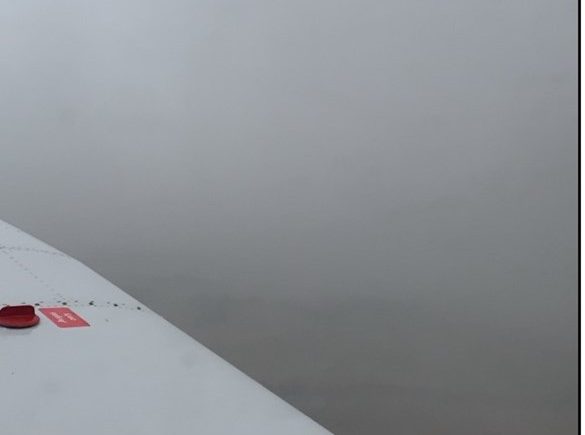
A recent report from the Australian Transport Safety Bureau (ATSB) is a reminder that diligent weather planning is important for every flight in a VFR aircraft. It’s the story of an instructor and student who thought they had checked the weather but had missed the description of deteriorating conditions approaching their route.
When the aircraft entered cloud on its return to Warrnambool airport on the coast of western Victoria, the instructor took over. The instructor had a command instrument rating, but not much IFR practice in the past 11 months and the aircraft, with gyroscopic instruments for the left side only, was not certified for IFR. The instructor climbed to 4500 ft, requested assistance from air traffic control (ATC) and flew to Moorabbin, near Melbourne, where the weather and visibility were better.
No-one was harmed – this time – but as the ATSB says in its publication Accidents involving Visual Flight Rules pilots in Instrument Meteorological Conditions, about 1 in 10 encounters with instrument meteorological conditions (IMC) of cloud or darkness ‘results in a fatal outcome’.
The training flight had taken off from Moorabbin that midday; its landing at Warrnambool was a planned diversion by the instructor, for training. During their time at Warrnambool refuelling the aircraft, the weather worsened and the two pilots contacted the training organisation in Melbourne, which had advised them it was no problem for them to remain in Warrnambool overnight, if required. But the weather appeared to improve and, after checking the aerodrome weather information service, the instructor and student decided to depart.
From the report: ‘At the time of their arrival at Warrnambool, the aerodrome forecast (TAF) was forecasting the visibility to be greater than 10 km with scattered cloud at 3000 ft above ground level (AGL). However, at 1500 a forecast INTER4 was due to commence, with the visibility decreasing to 5000 m in showers of rain and the cloud cover increasing to broken and the cloud base lowering to 1000 ft AGL. The student pilot did not brief the instructor on deteriorating weather in the Warrnambool area which was forecast on the graphical area forecast and the instructor did not detect this omission.’
The weather worsened enroute and they diverted to Cobden Aerodrome, about 26 NM (50km) away. Even poorer visibility at Cobden prompted them to return to Warrnambool, where the instructor called ATC for help, after maintaining control of the aircraft in IMC.
Would you have done any better, or would subtle biases and perceived ambiguities between forecasted and visible conditions have influenced your decision in similar circumstances?



Comments are closed.