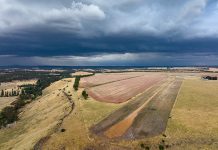


The propeller has stopped or the oil pressure has dropped to zero. No pilot wants to experience ‘that’ moment. But if you do, you may be thrust into an exclusive club of aviators who have no option but to perform a forced landing. Increase your chances of survival through procedural preparation, practice, and, most importantly, the right mindset.
Benjamin Franklin proclaimed, ‘By failing to prepare, you prepare to fail’. To manage ourself and our machine through an engine failure to forced landing, we won’t have time to wing it.
We need to know our mind, our machine and our plan – before we go.
Know your mind
In an aviation safety mindset, an engine failure or similar emergency is not a distant ‘what if’ but a constant consideration. And when it happens, the critical immediate component in the aircraft isn’t your stick or rudder, it’s your mind. The biggest threat to your mind in that moment? The ‘startle effect’.
Startle effect
The startle reflex is considered primitive, over which we have no control. Known as a ‘systemic motion response’, it consists of ‘contraction of the skeletal and facial muscles due to sudden intense stimuli’.
Contractions can include eye blinking, limb flexion, trunk shrugs, increased heart rate or sweating. Startle response can lead to a loss of cognitive capacity, and even temporary cognitive incapacitation.
Put (very) simply, the startle effect can cause us to mentally freeze and physically react. Both can have potentially dire consequences for a pilot in an emergency situation.
Deborah Lawrie AM, Australian Aviation Hall of Fame inductee, has survived just about everything a five‑decade aviation career could throw at her, including ‘sudden intense stimuli’ in the cockpit.
‘An engine failure, critical failure of a de-icing system, unexpected wind shear, lightning strike, bird strike on the windshield, degraded aircraft performance, sudden erratic behaviour of a pilot trainee, navigational error, traffic collision avoidance alerts and last-minute unusual instructions from ATC, to name a few’, she says. ‘All have resulted in various degrees of startle effect.’
It is generally accepted startle response can last for 2 to 10 seconds for someone performing everyday tasks. When performing cognitive tasks of higher difficulty (aviation, anyone?), the relationship is somewhat more complex. Some studies have measured up to 30 seconds. None of us is immune to it,’ Lawrie says. ‘It’s how we manage “startle” that counts.’
Factors such as stress can also affect the amount of time spent in the grips of startle. If you’re already stressed, the response can be stronger. If you’re relaxed, there’s likely a reduced effect. ‘Be on your game – not fatigued or distracted,’ Lawrie says.
Calm the farm
Phil Unicomb is an expert in emergency manoeuvre training and an instructor with 5 decades of experience. When he was performing aerobatics at an airshow 35 years ago, the engine of his Pitts S2A stopped.
‘It’s hard to mentally prepare yourself for the startle effect,’ he says. ‘Your brain will pause in disbelief and then it gets ready to fight or flight. You’ll bring your arms in defensively and put your head down – limb flexion. In the cockpit, that translates to an urge to pull on the stick, potentially creating or worsening a dangerous stall situation.
‘But, if you know what startle effect is, you might realise sooner that you’ve got it. You can calm the farm, take a breath and counsel yourself. Then you’ve just got to get on with it.’
When Unicomb’s engine stopped at about 1,000 feet AGL, he was in a tailslide. He remembers thinking, ‘This is not happening!’, startle effect writ large as denial.
Given his extensive training and preparation for engine failures, it took only a couple of seconds to recognise what was happening. Taking a breath, he got on with the job of dropping the nose, trimming for best glide speed and aiming for the highway. He was both ‘prepared for’ and ‘preparing for’ a forced landing.
Know your machine
The G-factors – glide speed, ratio, distance
A Flight Safety Australia feature by Thomas P Turner – Theory and practice: getting the glide right – delves into the technical aspects of glide ratios, factors that affect glide and how to set up a great glide. However, here are some tips to get you started (assuming flaps up, nil wind, straight and level, trimmed to best glide).
But don’t rely on estimates, always check your aircraft’s pilot operating handbook.
Now let’s use table 1 below to calculate estimated glide distance from 5,000 feet:
Cessna 172, using the ratio 9:1 (1.5 nm x 1,000 feet loss): 1.5 x 5 = 7.5 nm.
This estimate is only good, however, if you know your height above ground level.
Unicomb knew his height above ground, as it’s critical for performing at airshows. However, it’s likely the average pilot may not. Yes, your altitude is 5,000 feet AMSL, but what good is that to you if the ground elevation is 2,000 feet? You will only travel as far as 3,000 feet of air will let you.
| Aeroplane | Best glide speed | Glide ratio (1,000 feet per 1,000 feet loss) | nm travelled per 1,000 feet loss |
|---|---|---|---|
| Cessna 172 | 65–68 KIAS | 9:1–10:1 | 1.5 nm |
| Warrior PA28 | 73 KIAS | 9:1–10:1 | 1.3–1.5 nm |
| Bonanza A36 | 105 KIAS | 10:1–11:1 | 1.7 nm |
The other G-factor: glide time
Using the same scenario, how long do you have before you land?
How much glide time you have will affect how much time you can dedicate to other tasks such as trying to rectify the problem, configuring the aircraft properly for the forced landing and communicating.
Again, assuming best glide configuration, nil wind, etc (table 2):
| Aeroplane | Descent rate (fpm) | ∴ Glide time from 5,000 feet | ∴ Glide time from 2,000 feet |
|---|---|---|---|
| Cessna 172S | ≈ 740–760 | ≈ 6.5 min | ≈ 2.5 min |
| Diamond DA40 | ≈ 820 | ≈ 6 min | ≈ 2 min 20 sec |
| Bonanza | ≈ 950 | ≈ 5 min 20 sec | ≈ 2 min |
If we’re talking in minutes, it’s important to point out that every second stuck in startle effect makes a difference to your glide time. Every second is precious.
(Tip: The windshield test; once trimmed, head directly toward the chosen landing site and watch carefully. If it moves UP the windshield, you’re losing on distance and likely won’t make it. If it moves DOWN, you could make it but be careful not to lose sight of it.)
How far can your aircraft go?
Identifying glide range from your aircraft’s position can be tricky and every aircraft is different, but there are rules of thumb that have been tested over time.
It’s commonly considered that a Cessna’s glide range arc can be visually imagined from roughly one third down the wing strut. In a Cherokee, it’s typically advised the glide range circle begins at the first line of rivets back from the wingtip.
However, rules of thumb cannot truly account for other drag factors affecting glide distance, including aircraft configuration, weight and wind. Turner’s article examines the effect of these factors on some typical GA aircraft in glide, but every flight is different – so know yours before you go.
Unicomb has tested this many times in a variety of aircraft.
‘Regardless of your altitude, if your aircraft has a glide ratio of 9:1 or 10:1, then 9 times out of 10, you will be able to reach a field within that aircraft’s thumb rule range,’ he says. ‘They’re good rules of thumb.’
Know your plan
Prepared and practised, there are a number of decision-making models that can surface naturally for you in an emergency.
‘It is important to remember that startle will subside,’ Lawrie says. ‘A good rule is to “sit on your hands” for a few moments before you take any action. Then implement your failure management plan, such as FORDEC.’
Aviate, navigate, communicate
This is self-explanatory and can never be said often enough. The fundamental priority plan in any emergency.
ABCDE
Airspeed (or best glide speed)
Best place to land
Checklist
Declare emergency (if you have time)
Execute
FORDEC
Facts
Options
Risks
Decide
Execute
Check
Regularly performing CLEAR-OFF identifies your altitude and orientation and a possible landing site.
In-flight planning
Once airborne, we can be constantly preparing and planning for a forced landing, because every minute of a journey brings different terrain and different possibilities and risks.
Rolling site selection
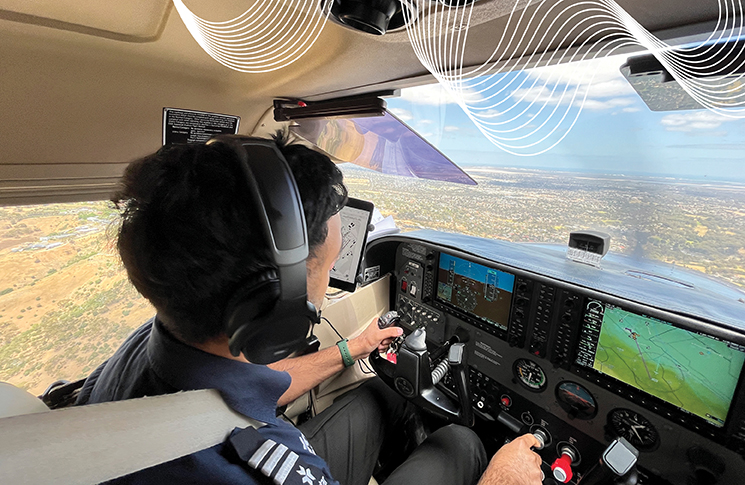
CLEAR-OFF checks are critical. ‘I want my pilots to perform CLEAR‑OFF checks on a regular basis, at departure, top of climb, setting a new heading or height, at least every 10 minutes,’ Unicomb says.
C – compass/DG
L – log
E – engine
A – altitude – how high am I?
R – radio
O – orientation – where am I?
F – fuel
F – forced landing – where would I go right now?
Regularly performing CLEAR-OFF identifies your altitude and orientation and a possible landing site. However, the more often you keep assessing and choosing, the better chance you have of being at least one huge decision ahead of yourself.
Selecting a landing site
Unicomb has a great tip. ‘Look for an area that’s a bit rectangular or runway-ish. This helps your brain do what it needs to do because it’s a
familiar sight.’
You have a better feel for your height above ground and your position. With a big round field, that type of estimating becomes more challenging.’
Once you’ve decided on a site, lock it in, but don’t discount the second option; keep assessing and checking until it’s no longer an option or your first option becomes obviously unviable.
- Size: Does the area look long enough to pull up in?
- Shape: Rectangular fields look more runway-ish, perhaps easier to judge. Circular spaces provide options for landing into wind.
- Slope: Landing uphill aids deceleration; landing downhill requires considerably longer landing distances.
- Surface: This is the difficult one. ‘Mean green’ crops may look smooth but growth can cause sudden deceleration, tipping an aircraft forward. ‘Boring brown’, harvested or fallow, is usually firmer but may be rough. Consider surface meteorological factors: wind direction and speed.
- Surroundings: Trees, buildings, powerlines. On the site, in the vicinity, on approach.
- Stock: Animals are a collision risk and indicate the presence of fences.
- Sun: Avoid landing directly into a low sun if possible.
- Wind: Headwinds shorten glide distance but reduce ground roll; tailwinds extend reach. Use smoke, tree, dust, or water movement to gauge surface wind direction and speed.
- Hazards: Always assume powerlines and poles exist near roads and in fields and sports fields. Scan for poles or ‘cut paths’ in treelines.
- Water: Landing on water poses distinct tip-over risks and hidden hazards under the surface. If you must land on sea, land parallel with waves at the slowest possible speed.
- Humans: Farmhouses offer communication, while parks beat busy roads in urban settings.
Every possibility presents risks that must be weighed against other possibilities. ‘I’d rather rip the gear off on a rough field than hit a powerline any day,’ Unicomb says.
Being prepared means knowingwhat we can know and preparing for what might be. Understanding the inevitability of the startle effect and knowing your machine’s glide characteristics, transitions you from panic to your plan. By preparing now, you ensure that when the engine stops, your skill and knowledge can take over.
Key points for managing forced landings
• Mindset matters: expect the startle effect in an engine failure and train to manage it quickly.
• Know your aircraft: understand your glide speed, glide ratio and how altitude converts into glide distance and time.
• Follow a simple plan: aviate-navigate-communicate, plus ABCDE or FORDEC, to structure actions under pressure.
• Always be choosing a landing site: use regular CLEAR‑OFF checks and the Seven S factors to identify viable options.
• Assess risks fast: consider wind, obstacles, terrain and other hazards to select the safest achievable landing area.
Flight planning is one of the special topics on our Pilot safety hub. Refresh your knowledge at casa.gov.au/pilots.