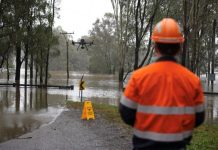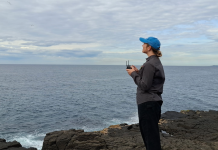

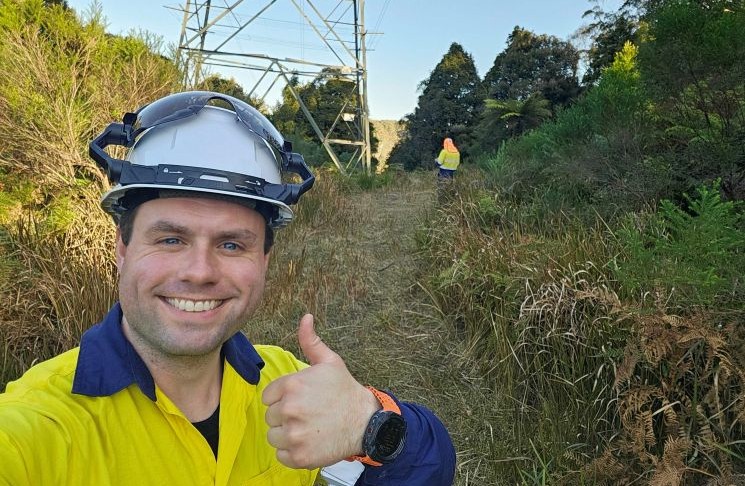
Flying a drone can look simple. A few sticks, a screen and a small aircraft hovering in front of you. For Liam Moore, chief remote pilot at Sensorem, and his team, flying is often the smallest part of the job.
Liam holds a remote pilot licence (RePL) and operates under Sensorem’s remotely piloted aircraft operator’s certificate (ReOC).
‘Pushing the sticks is actually less than 30 per cent of what we do,’ he says. ‘A typical mission starts days or weeks before we even deploy.’
Long before a drone leaves the ground, Liam and his team spend time planning. That includes checking airspace, understanding the location, thinking through what could go wrong and deciding how they would respond if it did.
The drones Sensorem fly are used to inspect large industrial sites such as mines, towers and pipelines. The goal isn’t just to fly; it’s to also collect information that engineers and clients rely on.
‘We’re capturing detailed data,’ Liam says. ‘Whether that’s thermal images or high-resolution photos, it has to be accurate to the millimetre.’
Once the flight is over, the work continues. The flight data must be processed, checked and delivered in a form the client can use. ‘The real mission is the end-to-end workflow,’ he says.
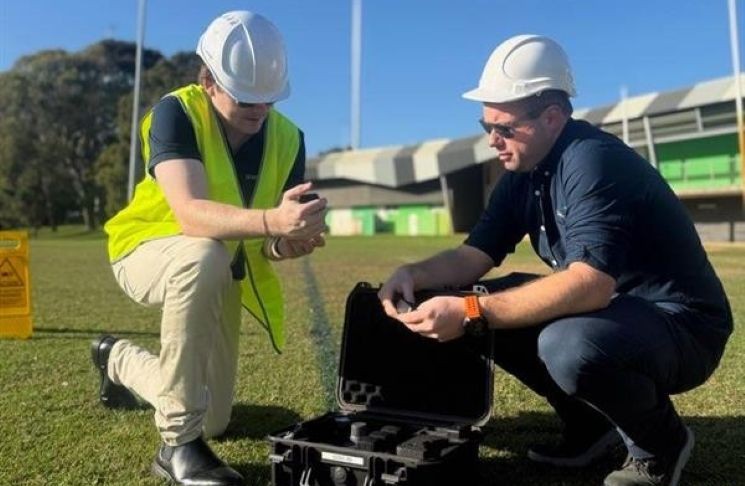
From field to remote operations
Some of Sensorem’s operations are conducted with pilots on site. Others are flown remotely, using automated systems and cameras. When pilots don’t have line of sight to their drone, this is called beyond visual line-of-sight flying and requires approval from CASA.
Liam says the biggest difference is building a clear picture of what’s happening around the drone.
‘When you’re on site, you can feel the wind change, hear site traffic and physically see the obstacle,’ he says. ‘Remotely, you rely entirely on systems. You have to trust your pre-flight planning and your systems because you don’t have the luxury of looking up at the sky to double-check.’
When operating remotely, pilots rely on information coming in from screens: live video, aircraft data, weather sensors and network connections.
Managing invisible risks
‘The biggest risks are often invisible,’ Liam says. ‘Magnetic interference from machinery and high-voltage lines can disrupt navigation.’
Sites can also change quickly, with cranes, venting stacks and heavy vehicles generating turbulence. ‘The risk isn’t just crashing; it’s losing connection in a critical zone. Maintaining a reliable link is vital,’ he says.
Loss of connection can quickly become a safety issue.
‘We’re always calculating our “out”,’ he says. ‘If the link drops now or if a sudden gust hits the tower, we ask, “Where is the safe termination point?”‘
One rule is non-negotiable. ‘The remote pilot in command has absolute authority to scrub a flight,’ Liam says. ‘A safe job is one where the only surprises are identified in the risk assessment.’
There are many reasons a pilot might make that call: changing weather, unreliable positioning data, fatigue or unexpected site activity.
‘Data can be captured tomorrow. You can’t undo an incident,’ Liam says.
Decision-making under pressure
Even with careful planning, conditions can change quickly.
Liam recalls a coastal inspection where a sudden burst of bad weather arrived mid-flight. ‘Wind speeds suddenly exceeded the aircraft’s limits,’ he says.
The pilot abandoned the flight and flew manually back to base. ‘We lost about 15 minutes of data but we saved the aircraft and eliminated risk.’
He says the decision was clear. ‘Safety and asset preservation come first.’
More than flying
Liam says professional drone work is more than flying skills. It involves thinking ahead and managing risk.
‘It’s about risk management, systems thinking and professional judgement,’ he says.
In simple terms, smart technology still relies on the pilot to make safe decisions. ‘The technology doesn’t replace judgement,’ he says. ‘It amplifies it.’
For new operators, that means understanding where you can fly and how to reduce risk. ‘Understand airspace, data and safety. The flying matters, but it’s only one part of the job.’
If you would like to feature in Drone flyer diaries, please email us.