
The day was planned as an exciting series of Sydney Harbour scenic helicopter flights for friends and relatives. I had only recently received my commercial pilot licence and was keen to give everyone a great flight.
Three flights had been planned, with careful weight and balance and fuel calculations done. It was a cloudy day with the base around 1,500 ft and a bit gloomy but light winds. On the first flight, I took off from Bankstown with 2 passengers. We headed up to the Parramatta River at 500 ft under CTA and followed it east. After we crossed the southern pylon of the iconic Sydney Harbour Bridge, we climbed to 1,000 ft. I gave my radio call and went into ‘tour guide’ mode pointing out all the sights such as the Sydney Opera House.
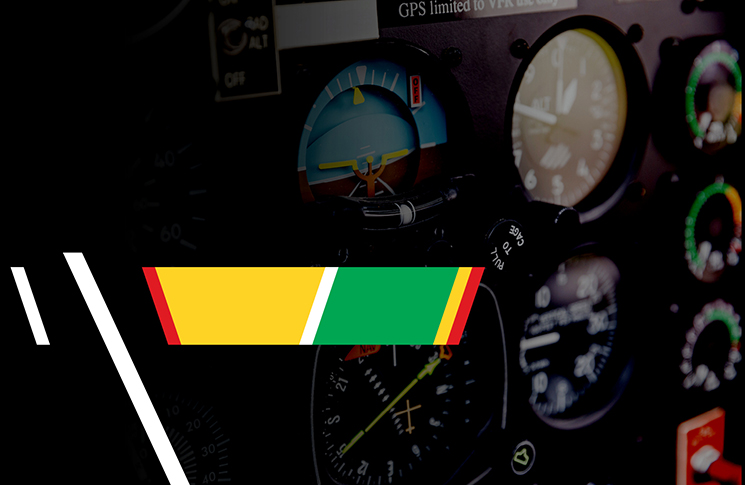
On my next instrument scan, I noticed the oil pressure gauge was now ‘in the black’! It had definitely been ‘in the green’ earlier in the flight.
I tapped it a couple of times, hoping it was a sticky gauge but there was no mistaking the reading.
There was no ‘low oil’ caution light, but that might come on at any time. I was at 1,000 ft in Sydney Harbour heading towards the heads.
I considered my options:
I could try to make it back to Bankstown but this would mean descending to 500 ft for the Parramatta River return (the maximum height allowed). This reduced my options for autorotation in an engine failure. If we landed in the water, I had done a helicopter underwater escape course but my passengers had not.
Another option was to land in a safe area, shut down and physically check the oil dipstick to see if the aircraft really was leaking oil or it was just a misreading gauge.
I finally thought, ‘What’s the safest option for me and my passengers?’
Being a relatively newly minted commercial pilot, I had some trepidation about the option of landing in CTA. Should I just chance a return to base? It would attract a lot less attention!
I spent a minute or 2 thinking about what to do. I finally thought, ‘What’s the safest option for me and my passengers?’ Then I made the decision to land.
I rehearsed my transmission, took a deep breath and pressed ‘transmit’ to talk to Sydney Centre.
I spoke in plain language telling them where I was, POB, that I had a low-oil pressure reading and intended to land in a sports oval on Middle Head.
I got a ‘no problem’ style response from the controller who asked if I wanted ‘services’ (I said no) and to advise him when I was on the ground and which sports oval.
I briefed my passengers, making an approach to a cricket oval all the while monitoring the engine and preparing to enter autorotation.
Fortunately, there was no-one playing cricket! After landing, I confirmed oil levels were normal and was satisfied it was likely a problem with the gauge. I called the base to confirm this. I started up and contacted Centre who offered ‘flight following’ for the short 10-minute hop back to Bankstown.
I felt good that I had overcome my fear of embarrassment or ridicule and made the right decision to land. Having the controller react in a completely normal and supportive way was really helpful too.
Lessons learnt:
- treat any warning light or abnormal gauge reading as real until proven otherwise
- call air traffic control early if you need to land and explain the situation in plain language
- plan safe landing options along your route before every flight
- stay calm and rehearse your radio call before you speak.
Controlled aerodromes and operations is one of the special topics on our Pilot safety hub. Refresh your knowledge at casa.gov.au/pilots
Disclaimer
Close calls are contributed by readers like you. They are personal accounts of individual experiences and are not corroborated by CASA. We publish close calls so others can learn from their stories and spark discussions about safety. These stories should not be used to identify individuals or operators.