

Old, says who?
A pilot used to be said to be getting old when they saw the aircraft type they flew for their first solo in a museum. But increasingly that type, or even that very aircraft, will still be in use.
The US Federal Aviation Administration defines an ‘antique’as an aircraft built more than 50 years ago. In Australia, Part 132 of Civil Aviation Safety Regulations defines an historic aircraft as one manufactured before 1 January 1960 or an Australian manufactured aircraft that is no longer being manufactured or an aircraft prescribed in the Part 132 manual of standards.
The Antique Aeroplane Association of Australia has categories of antique (pre-1945), classic (1945 to 1955), contemporary (1956 to 1970) and warbird (ex-military). While there are challenges in operating, maintaining and flying 50- or 60- or 80-year-old aircraft, there are also many rewards, which explains why owners of historic aircraft are so committed to keeping them in the air.
Old ways
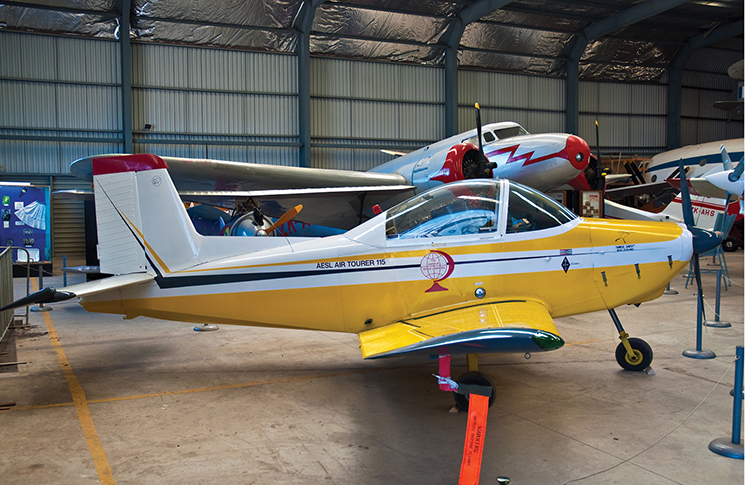
When Victa started manufacturing Airtourer aircraft in the early 1960s, the company (famous until then for its motor mowers) kept costs down by using automotive parts where possible. Nose gear from a Ford Anglia, brake handles from an FC Holden, fuel cap from a Ford Falcon and famously, trim levers from a mower height adjuster.
If you can picture your nanna’s louvred toilet windows, you will probably remember some lace curtains held up with a white plastic‑coated stretch wire secured to eye hooks. Victa used those stretch wires (‘suspension springs’) to maintain the shape of the rubber bag fuel tank. Over time, the wires sag and need to be replaced. This epitomises the challenges of keeping old (I mean, ‘historic’) aircraft in the air. How do you find replacements for 1960s toilet curtain wire? I fly a 1971 Airtourer and have encountered this challenge.
It turns out, keeping an old aeroplane in the air isn’t as difficult as it may first seem. The first point to note is that an old aeroplane doesn’t have to be rare or exotic. A typical GA aerodrome is home to far more old aircraft than new. One of the reasons is that well‑maintained aircraft don’t die!
I contributed a few flying hours to the total of 34,000 hours accumulated by a 1978 Piper Warrior 160 flying school workhorse. In 2023, the Bureau of Infrastructure and Transport Research Economics (BITRE) found the average age of the 9,443 fixed-wing single-engine aircraft in Australia was 39.6. And surprisingly, even aircraft types we think of as new give us surprises – the same report found the average age of a Cirrus was over 10 years!
Mitigation
The Australian Transport Safety Bureau published a report in February 2007 (that’s 19 years ago!), called, ‘How old is too old?’, which reviewed the impact of ageing aircraft on aviation safety. The report concluded that ‘ageing of an aircraft can be a safety issue, but with adequate maintenance, the consequences of ageing can be mitigated.’ Cooperation between regulators, manufacturers, maintainers, operators and owners was highlighted as necessary to identify additional and specific maintenance requirements. The report also stressed current and future maintenance programs will reduce risk only if the operators adhere to them.
Fatigue and corrosion can affect the wiring, flight controls, engines and other components, not just the aircraft structure. The way an aircraft is used will influence fatigue; an aircraft used for aerobatics or a pressurised aircraft may have a higher fatigue risk.
Well-maintained aircraft don’t die!
The geographical location of an aircraft’s operation, such as an airfield close to the ocean, will influence corrosion risk, as will aircraft use such as for agricultural chemical spraying. Old aircraft have often passed through numerous owners in different locations and the operational history can easily be lost. For example, some Tiger Moths, Austers and Cessna 180s were used for crop-spraying before returning to private ownership.
Age is not merely the chronological age of the airframe. It also includes the number of flight hours and number of flight cycles. And it’s the age-related effects such as fatigue, corrosion, deterioration and wear, that represent the risk factors of ageing aircraft.
While airframes may last forever, engines do eventually wear out. Most aircraft piston engines have a defined life determined by 2 measures: number of flight hours and calendar time. For example, a Lycoming O-360 engine has a time between overhaul (TBO) of 2,000 hours or 12 years, whichever comes sooner. But infrequently used engines can deteriorate faster than regularly run engines, as rust forming in cylinders and camshafts can abrade other components.
Maintaining airworthiness
Gordon Rich-Phillips, president of the Antique Aeroplane Association of Australia, owns and flies a 1941 de Havilland Tiger Moth. ‘Private GA operators generally struggle with access to LAMEs, and aerodromes without LAMEs make operation more difficult,’ he says.
But for owners of historic aircraft, the difficulty is much greater. ‘Getting younger people with wood and fabric skills is hard, not a lot of LAMEs have those skills, and those that do won’t be there forever.’
Getting younger people with wood and fabric skills is hard, not a lot of LAMEs have those skills, and those that do won’t be there forever.
Ballarat-based Steve Carter is the owner of a 1938 Ryan SCW, one of only 12 built in the 1930s. Even though his Ryan is powered by the original Warner Super Scarab radial engine, he has found difficulty finding a sympathetic and qualified LAME or maintenance organisation prepared to conduct annual inspections. ‘The local Ballarat maintenance organisation is available for any unexpected problems, however, I now have the annual inspection done at Nhill by an enthusiastic and capable LAME,’ he says.
Although the Scarab is rare, many LAMEs will take on the challenge – they say it is a simple engine and very reliable.
Jai Wright, a LAME working out of Yarrawonga in Victoria, points out the distinction between old aircraft and rare or unusual old aircraft. Using the Cessna 152 as an example, he says, ‘Although C152 production ceased in 1986, they’re still widely used in flight training around the world and parts supply is still very good’.
Turning to the economics, Wright says an older, well-maintained flight school aircraft can be a valuable low‑capital asset. ‘An older simple trainer can give you many hours of revenue earning,’ he says. However, while the purchase price might be relatively low, that initial outlay can be easily eclipsed by the bill for an engine overhaul or a new propeller or an avionics upgrade.
Wright currently has a rare Polish PZL Wilga in his care. ‘Technical data has become a very expensive part of aviation maintenance,’ he says. Technical data is the drawing, specifications, dimensions, manuals, parts lists, limitations and associated engineering reports. Some manufacturers use third‑party companies to publish their technical data.
Finding technical data for rare types can be time consuming, and the cost of a one-off maintenance or repair task can’t be easily shared with other customers. Aircraft types no longer in production, including ‘orphan types’ where the type certificate is no longer held by a successor company, can make locating parts a challenge.
Wright observes there are pros and cons to new versus old. ‘New aircraft have the advantage of less downtime for maintenance and avionics updates but have a significantly higher entry cost,’ he says. ‘And attachment to a particular design or manufacturer often becomes a deciding factor.’
Vintage appeal
For me, the decision to buy a 50-year-old Airtourer was built around the need for a side-by-side aerobatic aircraft capable of touring, with reasonable parts supply and technical support (through the Airtourer Cooperative which holds the type certificate), relative low entry cost and for a ‘personality’ aeroplane with historical significance. For others, the ‘shopping list’ would have been very different.
Ariana Bertocchi’s shopping list included the same historical requirement tinged with a bit of nostalgia, but she also wanted a tailwheel aircraft with a starter motor and didn’t care much about going fast. Her choice became a 1964 Cessna 150D tailwheel conversion with a 100-hp engine. ‘I chose the 150 mostly because I learnt to fly in one,’ she says. ‘I’d always wanted a taildragger conversion and when it came up for sale, I pounced on it. It’s also slow and simple, which makes it very low stress to fly.’
Bertocchi has found the 150 is cheap to run fuel-wise and the common O-200 engine doesn’t present a lot of maintenance challenges. But although Cessna parts are usually available in the USA, she says the D model is a little trickier for some things as it has the straight tail and a few other design features that are quite different to the later models.
In some cases, it is hard to find an equivalent new aircraft, so choosing an older type can be the only option. ‘A cheaper alternative would be an RAAus plane,’ Bertocchi says.
For Carter, owning a classic is a mix of his appreciation of its heritage and enjoying its beautiful flying qualities. ‘Pride of ownership and the elevated care required to keep a rare aircraft flying is rewarded when compliments come your way.’
Rich-Phillips observes that rewards come not just for pilots and owners – maintainers share the pride of keeping ‘pretty unique’ aircraft flying. ‘Thirty years ago, lots of these aircraft were grounded and you would never see them flying,’ he says. ‘Now they’ve been brought back into the air and there’s a great benefit to the community in seeing these unique aeroplanes.’
The Antique Aeroplane Association of Australia is full of people passionate about old (and less old) aircraft. Rich‑Phillips says people get into old aeroplanes through a variety of pathways. ‘In some cases, it’s an intergenerational passion, where there are 3 or even 4 generations of aviators,’ he says. It’s not just an old person’s fascination and the ‘antiquers’ make sure they encourage younger members.
Originality vs functionality
The cockpit of Carter’s Ryan seems like a time machine, and many owners of old aircraft value keeping originality. But compromises inevitably have to be made to keep the aeroplane safe and practical. Carter says it was an effort to disguise the VHF radio and transponder panels below the original instrument panel. ‘But otherwise, the aircraft appears pretty much as she did off the production line in 1938.’
Like many owners of historic aircraft, Bertocchi eschewed modern avionics and glass panels. ‘I don’t feel it fits the aesthetic of the aircraft,’ she says. Keeping original equipment operating is often a struggle and replacing obsolete components with alternatives sympathetic to the aeroplane’s heritage can be complicated. There is a balance to be found between originality, practicality and functionality.
While operating an old aircraft safely is not vastly different to operating a modern one, there are some differences, considerations and compromises. Continued safe operation relies on good maintenance and support; there is an imperative to avoid losing specialist skills and capabilities within GA. Aeroplanes are a relatively recent human achievement and being able to witness the full gamut of history – whether that’s seeing a 100‑year‑old aircraft bumping into the air, or seeing the aeroplane your parent learnt to fly in, or seeing the spark in a young kid’s eyes – is a marvel that is too good to lose.
| Aircraft make | Number of aircraft | Average age of aircraft (years) | Hours flown (thousands) | Landings (thousands) |
|---|---|---|---|---|
| Cessna | 3,074 | 45.5 | 350.5 | 502.8 |
| Piper | 1,393 | 49.4 | 100.5 | 155.5 |
| Diamond | 133 | 12.7 | 88.8 | 161.3 |
| Air Tractor | 193 | 20.3 | 68.5 | 125.8 |
| Pilatus | 79 | 13.0 | 47.5 | 45.8 |
| Amateur-built | 1,531 | 18.8 | 44.7 | 61.9 |
| Cirrus | 250 | 10.2 | 24.6 | 25.8 |
| Aerospatiale/Eurocopter | 74 | 20.1 | 19.1 | 26.4 |
| Beechcraft | 344 | 47.2 | 16.3 | 15.6 |
| American Champion | 106 | 32.5 | 12.5 | 24.1 |
| Other | 2,266 | 46.9 | 133.3 | 245.8 |
| Subtotal | 9,443 | 28.8 | 906.3 | 1,390.8 |