

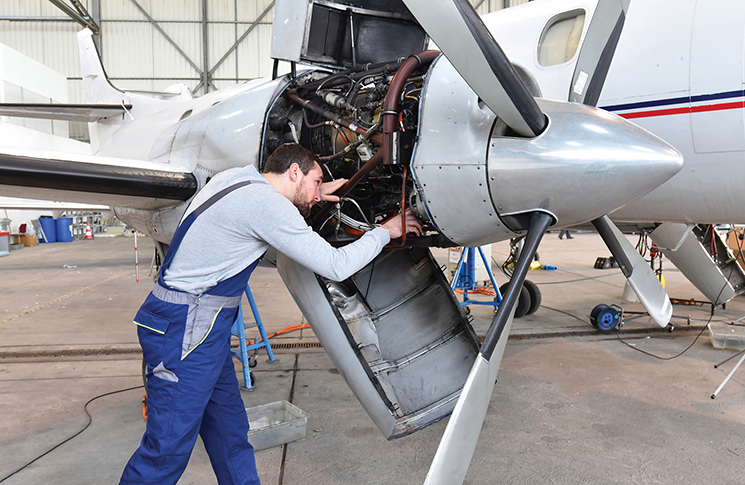
- A LAME completes maintenance on an aircraft with a MTOW of 4,500 kg. The work was carried out by another person under the LAME’s direction. Which statement correctly reflects the LAME’s obligations under CAR 42U and 42Z?
- the LAME may certify the maintenance only if they personally carried out all tasks
- the LAME may certify the maintenance provided they are authorised and satisfied the work complies with applicable airworthiness requirements
- the LAME may certify the maintenance only if CASA has approved the delegation
- the LAME may not certify maintenance performed by another person
- Maintenance affecting flight controls is completed on an aircraft below 5,700 kg. A minor unrelated defect is identified that is permitted to be deferred under the aircraft’s approved maintenance data. What is the correct regulatory action under CAR 42V?
- issue a maintenance release only after all defects are rectified
- defer the defect verbally with the pilot and issue the maintenance release
- record and defer the defect in accordance with approved data and issue the maintenance release.
- ground the aircraft until CASA approval is obtained
- Which of the following statements about a maintenance release issued under CAR 43 for an aircraft below 5,700 kg is correct?
- it certifies the aircraft is defect-free
- it certifies all scheduled maintenance has been completed for the next 100 hours
- it certifies that maintenance affecting airworthiness has been completed in accordance with applicable requirements
- it certifies the aircraft has been inspected and approved by CASA
- An aircraft below 5,700 kg has completed maintenance and a maintenance release has been issued. A deferred defect is listed in accordance with approved data. Under CAR 42ZB, when may the aircraft be operated?
- only if the deferred defect does not affect safety and is recorded on the maintenance release
- only if the pilot in command accepts the defect in writing
- only after CASA approval of the deferred defect
- only for private operations
- Which combination of actions best satisfies the intent of CAR 42U–42ZB (Division 4) with respect to continued airworthiness?
- maintenance certification, CASA oversight and pilot acceptance of defects
- authorised maintenance, correct certification, defect control and issue of a maintenance release
- approved maintenance data, scheduled inspections and test flights
- registered operator control and LAME supervision only
- The US FAA produces AC43.13-1B and FAA AC43.13-2B Acceptable Methods, Techniques and Practices (for Inspections and Repairs, and Alterations respectively). In Australia:
- AC43.13-1B/2B can be used on aircraft under 5,700 kg even if the manufacturer specifically excludes its use
- AC43.13-1B/2B can be used on pressurised and non-pressurised aircraft under 5,700 kg
- minor repairs appropriately carried out under AC43.13-1B/2B require CASR subpart 21.M approval.
- minor repairs appropriately carried out under AC43.13-1B/2B do not require CASR subpart 21.M approval
- Which of the following is correct about composite structures?
- composite structures are 2 or more materials that are combined to form a much stronger structure than the original material itself
- composite structures are only manufactured from non-metallic material
- composite structures always have a matrix in liquid form
- the concept of composite materials in aviation and outside aviation is relatively new
- What is the main advantage of using composite structures compared to aluminium structures in aircraft?
- they have a high strength-to-weight ratio
- they are easier to detect damage visually
- they have unlimited fatigue life
- they have increased electrical conductivity
- Two types of fiberglass cloth are commonly used in composite structures or repairs. Which of the following is correct?
- e-glass cloth is normally lighter than most other fiberglass materials
- s-glass cloth is not used in non-structural applications
- e-glass is not used for reinforcement
- s-glass is used where a very high tensile strength is needed
- In aircraft composite structures, the primary function of the matrix material (e.g. resin) is to:
- carry the majority of the tensile load
- protect the fibres and transfer loads between them
- prevent electrical conductivity
- increase fibre stiffness
- Which inspection method is most suitable for detecting internal delamination in composite aircraft structures?
- visual inspection
- dye penetrant inspection
- eddy current inspection
- ultrasonic inspection
- An advantage of borescope inspection over a differential compression test when assessing piston engine cylinder condition is that a borescope inspection:
- provides a quantitative measurement of cylinder sealing
- can be performed without removing spark plugs
- allows direct visual assessment of internal cylinder components
- cannot identify leaks in the induction and exhaust systems
- During a differential compression test on a piston aircraft engine, a low cylinder reading accompanied by air noise from the exhaust outlet indicates leakage past the:
- piston rings
- exhaust valve
- intake valve
- cylinder head gasket
- When inspecting valves with a borescope, how is a burnt exhaust valve most likely to appear as?
- a uniformly coloured valve face
- light surface pitting around the edge
- a localised area of erosion or missing material on the valve margin
- a polished valve seat with no carbon deposits
To view the answers, go to the next page using the page navigation buttons below.