
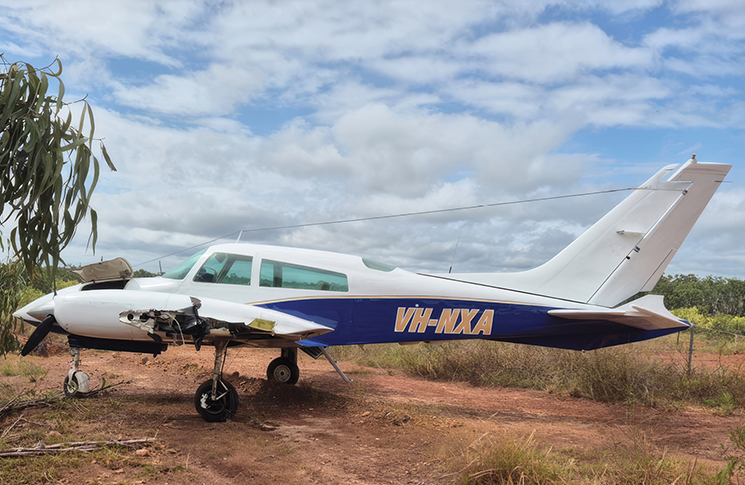
The pilot of a Cessna 310R was pushing hard on the foot brakes as the aircraft rushed down the runway towards the opposite threshold. But their sustained effort could not save the landing – the aircraft ran off the end of the runway and hit a perimeter fence.
Although the left wing was substantially damaged, the pilot and 4 passengers were not injured. The subsequent investigation by the ATSB revealed problems with maintenance, weight and balance and the approach.
Like other similar events, this incident was not due to just a single factor.
Landing long
The morning of 29 May 2025 in Darwin was typical – warm air and scattered cloud. However, for the pilot of the Cessna, the day was different. This was their first flight in command of a multi-engine aircraft.
When the pilot arrived at the aircraft, a licensed aircraft maintenance engineer (LAME) and an apprentice were working on the brakes. The pilot went away to do flight planning and fuel calculations and, when they returned, the engineers were gone and the aircraft appeared to be serviceable.
The pilot decided to test the brakes after the repairs. With the engines up to 1,700 rpm, the brakes should have been able to hold the aircraft stationary. Instead, it crept forward. However, it stopped when the pilot pressed harder on the brake pedals.
The pilot went to the terminal to collect the passengers for the 330-mile flight to Lake Evella. They asked the passengers for their weight and that of their luggage but did not use scales to confirm. However, the calculation of weight and balance was within limits.
Approaching Lake Evella aerodrome, the pilot lined up for a straight-in visual approach to runway 08. The wind was from the right quarter, south-east at 8 to 10 knots. The approach was slightly high and fast.
When the pilot flared the aircraft, it sat in ground effect and floated. Instead of touching down near the threshold as usual, the aircraft landed about 400 metres further on, almost halfway down the runway.
With about 500 metres of runway remaining, the aircraft should have been able to stop safely. But, despite the pilot increasing pressure on the brake pedals and shutting both engines, the aircraft continued. The passenger seated next to the pilot called for everyone to ‘brace’ just before the left wing hit a fence post almost 200 metres past the runway.
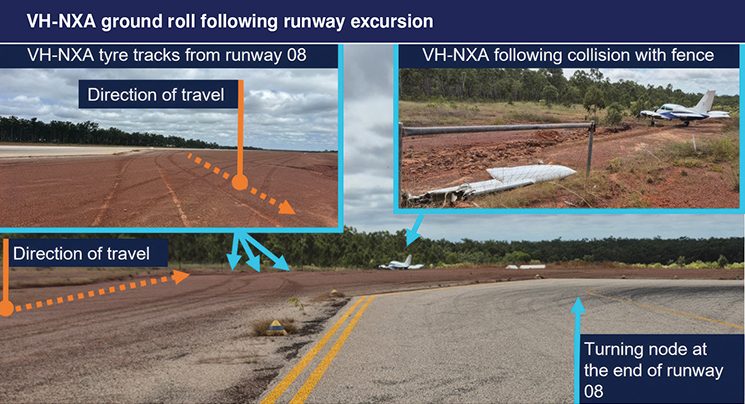
Soft pedals
Even though the long landing had reduced the landing distance, the brakes should have stopped the aircraft safely. The post-accident inspection confirmed this suspicion, revealing the right brake fluid reservoir was empty and the brake pads were worn beyond acceptable limits.
During earlier maintenance, leaking brake calipers were repaired. The LAME expected the brake pads would be replaced because this was routine practice.
‘The authorising LAME later stated that new brake pads should have been installed before the calipers were refitted to the landing gear, however, they did not verify this had occurred,’ the ATSB report said. ‘They reported the brake pads were last changed on 15 December 2023 and had 494 landings prior to the occurrence.’
This communication breakdown reinforces the point that pilots cannot assume the work was done by referring only to the maintenance release.
Previous problems
The aircraft underwent a post-maintenance verification flight the day before the accident flight, with a flight instructor and the occurrence pilot as an observer. ‘After the flight, the instructor advised the LAME by text message that the brakes felt “spongy”,’ the report said.
‘On the morning of 29 May, before the accident flight, the LAME checked the aircraft brakes, reporting they were acceptable, even though the brake pedal travel felt more than usual. The decision was made to bleed the brakes to remove any air or water in the brake lines and top up the brake fluid.
‘After the accident, the LAME found the right brake reservoir was empty, with evidence of hydraulic fluid leakage on the right tyre, however, they stated that the right brake disc was serviceable. They identified that the right brake pads were “heavily worn”.’
Official conclusions
The holes in the ‘Swiss cheese’ were evident: worn brake pads, high approach speed, high approach profile.
The report concluded the pilot conducted the approach above the standard profile and crossed the threshold above the normal approach speed. ‘The aircraft’s additional airspeed crossing the threshold likely resulted in a prolonged float in ground effect,’ it said. ‘This resulted in the aircraft touching down 402 metres beyond the runway threshold which was the pilot’s usual aiming point.
‘Due to the worn right brake pad and the lack of hydraulic fluid in the right brake system, there was insufficient braking capacity available to prevent a runway overrun following the landing and the application of brakes about halfway along the runway.’
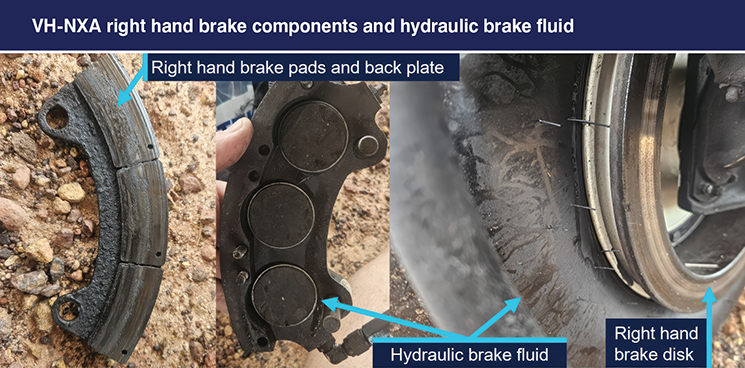
Making changes
In response, the aircraft operator said all references to the use of self-reported passenger weights for weight and balance calculations would be removed. The operator also said the electronic weight and balance system would be amended to reflect the correct maximum weights for the aircraft before its return to service.
The safety manager briefed company personnel about the proposed changes and advised existing pilots that actual weights for passengers must be used for all flights.
The maintenance organisation advised that, following the occurrence, a debrief with maintenance personnel highlighted the importance of increased vigilance during inspections conducted after maintenance tasks, and that the organisation also identified opportunities to improve internal processes following similar occurrences.
Breaking it down
The incident at Lake Evella was not due to a single failure. Like many other similar events, it was a combination of decisions and assumptions – maintenance expectations, familiar habits and a slightly higher speed and approach. Individually, they were manageable, but not when they combined.
Read the report
atsb.gov.au
Investigation AO-2025-024