

When Laurie Shaw spoke to Flight Safety Australia, he was in the tired-but-wired state familiar to aircraft captains after a long and challenging flight. ‘We were dodging typhoons and storms all the way from Hong Kong to Fiji. Thing is, the airspace is busy these days and you don’t always get the (flight) levels you want, so we were always working.’
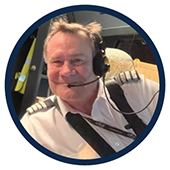
Shaw has a metaphorical runway in sight, bringing his 25,000-hour piloting career to a close as a long-haul captain with Fiji Airways. By the end of this year he will command his final revenue flight. His 37 years as an airline transport pilot began as a first officer with Ansett Airlines of Australia. He held captaincies with Cathay Pacific Airways and Malaysia Airlines, on types including the Fokker 50, Boeing 737-200, Boeing 747-200/300/400, Boeing 777-200/300, Airbus A330, A340-300/600 and most recently, the A350.
‘To use a favourite Fijian word, I am very “blessed” to be in the left-hand seat of an A350 and finish flying on my terms,’ he says. But while his career in the flight levels is near its end, his other calling shows no signs of fading.
Over the past 15 years, Shaw has helped shape aviation’s approach to wellbeing and is among those who have pointed out the link between individual wellbeing and operational safety. He helped found HIMS Australia. It is a collaborative body of representatives from professional pilot associations as well as aviation medicine and addiction medicine specialists.
HIMS stands for human intervention motivation study, a project run by the US Air Line Pilots Association since the 1970s. The original HIMS project was designed to test a program for dealing with the presence of alcoholism among pilots. It determined a recovering pilot’s ability to function effectively was best observed by fellow pilots.
It has evolved into a worldwide, aviation industry supported, confidential peer mentoring program. It is designed to support airline pilots in recovery and rehabilitation from addiction or substance dependence and help them make a safe return to work.
HIMS Australia was formed after the 2002 crash of a Cherokee Six off Hamilton Island, Queensland that killed 6 people. The pilot of the chartered aircraft was under the influence of alcohol and cannabis and the investigation report recommended the introduction of an alcohol and other drug testing program for safety sensitive aviation personnel.
HIMS Australia was formed after the 2002 crash of a Cherokee Six off Hamilton Island, Queensland that killed 6 people.
In 2019, Shaw was instrumental in launching the Peer Assistance Network (PANHK) for Cathay Pacific Airways’ pilots, marking a significant advancement in peer support initiatives.
When his flight bag goes into the wardrobe for the last time in late 2025, Shaw will focus on helping establish best practices for mental health and wellbeing across the aviation industry.
He most recently consulted with Airservices Australia and is in early discussions with other aviation organisations, including Fiji Airways, to develop comprehensive peer support and wellbeing programs. His goal is an aviation workplace where pilots, ATC, engineers, cabin crew and firefighters feel safe sharing their problems, are supported to return to their duties when they’re ready. He acknowledges this is huge task. ‘How do you eat an elephant? One bite at a time,’ he says.
‘As I look back, I’m very grateful to the leadership at Cathay Pacific Airways and Airservices Australia for placing their trust in me and in the remarkable people I’ve worked alongside; this has helped shape sustainable peer support systems that are now embedded in those organisations.’
How did you start in aviation?
My dad was a private pilot. My uncle was also a private pilot and he used an aircraft to do mustering. We’re talking about the Queensland bush here – Charleville, Windorah, Birdsville. I just grew up with aeroplanes and when I got my commercial licence, I worked in outback general aviation and charter, building the hours that led to me joining Ansett in 1988.
Why have you made wellbeing in aviation your personal focus?
I have seen many colleagues and one close friend struggle with addiction and mental health challenges over the years. With the friend, in particular, I felt I had to do something. It just sort of evolved from there. But this is not about me. I’m just a cog in a wheel. I see it as systems thinking, which is what we do as pilots. The systems were letting people down, so we had to work with the systems to fix it.
The systems were letting people down, so we had to work with the systems to fix it.
What is wellbeing in the aviation context?
What’s wellbeing? How long is a piece of string, is my answer. But let’s take it to the neurobiological core and just say it’s all about homeostasis, stability. If your nervous system is in balance, that means optimal cognitive function and if your cognitive function is optimal, then so is your safety. That ability to get back into a balanced state is the definition of resilience. If you are overwhelmed by circumstances or coping by addiction, then you’re out of balance, not performing to your potential, and not as safe as you need to be.
Are peer support services relevant for aviation personnel who are under stress but not using drugs or alcohol?
It didn’t take me long to realise that addiction or substance misuse is a symptom, not the cause. A system that uses people and throws them away is the issue. We’re talking about culture, fatigue, stress and training, and how they interact as a system; Dave Snowden – creator of the Cynefin Framework and expert in applied complexity – describes it as ‘a network of coherence’.
Or, if you prefer Archbishop Desmond Tutu’s metaphor, we’ve got to stop plucking people out of the river and go upstream to find out why they’re falling in. That’s what we’re trying to do, without judgement. To integrate wellbeing into the system, to protect its human components.
Addiction or substance misuse is a symptom, not the cause.
So, is wellbeing another form of aviation maintenance – on people instead of machines?
Exactly. There’s a great quote from William Patterson, the first president of United Airlines. He said, ‘In the air transport business more than any other, the human element is everything. That big plane in front of the hangar is only as good as the man who flies it, and he is only as good as the people on the ground who work with him.’ Expand that to include women and it’s still true.
Over the past 50 years we’ve become driven by KPIs (key performance indicators) and numbers. That’s true in all sorts of industries, including aviation. We’ve overlooked the human element. But it’s coming back. The International Organisation for Standardisation published ISO 45003 in 2021. It deals with managing psychological health and safety at work and, among other things, looks at workloads, communication practices, leadership behaviours and organisational culture. ISO 45003 is only a set of suggested guidelines, but it does place these subjects on the agenda for organisations. The Australian Government signed off the latest iteration in 2024.
Why the emphasis on peer support?
A workplace is a social setting, and we are social beings. And among peers there is trust and respect. In aviation, where most of us love our jobs, work is the best cure – being back in the ecosystem, back with your mates. I maintain that someone who has a real desire to be well, as most of us do, is better off back in the workplace than sitting in the naughty corner for 12 months or more.
COVID-19 swept away a sense of security in the industry that took decades to develop.
What is the greatest reward of your work in peer support?
For me it’s to see that thing that lives inside us, to watch people emerge from the depths, then watch them thrive – that is miraculous. We hear so much about post-traumatic stress, but with the right support, there’s also post-traumatic growth.
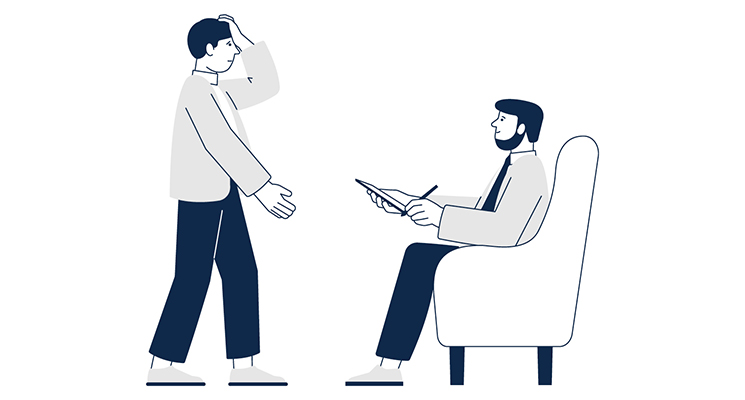
What effect did the COVID-19 pandemic have on wellbeing in the aviation industry?
It’s still reverberating. I’m hearing anecdotally there is still a lot of anxiety related issues and an uptake in drug and alcohol use. COVID-19 swept away a sense of security in the industry that took decades to develop. Among those who lost their livelihoods overnight, COVID-19 seems like yesterday, even though it was 5 years ago, and there’s a sense of ‘When’s the next one going to happen?’
Metaphorically, your aviation career is on short final. What about your wellbeing?
I’m stepping into a liminal space – excited but wondering what’s next. Like any aviation career, there have been ups and downs, with redundancies and employers going bust but I’m ending my flying in a happy place. Fiji Airways is a great little airline, like an aero club in the best sense of the word. I do mainly west-coast USA. People who don’t do those routes often would call it a high-stress environment, but I love flying into Los Angeles or San Francisco. It’s what’s termed ‘eustress’ or ‘good stress’. High volume, fast. When you’d coming into land at San Francisco on 28 left or right, and ATC is simultaneously clearing traffic to depart on 01 right or left, you think, ‘Wow, these guys are good at their job!’ with awe and wonder.

Further reading
View a range of pilot wellbeing resources.
Visit HIMS Australia for information about their supportive mentoring program for pilots with alcohol and other drug problems.
If you or anyone you know needs help, contact Lifeline (24 hour crisis line) on 131 114.