
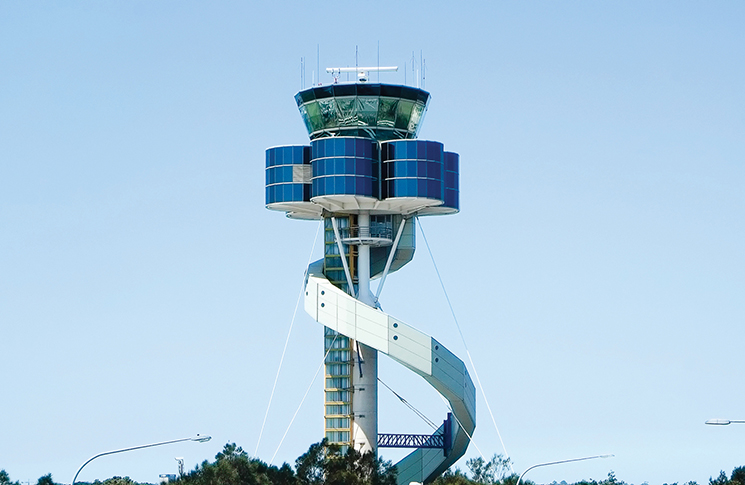
The radio clicks. Silence. Then a voice, hesitant, unsure, almost apologetic.
‘Tower … um, [call sign], inbound from the west, request … join … er, the circuit … ‘
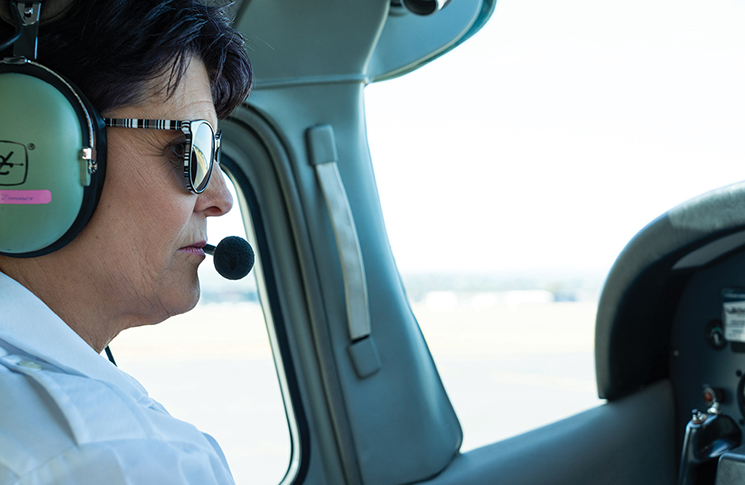
Every instructor knows that voice. The tremor that sneaks in when a pilot is dealing with unfamiliar controlled airspace (CTA). Whether it’s rolling in from the training area for the first time, joining a busy arrival sequence or lining up to depart from a towered field they’ve never flown before, the nerves show up.
From the right-hand seat, they see it all: the mental overload, the white-knuckle grip and that silent, desperate hope that ATC will ‘go easy’.
Why unfamiliar airspace unnerves us
There’s something about controlled environments that cranks up the pressure.
- Arrivals: the workload spikes as you try to stay ahead of the aircraft, brief the entry and still sound sharp on frequency.
- Ground operations: the maze of taxiways and hold-short points feels like Level 10 Tetris.
- Departures: the stress of getting it ‘just right’ builds as you juggle clearance readbacks, flows and timing your roll into the traffic picture.
It’s not lack of skill, it’s human wiring. Our brains don’t like novelty layered on top of high stakes. And in controlled airspace, the brain is battling 3 forces at once:
- Novelty: new airspace layouts and new radio phrases demand more processing power.
- Perceived judgement: the sense that controllers and other pilots are listening – and judging.
- Time pressure: the belief that you need to respond instantly, even when you don’t.
Recognising those forces, and deliberately slowing the experience down, is how you keep your brain in command mode instead of in survival mode.
From the right seat: what instructors hear
Cognitive overload and the fear of looking unprofessional are universal for high-hour pilots, brand-new PPLs and everyone in between. No one is immune.
- On arrival: pilots get so focused on the inbound clearance that they miss altitude changes or forget to re-brief the approach.
- On the ground: they hesitate during taxi instructions, unsure of routing, afraid to ask for clarification.
- On departure: calls are rushed. Flows are skipped. The urge to ‘get out of everyone’s way’ overrides calm, methodical execution.
Controlled airspace is designed to keep us safe but it only works when we show up prepared, present and ready.
Managing the arrival
The first time you fly into a busy controlled aerodrome, the arrival feels like trying to merge onto a freeway during peak hour – but the cars are flying at you at 140 knots.
That’s where Gerard Lappin, Grade 1 Instructor at Latrobe Valley Aero Club and ag pilot for Aerial Extras, reminds pilots to slow the whole experience down. ‘Don’t let the aeroplane outrun your brain,’ he says. ‘Slow down the aeroplane to keep up with what’s being read back. It’s a “readback” not a “remember back.” Create your own shorthand. I do it in my own aircraft. When you have a consistent way of writing down a clearance and reading it back, everything becomes easier.’
Talk through the arrival out loud.
He’s also quick to point out a common trap. ‘People often read back a bunch of things they shouldn’t – just stick to the instruction,’ he says.
And underlying it all is clarity. ‘All communications and instructions should use standard phraseology. The standards are all in the AIP.’
From the instructor’s seat, here’s what works:
- Plan before you point the nose: visualise the airspace, the entry points and the altitudes before you’re anywhere near the boundary.
- Slow down the mental clock: talk through the arrival out loud; slower speech equals clearer thought.
- Stay flexible: if ATC changes your entry point, you’ll adjust without the panic because you’ve rehearsed the picture.
Navigating the ground
Once you’re on the ground, the pressure doesn’t let up, it just changes flavour. Taxiway diagrams suddenly look like a 1,000-piece puzzle you didn’t sign up for.
The pilots who handle this phase best? The ones who treat it like another phase of flight:
- Brief the taxi route: trace it on the diagram until you can see it in your mind. Treat the ERSA as your bible when flying in or out of unfamiliar aerodromes and when planning. Look up the runways, taxiways and local procedures. If it helps, draw yourself a quick mud map.
- Use the sterile cockpit rule: no non-essential chatter until you’re clear of the active areas.
- Don’t be afraid to stop: if something’s unclear – pause the aircraft, clarify and then move.
Paper and prep will get you far, but technology can make the ground phase even smoother. That’ where Gerard Lappin’s advice kicks in.
‘Use every device at your disposal and have them set up before you move,’ he says. ‘When using GPS, be familiar with your technology. Know how to activate a leg, go “direct to”, drop a dot on the map and submit or set up a flight plan in your system.’
Owning the departure
Departures in controlled airspace can be deceptively stressful. Clearances stack up, the frequency is busy and suddenly the brain starts to rush.
‘I always recommend asking for taxi and airways clearance separately,’ Lappin says. ‘Ask for your airways clearance first, you can even get it by phone if you want. That way, if your clearance is different to your flight plan you haven’t locked and loaded everything into the GPS. Or if ATC says you can’t get that routing, you can amend it before you taxi.
‘Once you have your clearance, ensure your GPS and charts are correct and carry out your checks – and only then ask for your taxi clearance.’
The key is slowing everything down:
- write down your clearance – don’t rely on memory
- read it back slowly and clearly
- visualise the departure sequence before you push the throttle forward.
Train for the stage
From an instructor’s perspective, the real transformation happens when pilots stop chasing perfection and instead focus on being calm, deliberate and precise.
Controlled or unfamiliar aerodromes don’t have to rattle you if you train for them the right way.
Lappin says he has seen the most experienced pilots fly inbound to an airfield and toward the wrong runway. ‘Usually, the controllers are calm enough to say, “That’s not quite right”.’
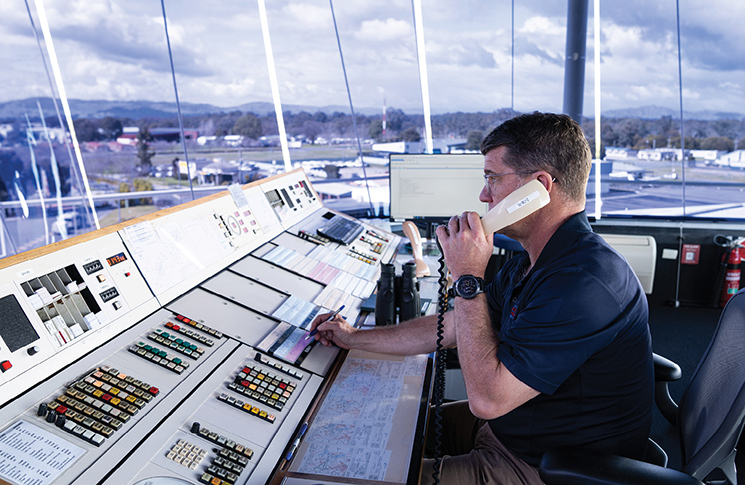
His message is simple: use CTA to your advantage. ‘CTA is easier than OCTA [outside of controlled airspace]. These guys are here to help all pilots. Ask them for help if you need it.’
Taxiway diagrams suddenly look like a 1,000-piece puzzle you didn’t sign up for.
And preparation doesn’t end when the engine stops, he says, ‘At the end of every flight, take the time to analyse it. There’s never a perfect flight. Something will always go off plan, sometimes it’s just a readback. Whether you’re new or experienced, remember you’re human. For newer pilots, get a scanner and listen to readbacks.’
That reflection links back to the rules. ‘I hear things on the radio all the time that aren’t in the AIP,’ he says. ‘The excuse is often, “That’s how we’ve always done it.” But that doesn’t mean it’s right. I’m particular about this. The AIP is your friend, so get familiar with it.’
Finally, there’s the art of talking to the tower. ‘Talk as quickly as you want to hear. If you talk slowly, the tower will usually reply slowly too. I remember a pilot who once said, “Hear how slow I talk? That’s how slow I listen” It’s not a race but be prepared for what you’ll say so you’re not fumbling.’
When you practise that structure, shaky radio calls disappear. Situational awareness sharpens. And confidence grows, because it’s earned, not guessed.
Your cue
If you’re heading into unfamiliar controlled airspace soon, remember this:
- precision doesn’t mean speed
- confidence isn’t ego
- preparation and calmness are your superpower
- plan until the picture is clear
- speak slower than you think you should
- and don’t be afraid to ask for clarification – ATC would rather repeat themselves than clean up a runway incursion.
Controlled aerodromes and operations is one of the special topics on our Pilot safety hub. Refresh your knowledge at casa.gov.au/pilots