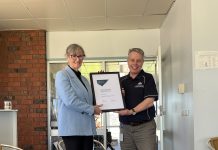


Paul Daff is Chief Executive Officer of the Royal Victorian Aero Club (RVAC) and brings more than 30 years’ experience to his role. After nearly 3 decades working in senior positions within the aviation industry including for major airlines in Australia, New Zealand, Singapore and Vietnam, Paul possesses both deep experience and fresh perspectives.
Flight Safety Australia sat down with Paul to discuss how leadership, safety culture and the evolving role of safety management systems (SMS) affect one of Australia’s oldest flying organisations.
Thanks for talking with us today, Paul. To start, can you tell us about the Royal Victorian Aero Club and its history?
The RVAC is a member‑based club with a proud history – we’re 112 years old this year! As such, we are a major player in Australian aviation since the early days of flight in this country.
The club began by training pilots for the First World War, even before Australia had its own air force! Since then, the club has produced scores of pilots, including some of Australia’s most prominent female aviators such as Freda Thompson and Jean Burns. Our current club patron is Deborah Lawrie AM, who was the first female airline captain in Australia.
The club has about 600 members today and operates a flying school training the next generation of Australian pilots.
In your role as CEO, how do you ensure safety is embedded as a core organisational value, rather than treated as an add‑on, and what strategies do you use to model authentic safety leadership that encourages staff to follow suit?
Well, safety leadership begins with resourcing, culture and a strategy that is aligned with the organisation’s core values. Safety should be one of your core values regardless and should never be seen as simply an ‘add-on’.
Safety should be embedded into every process, to the extent it simply becomes ‘who we are and what we do’ and is not seen as an obligation that imposes on day‑to‑day operations. If leaders genuinely believe in and model safe behaviours, staff will immediately recognise that authenticity and respond to it.
How have you led the shift from compliance-driven safety to a culture where everyone – pilots, ground crew, maintenance personnel, office staff and volunteers – feel responsible for managing risk?
Because of the organisation’s long history, safety was already deeply ingrained in the club’s processes and functions, so I was very fortunate that it had an existing SMS when I came on board. So rather than creating one from scratch, I saw my job as strengthening, improving and maintaining that safety culture.
At the club, we try to learn as much as we can from internal reports, as well as ATSB and CASA reports too. Another thing we try to do is introduce student pilots to safety reporting from their very first day of training. Even private members, who technically don’t fall under the flight training school’s SMS, are included in our safety reporting briefings, and we follow up to ensure what we’ve covered has stuck.
By highlighting the importance of safety reporting early, among other safety initiatives, I believe we instil the concept of ‘just culture’, especially as some longtime members have not historically operated within such ways of thinking. Consistency is key! The principles of just culture must be applied uniformly, over long periods of time, so trust can be built. That will encourage people to work safely and report safety issues without fear of reprimand or punishment.
And it’s not just pilots and club members who benefit from this early guidance – we apply it across the organisation, with our operational and support staff getting involved as well. They’re also encouraged to take part in training days and safety briefings, where they learn how to identify hazards and report them confidently.
Safety is a whole-team effort; with everyone singing from the same safety song sheet, it makes for a much more conducive working environment.
You’ve highlighted that reporting is crucial to maintaining a strong safety culture. Can you share the most effective strategies you’ve used to encourage staff, students and members to report hazards or mistakes without fear or blame?
We regularly conduct safety training for instructors and topic‑specific safety seminars for students and members, covering areas such as Moorabbin Airport procedures, weather and rules for flying in various meteorological conditions.
We even highlight some emerging concerns that we’ve identified, like the challenges associated with ageing pilots. We also put a lot of our safety notices and updates into the club’s fortnightly newsletter.
We make available reporting mechanisms which are designed to be straightforward to understand, easy to find and simple to complete. It’s located in the club’s booking and flight‑management system, where it is prominently displayed on the main page.
However, even with all this, encouraging members to report openly can take time, particularly for those not accustomed to operating in a just culture environment. Embarrassment after making a mistake is common, but consistency and supportive follow‑up help build confidence among our members.
What role do you see leaders in smaller aviation organisations playing in the evolution of SMS, particularly as operations and risks continue to change?
Leaders in small general aviation organisations must embed SMS from day one, because if you attempt to retrofit safety after the fact, it is difficult and can be a costly and risky exercise. When an SMS works as it should, no-one notices, but when it fails, the consequences are immediate and significant; it can destroy businesses and destroy lives.
I have a saying when it comes to sitting down and developing safety principles – you should plagiarise freely, that is, you don’t need to reinvent the wheel. You can learn from the experience of others, apply safety findings from ATSB reports and draw upon the shared knowledge and experience from comparable organisations from across the general aviation community.
Any final advice you can give to smaller operations working to implement their SMS?
The final thing I’d say is that smaller operators need to make sure they’ve got the right capability for the future. That means putting time and resources into developing the next wave of safety leaders who can handle whatever challenges come their way.
In many cases, safety managers get their start in the industry working for smaller organisations like ours. As their skills grow, it’s only natural they may move on to bigger companies with larger, more complex aircraft and operations. That’s why building a succession plan into the safety team is so important. You don’t want to be left in a position where one person walks out the door and takes all that knowledge and experience with them.
Thinking long‑term ensures continuity and helps keep your SMS running smoothly.
Further reading
Visit our dedicated SMS webpage. You’ll have free access to a range of tools, templates and resources, such as: