
As the aviation industry enters the final stages of the flight operations rules transition, practical, easy-to-use tools matter more than ever.
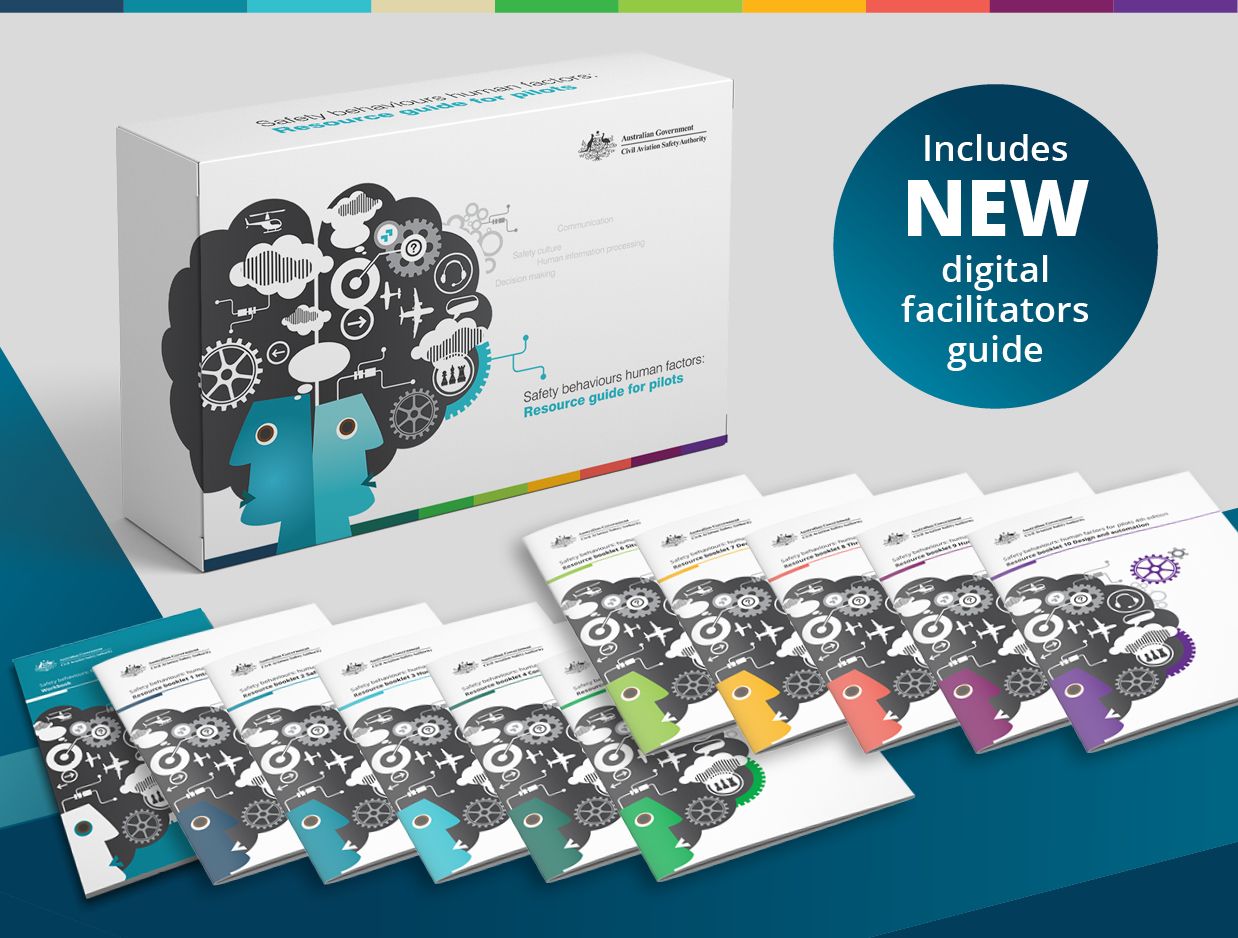
That’s where the updated Safety behaviours: human factors for pilots resource kit comes in. Now in its fourth edition and supported by a new digital facilitator guide, it helps operators and pilots build human factors and non-technical skills (HFNTS) into everyday operations.
It can also be used as an acceptable means of compliance within an operator’s HFNTS program.
Chace Eldridge, CASA Aviation Safety Advisor says, ‘Regulatory transitions introduce risk to any operation – systems change and expectations evolve. Strong HFNTS capability enable personnel to identify emerging hazards, communicate clearly and manage risk as the operation adapts.’
Human error will always be part of aviation but understanding what influences performance helps pilots manage risk and make sound decisions under pressure.
What’s in the kit
The resource kit includes:
- 10 focused booklets
- a hands-on workbook
- a new digital facilitator guide with scenario-based videos and expert interviews.
Together, they cover core human factors and HFNTS topics including communication, teamwork, situational awareness, decision making, threat and error management, and automation.
The workbook uses case studies and exercises to prompt reflection on real-world situations, supporting individual learning or structured training.
Turning theory into real world practice
‘One of the most common questions we hear from pilots is how to take human factors theory and apply it in real-world operations. This kit answers that with practical, scenario-based activities, and a workbook that turns everyday flying tasks into structured learning through self-assessments, guided questions and prompts for reflection.’
It helps pilots tangibly improve the non-technical skills they use on every flight with the same intent they bring to technical training’ says Chace.
Why the facilitator guide makes a difference
The new digital facilitator guide is a significant enhancement, giving operators flexibility in how they deliver training – in a classroom, small groups, or self-paced learning.
For organisations, this means:
- no need to build training from scratch
- more engaging sessions with interactive exercises and videos
- consistent, repeatable delivery aligned with expectations
- a scalable option for small and large operators.
Chace also mentions that ‘For many operators, the biggest challenge in this transition is the resources (time, personnel, budget) to understand new requirements and then design and deliver training to meet them. The updated kit and facilitator guide are designed for simple implementation and to be scalable as your HFNTS training system evolves.’
Connecting HFNTS to your SMS
HFNTS isn’t a nice to have – it supports an effective safety management system (SMS).
Skills like communication, decision making and situational awareness influence how hazards are identified, risks are managed and safety is maintained.
When these skills are consistently applied, operators often see:
- more effective hazard reporting
- stronger threat and error management and decision making under pressure
- better team coordination and a more resilient safety culture.
Using the kit for HFNTS training helps demonstrate that human performance risks are being actively managed – an expectation under the flight operations rules.
Ready to use, ready to scale
Materials are available as free downloads, and printed versions (excluding the facilitator guide) can be ordered through our online store. There’s no need for costly development—operators can start straight away.
Explore the full suite
With the 2026 regulatory milestones approaching, now is the time to integrate practical tools like this into your training and SMS.
Strong safety behaviours don’t happen by accident – they’re built through consistent practice, the right tools and clear leadership.
Operators can:
- download the human factors for pilots kit and facilitator guide
- visit the HFNTS webpage
- contact an aviation safety advisor for advice.