
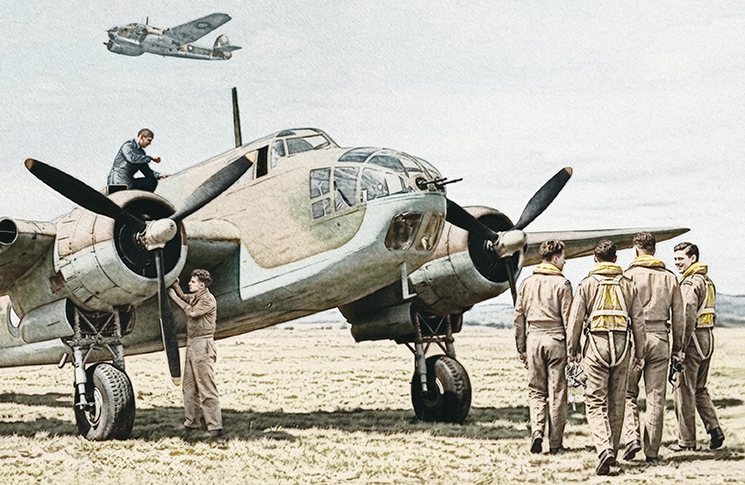
Bristol Beaufort, A9-409
Sea near Woodside, Victoria
5:15 am, Thursday, 7 October 1943
You cannot, you must not, judge the past by the present; you must try to see it in its own terms and values, if you are to have any inkling of it.
– George MacDonald Fraser
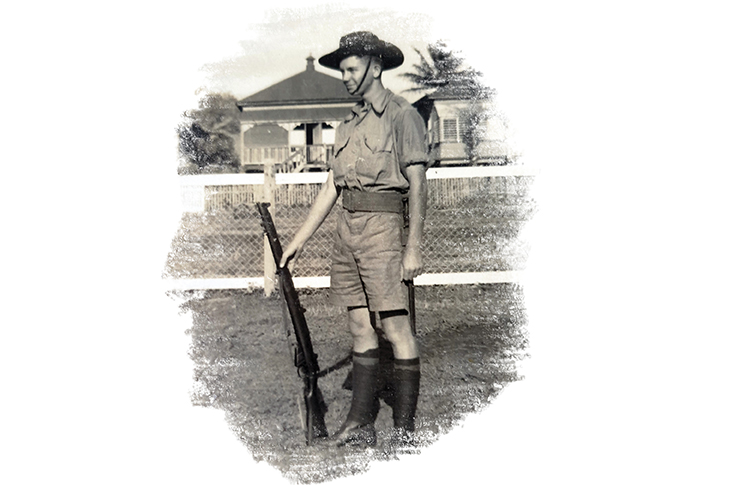
The beds they would have tumbled into later that morning stayed neatly tucked and folded to a military standard. Four Australian airmen had disappeared into the waters of Bass Strait, when almost no-one was looking.
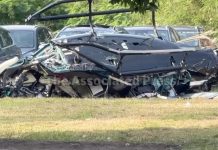
About 15 minutes before sunrise on a cold October morning, Cecelia Paterson, who lived in the small East Gippsland town of Woodside, heard an aircraft flying over. Soon after, she noticed a red glow over the sand hills on the nearby beach and heard an explosion. ‘On proceeding to the beach, she saw two grey/black clouds of smoke,’ a contemporary Royal Australian Air Force (RAAF) document says.
Mrs Paterson was the only recorded witness to the deaths of a bomber crew whose journey to fight the forces of tyranny never left Australia. A search found an oil slick 2 km offshore from Woodside Beach, presumed to be from A9-409, which had taken off for a navigation exercise late on Wednesday night. This was confirmed when the remains of wireless operator Gordon Sexton, 19, were found on the beach 3 days later.
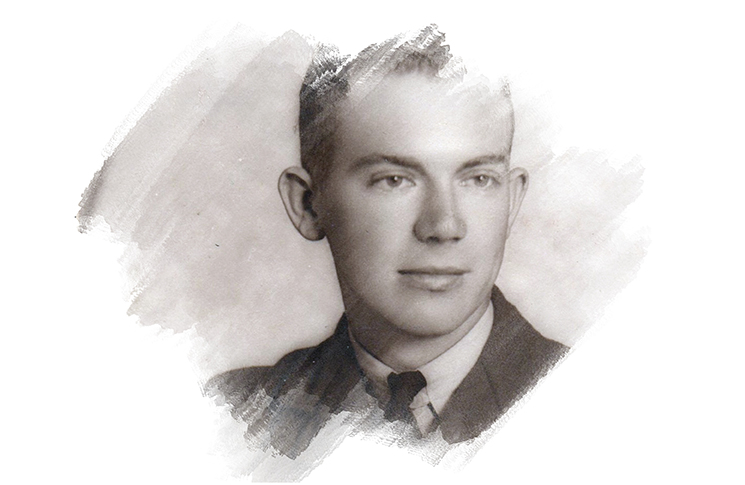
The others have no graves. They were pilot Laurie Smith, aged 22, air gunner Ronald Butler, 20, and navigator William Rogers, 19. Their deaths were 4 of the Second World War’s average daily death toll of 27,000.
School of hard knocks
Pilot and aircrew training during the war was tough-minded to the point of being shockingly dangerous by the standards of the 21st century. Three things made it so. There was an urgent need to produce trained aircrews, combined with an influx of young men in their prime risktaking years, most of whom had no aviation experience. The third factor was an air force which was swelling from its pre-war establishment of 4,000 personnel to its 1945 size of 140,000.
This frantic growth meant inexperience was not confined to the student volunteers – organisational memory was in short supply. And the priority was producing sufficient numbers of aircrew, rather than shepherding trainees through the program with minimal losses. An example of this philosophy was 1 Operational Training Unit, East Sale (1OTU). ‘Due to the demands of the Empire Air Training Scheme, 1OTU worked virtually 24 hours a day,’ an official history says.
Tool of war: the Bristol Beaufort
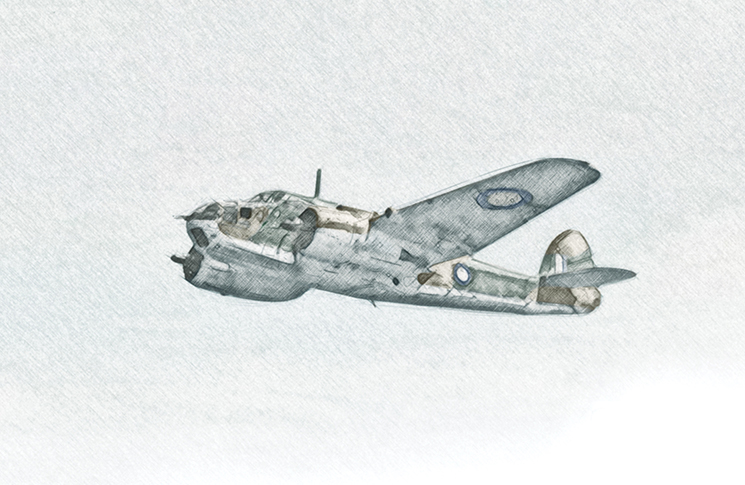
Early in the Second World War, the Australian Government realised its air force would need a locally produced aircraft for the coming Pacific campaign that seemed likely. This design would have to be modern but capable of being produced by Australia’s vestigial industrial sector. It chose the Bristol Beaufort, a torpedo-bomber evolution of the Bristol Blenheim bomber.
As the Australian War Memorial summarises:
Making the Beaufort was an enormous effort for Australia. Each bomber needed 39,000 carefully manufactured parts. Drawing on a tiny industrial base and few skilled workers, the Beaufort Division of the Department of Aircraft Production (DAP) grew until it occupied 7 large factories in 3 states. DAP had 8,500 employees, of which one-third were women. Tens of thousands more people worked for the 600 private subcontractors.
The RAAF took delivery of its first Beaufort in September 1941 and gave it the type number A9.
I put my feet up on the dash and I pulled the throttles right off and I hauled that stick back as hard as I could.’
The same steep learning curve applied to aircraft manufacture as to aircrew training. By 1942 the Beaufort was in service in the south‑west Pacific. It was also serving with aircrew training units, including 1OTU. In this role, it began to accumulate a startling loss rate.
Between April and September 1943, there were 6 fatal accidents:
- 28 April. Beaufort A9-304 crashed into the sea near King Island in Bass Strait killing all crew
- 11 July. A9-352 crashed and burned near Currie, Tasmania
- 22 August. A9-175 dived vertically from 2,000 feet into the ground near Tinamba, Victoria
- 25 August. A9-311 struck the ground while making a steep turn near Welshpool, Victoria
- 28 August. A9-353 dived into Lake Wellington, Victoria, on a dive-bombing exercise
- 13 September. A9-303 dived vertically into a swamp near East Sale, Victoria.
Silent killer
Even before these crashes, the Department of Air and the Air Board had ordered an investigation into training losses on 9 February 1943. But lacking flight recorders, and in many cases wreckage to analyse, it was unable to reach any conclusion. The combination of young inexperienced pilots, powerful complex aircraft, instrument meteorological conditions and a causation model emphasising human error allowed many plausible explanations.
The crash of Beaufort A9-303 into the swamp attracted the attention of civilian pathologist Charles A Taylor who, against the wishes of the RAAF, tested blood and liver samples from one body. He found signs of carbon monoxide poisoning. ‘I am confident that my finding in these RAAF cases is positive and conclusive,’ Taylor wrote.
However, the Air Force did not accept this as the sole cause of Beaufort accidents. Instructions were issued to ground crews and pilots of the danger of carbon monoxide. This had not been considered a hazard for Australian-made Beauforts, in which the cockpit heating system of the British design had been blanked off. Suspicion focused on leaking blanking plates.
In plain sight
An even more serious problem with the Australian Beaufort was revealing itself from time to time.
3 July 1943. Flight Lieutenant J G Hoskins makes a test flight of A9-308 at East Sale after a trainee reported it was oscillating in level flight. The aircraft obliges the senior officer with another emphatic demonstration of this behaviour and Hoskins is forced to land at a golf course in Maribyrnong, Victoria. Inspection of the elevator revealed a loose trim tab actuator.
14 October 1943. 1OTU chief Group Captain William ‘Bull’ Garing grounds the unit’s Beauforts. Garing was a forceful and legendary airman who had acquired his nickname because his voice could be heard on the ground from an open cockpit biplane flying at 1,000 feet. His record and character gave him the authority to stop the pilot production line, but not for long. After inspections, the Beauforts were soon flying again.
29 October 1943. Flying Officer Cliff Scott is flying near Barrenjoey on the NSW coast. ‘Suddenly the aircraft developed a nasty shudder, which gradually got worse until the control column was whipping backwards and forwards causing the aircraft to porpoise,’ Scott wrote.
‘Without further warning the Beaufort bunted into a steep dive. The controls were solid, but forcefully operating the trim control pulled her out.’
Scott returned to his base at Camden, near Sydney, and landed with the navigator straining to hold the trim wheel fully back. ‘After this effort all our kites were grounded until the elevator trim actuator was replaced,’ he recalled years later.
5 November 1943. Another senior officer, Group Captain Brian ‘Blackjack’ Walker, encounters a severe vibration flying a Beaufort near Crookwell, NSW:
The control column suddenly jerked violently forward and I thought, “Ah ah, this is the Beaufort bogey” and I thought, “Right, it’s not going to get me”,’ Walker told an Australian War Memorial interviewer years later. ‘So I remember, I put my feet up on the dash and I pulled the throttles right off and I hauled that stick back as hard as I could.
Walker felt his strength draining before remembering the aircraft had dual controls and that one of his passengers had applied for pilot training.
‘I said, “Right, your flying course is starting right now. Get into that seat and see if you can help me hold this thing”.’ They belly landed the Beaufort at RAAF Bankstown.
Walker phoned the Air Board at once. ‘I said, “Ground them,” and they didn’t. They just made it a mandatory inspection the next morning.’
But on 14 November 1943, a letter from the Department of Air to the Department of Aircraft Production headed, ‘Most Secret – Beaufort Aircraft Defects’, said:
A serious defect has been discovered in the Breeze Control mechanism of the elevator trim tab circuit in Beaufort aircraft … It has therefore been decided to ground all Beaufort aircraft until replacement spindles are installed.
I said, ‘Ground them’ and they didn’t.
6 January 1944. Wing Commander Charles Learmonth, 26, has returned from the south-west Pacific to a supposedly safer non-combat posting. But as he flies over the Indian Ocean near Perth, he calls to the 2 other aircraft he is leading, ‘Open up formation, my aircraft is shuddering and hard to control’.
A pilot who was listening to their radios from the ground, told what happened next. ‘We could hear him trying to diagnose the trouble with his 2 wing pilots, who reported that the trim tab was flapping and then stuck in the vertical position as the plane assumed a diving position. Finally, although a powerfully built man, Learmonth said, “Sorry chaps, can’t get her out. Trim tab appears jammed. This looks like it.” Then silence.’
Learmonth’s Beaufort dived into the sea. There were no survivors. But it was the last recorded Beaufort trim tab crash.
The Beaufort legacy
The Beaufort crashes are a reminder of the importance of information flow in aviation safety, as well as the role of culture in facilitating or impeding that flow. Accounts vary but the trim tab defect notice was either delayed reaching Western Australia or not acted on in time. The safety management systems of the 21st century are designed to close precisely this sort of information gap.
The Beaufort crashes are also a clear–cut case of the effects of organisational stress on operational safety. Any aviation organisation undergoing rapid growth is also rapidly creating opportunities for accidents as operations expand faster than expertise. More than 50 years later Ansett Australia fell into the same trap in the rush to introduce international Boeing 747 operations. Thankfully, nobody died in the crash (a wheels-up landing) that followed but the investigation found rushed and chaotic training had produced a predictable result.
The technical issue was unique to Australian-made Beauforts; a 1/16‑inch straight pin had been used to lock 2 components together where a 3/32-inch taper pin should have been fitted.
The RAAF required 3 close calls before acting, in part because of a temptation to blame flight crews when confronted with the inexplicable. A similar pattern can be seen in the case of the Boeing 737 MAX crashes of 2018 and 2019.
Piston engines produce carbon monoxide now, as then, and vigilance against this insidious assassin is as important as ever, both in maintenance and flight. Electronic active carbon monoxide detectors make this easier now.
What destroyed A9-409 near Woodside can never be known with certainty. But there are 2 plausible suspects – the trim tab problem and carbon monoxide incapacitation.
Like most people who died in the Second World War, the crew were killed by its indirect effects rather than in battle, doomed youth who died with no anthem. The ordinary circumstances of their sacrifice take nothing from its nobility and make it relevant for we who take off into peaceful 21st century skies.