
I was at that point where I needed to build hours for my CPL. I had planned a trip to fly up to the north of Western Australia with a buddy of mine. We were to leave on a Monday morning and arrive at our destination, either late that afternoon or stay the night at a midway point and arrive the following day.
The night before had come. I had completed all packing and planning for the flight and my mate and I were ready to head out to the airport in the early morning to depart on our week-long flying trip around the state. The weather forecast for the majority of our trip looked very good; however, the forecast for our departure looked like it could pose some problems for us.
The morning arrived. We arrived at the airport early and were airborne just after first light, with the sun shining. We were only about half an hour into the first sector when we ran into the first hurdle. The forecast was right – a solid wall of cloud and rain had moved in from the north, extending as far west and as far east as we could see!
There was no way around it and definitely no way through it! Visibility through the heavy showers and dense nimbostratus was zero, and the wall was far reaching vertically. There was only one choice, to turn around and find a close by aerodrome. The decision had to be made expeditiously, as the shower was moving in our direction. We made a turn to the south and I had my sights set on an aerodrome nearby but quickly realised that by the time I had made a flyover to check the windsock and runway and joined the circuit, the shower would most likely be on top of me. So I decided to go to another airfield approximately 10 minutes away. It gave me more of a chance to prepare myself and get down safely.
We made it down no problems. We had a drink and something to eat while we waited for the shower to pass by. We gave it a couple of hours just to make sure it was clear before we became airborne again.
I had decided to take on more fuel. The aerodrome required the refueller to be called out. At the same time, we had also received a call from the company we had hired the aircraft from, advising us they had accidentally put spare oil on board that was of the incorrect grade for an engine that was being run in, and we would have to go to another nearby airfield to pick up the correct grade. I decided we would get the fuel and oil from the same place.
There was no way around it and definitely no way through it!
We climbed aboard but the engine would not start. It appeared we had a flat battery. I could not understand why as I was sure nothing had been left on. While attempting to get it started, the refueller showed up.
He helped us start the aircraft and finally we were off and flying again. It was a short trip to the nearby aerodrome to pick up the required oil and fuel and then we were set to get on our way again.
But once again, the battery was flat! I rang the owner of the company, again, and was told to replace the battery if necessary. So after we got the engine started, we flew to our next stop and replaced the battery.
By this time, I was becoming concerned about the end of daylight. I had done the night VFR training but had not sat the flight test, and so would not be able to plan to arrive after last light. I decided we would have to stay overnight at a point halfway to our initial destination.
I was still concerned about making our new destination before last light, even though my calculations had determined us to arrive just in time. My mate was keen to get underway and at least get somewhere, so with the calculations done, his eagerness providing me with some pressure, not to mention my own eagerness, we got in and got moving.
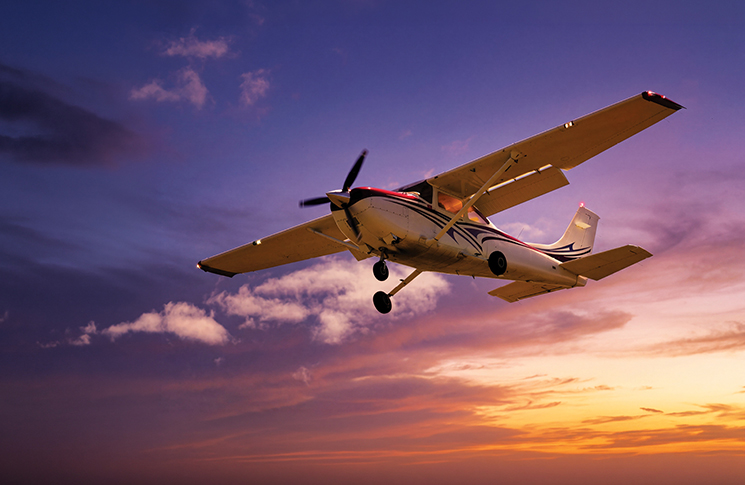
As we levelled off at 7,500 feet, we were well on our way and the skies had become clear blue. But the blue was beginning to fade to dark blue, orange and purple. The sun was going down! I did another calculation for our ETA and it now looked like we were going to get there just after last light.
I knew the sky would still have a little light left in it but being someone who follows the rules, especially at this early stage of my flying, I was becoming a lot more worried, and nervous. The view was amazing, but my concern was the time ticking away. Eventually the sun set and it was becoming darker by the minute.
Unfortunately, between our origin and our destination, there were no other suitable areas I could put us down for the night. I was ultimately committed to pressing on. I prepared myself as best as I could for our arrival. We had the town in sight and I activated the runway lighting. e joined the circuit, made a nervous and not very pretty landing and were glad to be safely on the ground, while calling to cancel SARTIME.
I had just been through a huge learning experience.
Lessons learnt
- check your fuel, oil and aircraft readiness before departure
- plan an alternate before you fly and regularly review this plan during flight so you can decide early where to divert if needed
- allow extra time for delays so you can land within both the regulatory limits and your personal limits
- reassess and stop if conditions or timing do not meet your limits, regardless of pressure from others.
Close calls are contributed by readers like you. They are personal accounts of individual experiences and are not corroborated by CASA. We publish close calls so others can learn from their stories and spark discussions about safety. These stories should not be used to identify individuals or operators.
Listen to close calls where you find all good podcasts.
Non-controlled operations is one of the special topics on our Pilot safety hub. Refresh your knowledge at casa.gov.au/pilots.