
The Sydney basin airspace supports one of the most diverse and active aviation environments in Australia. Both Bankstown and Camden airports have long been home to a wide range of aviation operations encompassing flight training, charter, airwork, freight, emergency services, tourism, private flying and other general aviation activities.
In the 2023 financial year, Bankstown and Camden airports supported over 323,000 aircraft movements, reflecting their important role in training, emergency services and general aviation operations.
With operations at nearby Western Sydney International (Nancy Bird-Walton) Airport commencing this year, the airspace will evolve to support an expanded range of operations under more structured airspace arrangements.
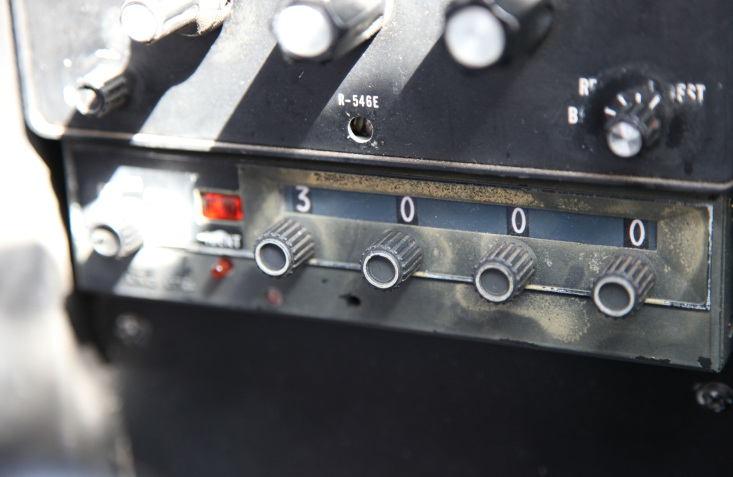
From 9 July 2026, airspace around Western Sydney International and Bankstown Airports will be reclassified to Class D. Most of this has historically operated as Class G. The new Class D airspace will bring many changes to pilots, one of them being the requirement to carry and use a transponder. A transponder will allow air traffic control (ATC) to ‘see you’ on their surveillance equipment and provide safe separation from other traffic in the airspace.
Carrying a transponder
Operating around Bankstown Airport from 9 July will need more than the reliance on ‘see and be seen’ used by pilots operating in the previous Class G environment. It will depend on the electronic conspicuity of all aircraft operating in or transiting through the area under the watchful eye of ATC. If you are flying only in the Bankstown CTR, a transponder won’t be required.
A wide range of transponders and surveillance equipment is available:
- Mode C and Mode S transponders: Mode C devices provide an aircraft’s pressure altitude, while more modern Mode S transponders broadcast flight data including code, aircraft identification and altitude.
- ADS-B OUT: These devices frequently use an extended squitter Mode S transponder coupled to a GNSS position source to continuously provide the flight information and precise position and velocity data. It does not require an interrogation request from ATC ground radars or other aircraft.
- ADS-B IN and TCAS systems: Aircraft equipped with either ADS-B IN capable systems or TCAS systems can receive ADS-B OUT data from nearby aircraft and feed this information to cockpit displays.
Aircraft operating in the new Class D airspace must meet the equipment requirements outlined in the Part 91 Manual of Standards. This requirement can be met by using either a Mode A/C transponder or a Mode S transponder. An electronic conspicuity (EC) device does not meet the minimum equipment requirements.
Challenges and benefits
The operational requirements will present both challenges and benefits to pilots, according to Adam Hastings, CEO at The Main Rotor Hub, a Bankstown-based helicopter operator.
‘For some private pilots operating in and out of Bankstown, the airspace changes and new requirements may be quite challenging at first,’ he says. ‘Every flight will require preparation including a flight plan, the acquisition of a discrete transponder code and clearances for every stage of flight, including start-up. The new airspace arrangements will require pilots to adopt strict new disciplines and maintain very high standards in their flying.
‘The other side of the coin is that students undertaking flight training will benefit greatly from the new operating environment. It will support students to develop skills that will prepare them for operations in every airspace environment in Australia.
‘For most pilots, transitioning to the new airspace system will create a higher workload as they manage new and unfamiliar tasks. Practice and repetition in managing the transponder and other tasks will be the key to it all becoming second nature.’
For more information, visit casa.gov.au/sydneyairspace.
Further information
Visit casa.gov.au/sydneyairspace to learn more about what is changing, how to prepare and find useful resources.
Subscribe to CASA’s airspace and aerodromes mailing list to stay up to date.