
Most general aviation pilots think twice before hitting the transmit button to ATC. There’s some quiet assumptions baked into a lot of cockpits – that controllers are watching for slip-ups or asking questions is admitting weakness or the radio is a place to be careful, not curious.
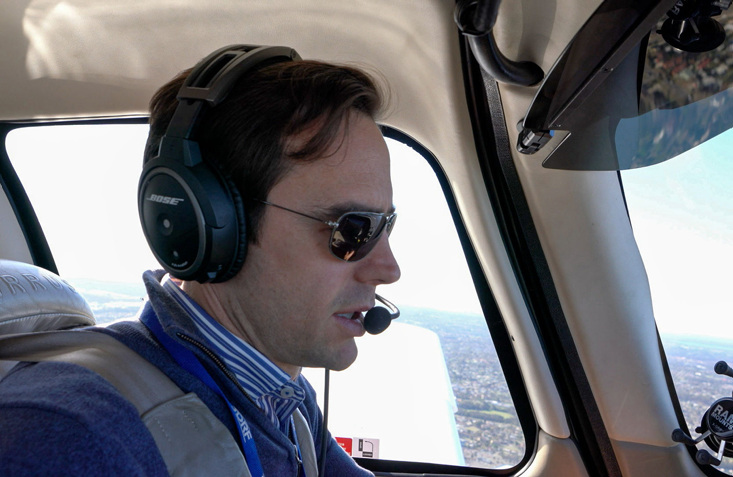
Jamie Milner, an air traffic controller with Airservices Australia, would like to put that idea to rest.
‘Air traffic controllers are not the police,’ he says. ‘We will report things when needed, however, our primary role is to help.’
What you’re not seeing from the cockpit
The picture from inside the tower is busier than most pilots realise.
In a typical sequence, Milner is tracking what aircraft are reporting: their type; wake turbulence category; how that affects everyone around them; what speed differentials are developing between departures; what plan B looks like if the original sequence falls apart; what plan C looks like if plan B doesn’t work either.
‘There is plenty going on and a lot of variables that may change pilot to pilot or company to company,’ Milner says. ‘What we have available that the pilot does not is the disposition of all aircraft, who is likely to call us next and how they might fit.’
That picture changes how you read every instruction. The clearance that seemed restrictive is usually the one keeping you safely separated from something you cannot see.
The cost of staying quiet
Milner has watched pilots hold back from calling ATC unless they absolutely have to. He’d rather they didn’t.
‘Particularly when things are going wrong and cockpit workload is high, as a controller I would prefer to know and understand what’s going on than not,’ he says. ‘If you are unfamiliar or lost or getting low on fuel, I’d prefer to know. Maybe I can assist in gaining an actual observation at a nearby aerodrome.’
The reframe is the whole point. ATC isn’t a regulator perched in the tower waiting to catch you out. It’s a resource on the other end of the radio that becomes more useful the more it knows.
‘There is so much more that can be done if you view ATC as being on your team,’ he says. ‘We are human just like you and would prefer to be of help than have something go wrong on our watch that could have been avoided. If we had just known.’
One of the most common questions ATC gets
Several times a year, ATC is called to help a pilot flying VFR on top. The pilot will ask whether the controllers can observe any breaks in the cloud ceiling.
‘In these circumstances, we can advise that it is solid, thereby suggesting to the pilot it would be safer to turn back rather than expend unnecessary fuel, or advise which quadrant the pilot can position themselves to get down,’ Milner says.
If that question is asked early, the entire trajectory of the flight changes.
The same logic applies to clearances.
‘It’s better that we repeat an instruction or explain it better, than for you to get it wrong and do something we were not expecting,’ Milner says. ‘Of course, repeating slows things down but not as much as something occurring that we did not expect.’
Treating ATC as a resource rather than an authority changes how you fly. That includes what you ask, when you ask it, how willing you are to admit you’ve lost the picture.
‘Our first priority is safety,’ Milner says. ‘We will always prioritise your safety and the safety of others ahead of any other imperatives.’
ATC is your support team. The controllers are there to ensure your flight is safe and successful, alongside your fellow aviators. They’re always listening and would rather hear from you early than try to anticipate your next move, before it’s too late. Whenever you’re unsure, ask for clarity.
Further information
- Controlled aerodromes and operations is one of the special topics on our Pilot safety hub. Refresh your knowledge at casa.gov.au/pilots
- Visit casa.gov.au/sydneyairspace to learn more about the Sydney basin airspace changes, how to prepare, and access useful resources.
- Subscribe to CASA’s airspace and aerodromes mailing list to stay up to date.