
When I was getting my night VFR rating with an instructor, we scheduled a flight like the other 2 or 3 sessions we’d already done. We checked the weather. Everything was OK on the METAR. The TAF said the ceiling would eventually reduce to 500 feet but in 2 or 3 hours, after our planned time of flight. So we thought we had plenty of time.
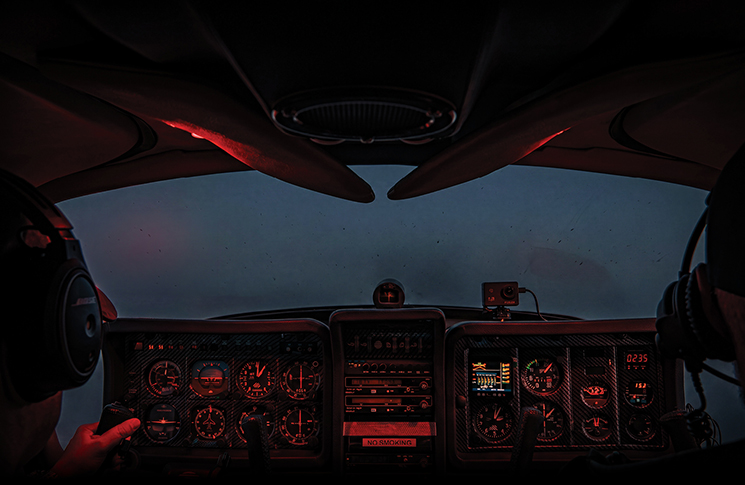
After doing my preflight and making sure we had everything we needed for the night flight (mostly red headlamps), we started the aeroplane, did the necessary pre-take-off procedures and began taxiing to the runway. At night, the aerodrome is non-towered.
During taxi, we passed a parallel road and I noticed the headlights of passing cars had unusually strong reflections. Visibility was already bad and that made me feel a bit uneasy. But we could still see and another check of the METAR showed VFR conditions, so I shrugged it off.
We stopped before the runway, did our pre-take-off checks and everything still seemed OK. I announced our departure on the radio, lined up on the runway and began the take-off roll. I called ‘airspeed alive’. We quickly reached rotation speed, so I called ‘rotation’ and lifted the nose to get airborne.
At about 200 to 250 feet AGL, nothing was out of the ordinary. Soon after, I raised the flaps and started a standard rate right turn.
Then everything suddenly went white!
I couldn’t see any reference outside, and neither could my instructor. We had inadvertently entered IMC! We were both non-instrument rated and this was the beginning of the longest 10 to 15 minutes of my life!
I immediately checked the airspeed and artificial horizon, then stopped the turn and tried to level the wings. We started scanning outside again for any reference. But we couldn’t recognise anything. It was all white and black – just fog and darkness.
We tried to keep the aircraft as level as possible. I admit I wasn’t using the artificial horizon as much as I should have. I mostly checked the airspeed from time to time. At that point, I suggested that we descend – a bad idea as we were probably at 500 or 600 feet. My instructor
said ‘no’ because it might be unsafe and we couldn’t risk hitting something below.
After a time trying to figure out where we were, my instructor took out his tablet and opened the navigation app we routinely used. It turned out we weren’t left or right of the runway as we thought, but south of it, and not very far.
Then everything suddenly went white!
We used the GPS position on the tablet to get closer to the aerodrome. Belatedly, I announced on the radio we had inadvertently entered IMC and were returning and going to land in the opposite direction to our take-off.
Against the odds, we landed safely after about 10 to 15 minutes of flight time and taxied back to our club. Once we shut down, I realised I was shivering. I think the stress hit me all at once.
Lessons learnt:
- check the latest approved meteorological forecasts relevant for your flight just before take-off and compare them to what you can see outside
- treat early signs, such as reduced visibility or light reflections, as a warning and delay the flight
- monitor visibility after take-off and turn back or land as soon as conditions start to worsen
- use your flight instruments to keep the aircraft straight and level if you lose visual reference.
Related content
Don’t forget to check out the audio close calls and hear the stories come to life.
Weather is one of the special topics on our Pilot safety hub. Refresh your knowledge.
Have you had a close call?
8 in 10 pilots say they learn best from other pilots and your narrow escape can be a valuable lesson. We invite you to share your experience to help us improve aviation safety, whatever your role.
Find out more and share your close call.
Disclaimer
Close calls are contributed by readers like you. They are personal accounts of individual experiences and are not corroborated by CASA. We publish close calls so others can learn from their stories and spark discussions about safety. These stories should not be used to identify individuals or operators.