
As someone who has made a career out of writing about my mistakes, I have many to choose from. However, my first area solo was one of my biggest lessons – I managed to make 2 significant mistakes in one flight!
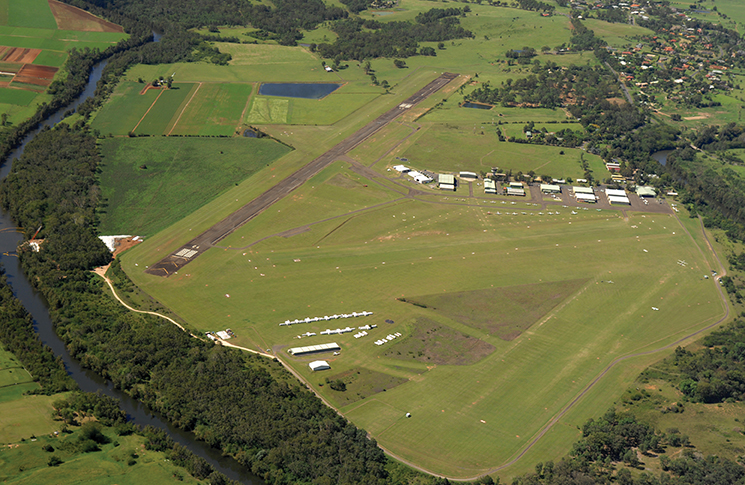
I had been flying circuits all morning at Camden using runway 06, which is left-hand circuits. After lunch, my instructor sent me solo to the training area. The wind had shifted and operations had changed to runway 24, which requires right‑hand circuits.
I did know that – at least, I had known it. Although my initial training had been at Hoxton Park, I was familiar enough with Camden to know that 24 requires right-hand circuits. And, of course, it is published in the ERSA.
Unfortunately, I had become a victim of muscle memory. I had spent hours recently turning left, so when I departed, I instinctively rolled into a left turn. It felt natural and right, but of course, it was wrong.
My brain had not caught up with the change in runway and circuit direction and I panicked, realising that what I was expecting to see in the training area was not what I was actually seeing. What I was seeing was myself getting awfully close to Holsworthy restricted airspace!
As this was before EFBs and the aircraft did not have GPS, I dialled up the NDB for Camden and reset my course.
It was the first time I understood how quickly routine can unravel inside the circuit.
Later, re-established in the circuit, a Baron called inbound for a straight‑in approach. The pilot asked me to extend downwind, saying he’d planned for a straight-in and would like to execute it. I did not know how to extend safely without disrupting spacing, and I did not know how to say no so I said it was my first training area solo.
He relented and I landed without incident but felt super shaky, even after the Baron pilot congratulated me on the solo. While nothing terribly dramatic happened that day, it was the first time I understood how quickly routine can unravel inside the circuit.
Joining and operating in the circuit is often described as simple. It is not technically difficult, but it is cognitively dense. It is where small assumptions stack quickly.
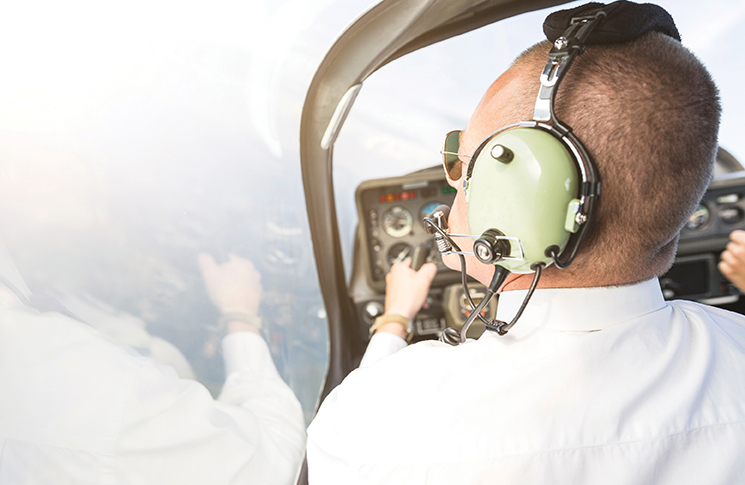
The highest workload in VFR flight
Steve Curtis has been a GA pilot for 48 years and is a Grade 1 flying instructor, founder of a flying school, a CASA-approved testing officer and currently owns and flies a Piper J3 Cub. He has watched generations of pilots handle circuits well – and badly.
He says the greatest threat appears the moment the runway comes into view. ‘Tunnel vision, particularly once the airfield is in sight.’
He says pilots narrow their scan as they get closer.
It feels logical to look at the runway, but conflicts rarely develop directly ahead. ‘Usually, threats come from outside of the area between you and the airfield,’ Curtis says. ‘These aircraft don’t sneak up on you – your ineffective lookout didn’t spot them.’
At the same time, the workload is climbing:
- wind assessment
- circuit direction
- traffic identification
- radio calls
- configuration
- spacing.
This is also the moment when many pilots are still catching up with basic planning. Circuit direction should already be confirmed. Wind direction should already be visualised. The likely traffic flow should already be anticipated.
If those elements are still being worked out inside 5 miles, the workload increases rapidly. Small uncertainties compound – a slight crosswind becomes a runway change, a late position call becomes a spacing problem, a faster aircraft compresses the pattern.
The safest joins are rarely reactive – they are rehearsed mentally before descent.
David Pilkington, an experienced GA pilot and instructor with OzAeros who specialises in aerobatic and upset prevention training, sees the same pattern. ‘Lack of planning is where it starts to go wrong,’ he says.
He says pilots often arrive without properly reviewing ERSA or NOTAMs. ‘Pilots won’t be aware of those situations unless they look at ERSA and take the time to check NOTAMs.’
The ATSB’s A pilot’s guide to staying safe in the vicinity of non‑towered aerodromes (AR-2008-044) reinforces this. The most hazardous area for collisions is within 5 nautical miles and up to 3,000 feet above an aerodrome. It is precisely where pilots are configuring, communicating and searching for traffic at the same time.
When the traffic picture breaks down
In June 2024, 2 light aircraft came into close proximity at Ballina Byron Gateway Airport. At the time, it was a non-controlled aerodrome. Both aircraft were preparing to land and making radio calls. But neither had a complete picture of the other.
The ATSB occurrence brief noted the zone close to the aerodrome carries the highest collision risk because of task saturation. Situational awareness degrades quickly when workload peaks. The event was not reckless flying; it was incomplete awareness.
‘Increase visual traffic scan and reduce the use of traffic awareness devices in the circuit,’ Curtis says.
Pilkington recognises what happens internally when something unexpected appears. ‘The principle is to prepare for the unexpected.’
It sounds simple, but that preparation includes recognising when you are no longer ahead of the aircraft and giving yourself time to reassess. That instinct to press on is powerful. It feels inefficient to leave the circuit to reset, but creating time and space is often the safest decision.
Pilkington says the key moment often comes earlier than pilots realise. ‘Change of plan has to be early, if at all.’
Once workload rises and spacing tightens, options reduce quickly. Creating time before the pattern compresses is far simpler than trying to untangle it later.
The drift away from standard
There is often a gap between published procedures and what actually happens locally. ‘Peer pressure and normalisation of deviance result in a drift away from standard procedures,’ Pilkington says.
Straight-in approaches become routine. Modified circuit entries become habit. Departures are shaped by convenience rather than predictability. ‘Doing something non-standard will increase the risk of conflict,’ he says.
Several experienced pilots echo this theme.
Alan Brownbill, a Sunshine Coast‑based pilot who has been flying for more than 55 years, says discipline still matters. ‘If you adhere to the correct procedures and communicate as required or as needed and look out, there shouldn’t be an issue,’ he says.
But he acknowledges mixed traffic complexity. ‘It can be challenging at non-controlled airports and ALAs with different aircraft travelling at
different speeds.’
Speed compresses time. A faster aircraft on a straight-in shortens decision space for those established in the circuit. ‘Remember, there’s no rush. Slow up and be situationally aware,’ Brownbill says.
When operations mix
Confusion increases when different types of operations share the same aerodrome. Glider activity in particular can introduce procedures that differ from the standard powered aircraft circuits. Launch points, landing areas and traffic flows may not follow the conventional overhead and downwind expectations of powered pilots.
At some aerodromes, gliders may operate without a defined dead side, use different circuit patterns or land in areas that do not align with the active runway direction for powered aircraft. Without reviewing ERSA, local procedures and NOTAMs before arrival, a pilot can easily build the wrong mental picture of how traffic will move.
Preparation reduces surprise. Understanding how glider operations integrate with powered traffic allows you to anticipate geometry rather
than react to it.
Wind, runway and personal limits
Wind assessment is one of the quiet traps in circuit operations. It is easy to follow the aircraft ahead without independently confirming whether the runway and wind component suit your aircraft and experience level.
Wind assessment is one of the quiet traps in circuit operations.
A few knots of tailwind may appear manageable, but they increase groundspeed, extend float and reduce margin. Crosswinds that feel acceptable to one pilot may sit outside the comfort zone of another.
Confirm the windsock and listen carefully to reports. If uncertain, overfly and reassess. Arriving at an unfamiliar aerodrome is not the time to be testing personal limits.
Radio discipline
Radio calls are a safety tool, not a performance.
Long, unfocused transmissions increase frequency congestion and add to workload for everyone in the circuit. An inbound call should be concise, structured and informative. Other pilots are trying to build a traffic picture. They need position, altitude and intention, not commentary.
Clear broadcasts support predictability. They reduce ambiguity and allow others to plan early rather than react late.
Curtis reinforces the need to confirm visually. ‘Don’t assume people are where they report – obtain a visual fix on them.’
A position report is useful, but it is not separation.
Pilkington adds that if awareness starts to erode, communication can help rebuild the picture. ‘If [you have] lost awareness of traffic that is a potential conflict, then communicate again.’
Building the mental model
Whether joining overhead, crosswind or straight-in, the critical task is building and maintaining a clear mental picture before descending into the circuit. That picture includes wind direction, circuit direction, traffic sequencing and performance differences between aircraft.
If any part of that picture is unclear, resolve it early – slow down, ask again, reposition if necessary. The closer you get to the runway, the less time you have to untangle uncertainty.
Five key ingredients in a safe circuit join
- Complete checks early: complete as many pre-landing procedures as possible before arriving in the circuit area
- Keep it quiet: keep a silent cockpit to reduce distractions
- Confirm frequency and volume: double-check radios are on the correct frequency and volume set
- Scan deliberately: increase your visual traffic scan and reduce the use of traffic awareness devices in the circuit
- Verify traffic visually: don’t assume people are where they report – obtain a visual fix.
CASA’s Operations in the vicinity of non-controlled aerodromes echoes the same themes in plain language: know the circuit direction before arrival, make standard calls, maintain an effective lookout and integrate predictably with existing traffic. These are not administrative preferences. They are practical collision avoidance strategies built from investigation data and operational experience.
Respect the 2 minutes
When runway 24 replaced 06 at Camden, the environment changed. My brain did not.
The Baron’s straight-in request added pressure I was not prepared for. I had focused on flying accurately but had not thought about managing faster traffic or extending safely.
Nothing dramatic happened that day, but the lesson has stayed with me.
The circuit is not just a rectangle in the sky. It is wind, traffic, habit, expectation and human limitation converging in a confined piece of airspace where margins narrow quickly.
Competence in the circuit is not about drawing tidy patterns. It is about recognising when workload is rising and acting early. It is about resisting the urge to press on when the picture feels incomplete. It is about giving yourself time.
The safest join is rarely the fastest or the most accommodating. It is the one that is planned, predictable and unhurried. And if the picture does not make sense, climb, reset and try again.
Those 2 minutes deserve that level of respect.
Controlled aerodromes and operations, and non‑controlled operations, are among the special topics on our Pilot safety hub. Refresh your knowledge at casa.gov.au/pilots.