Eric Moody, master of airmanship and understatement

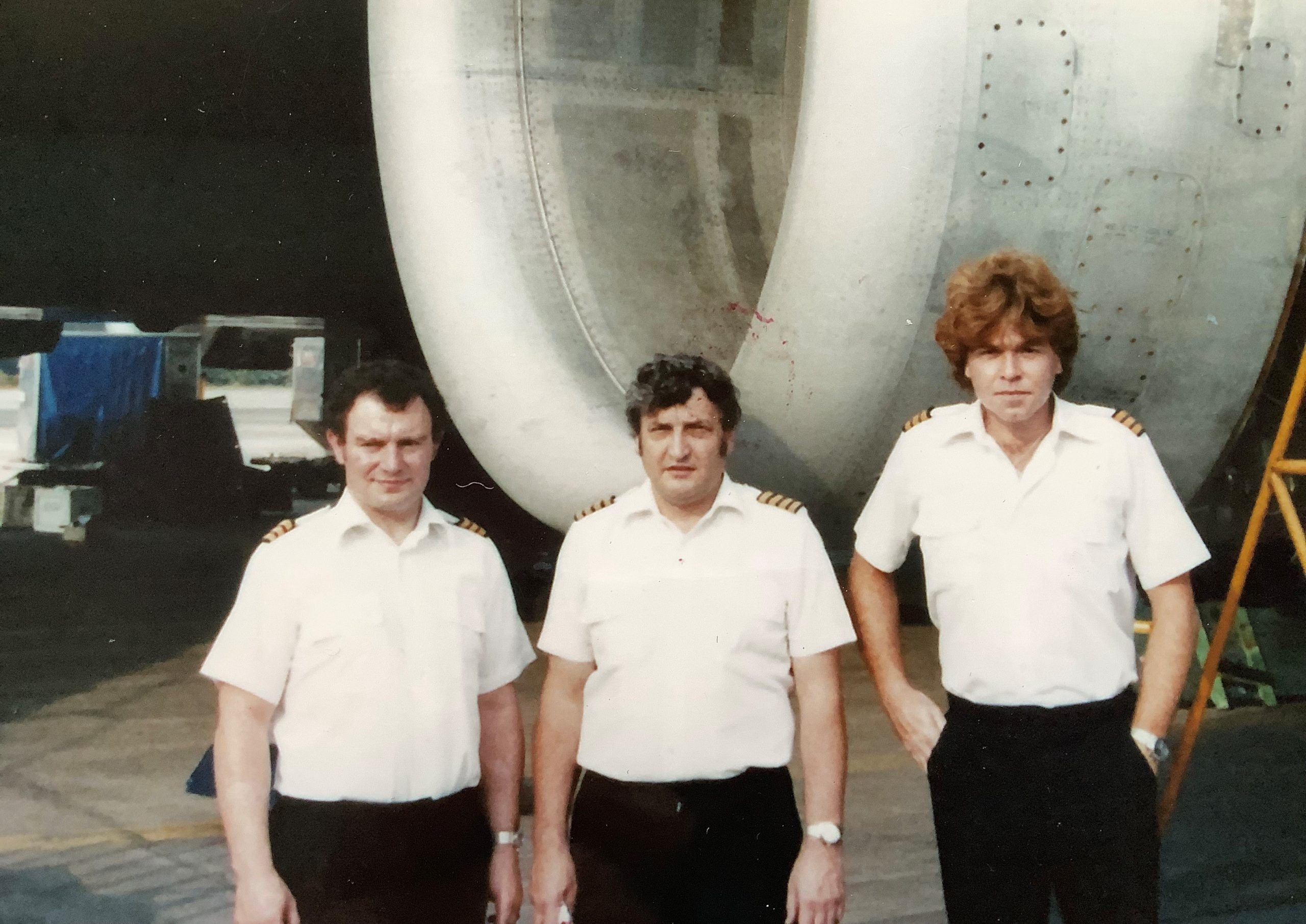
Captain Eric Moody, the pilot-in-command of British Airways flight 9, which encountered the previously unknown hazard of volcanic ash over Indonesia on 24 June 1982, died peacefully in his sleep last week.

The Boeing 747 200 was flying near Mount Galanggung at Flight Level 370 when the crew noticed a glow around the nose similar to St Elmo’s fire. Smoke filled the passenger cabin and window seat occupants saw a stroboscopic blue glow from the engines.

At 20:42 local time the No. 4 engine surged and flamed out. The No. 2 did the same a minute later, followed with seconds by the No. 1 and No. 3 engines. Ash had choked all 4. It had been invisible on the weather radar, which was calibrated to detect moisture.

As the crew attempted to restart, Moody made a what has been described by AirlineRatings as the greatest passenger announcement in the history of aviation.

‘Ladies and gentlemen, this is your captain speaking. We have a small problem. All four engines have stopped. We are doing our damnedest to get them under control. I trust you are not in too much distress.’

Oxygen masks dropped in the cabin but on the flight deck the oxygen mask of first officer Roger Greaves was unusable. Moody increased descent to 6,000 fpm to get to a breathable altitude more quickly. He set a decision height of 12,000 feet, after which, if the engines had not started, they would attempt to ditch in the sea rather than try to cross the 11,500-foot high mountains of central Java. As the aircraft passed 13,500 feet, engine No. 4 started, followed by the other 3.

The next challenge was landing at Jakarta Halim Perdanakusuma Airport. Despite clear night conditions, the approach had to be flown IFR, as the windscreen had been abraded by the ash and was opaque. On that evening the vertical guidance of the ILS happened to be broken and Greaves used the airport’s distance measuring equipment and an approach plate from his flight bag to call out height-distance combinations, creating a virtual glideslope for Moody to fly. Asked about it later, Moody again demonstrated his mastery of language with a startling rural metaphor. ‘It was a bit like negotiating one’s way up a badger’s arse,’ he said.

In 2022 he discussed his philosophy of airmanship with Flight Safety Australia writer Steve Creedy. ‘I was always brought up to expect the aeroplane might break any minute,’ he said.

Passengers, who minutes earlier had been writing final notes to loved ones, applauded as the aircraft touched down.

Moody and his flight deck crew, Greaves and flight engineer Barry Townley-Freeman received awards including the Queen’s Commendation for Valuable Service in the Air. The 12 cabin crew had also done an admirable job, preventing panic and teaming solo passengers together for mutual support. Two strangers who had been in nearby seats on the flight later married.

Eric Henry John Moody was born in Hampshire, England on 7 June 1941. He married Pat Collard in 1966 and was father to a son and daughter. His death was reported on 19 March 2024.


Mechanic’s skyward shift to aircraft engineer

Scholarship recipient Josh Kilgour reflects on his AME achievements

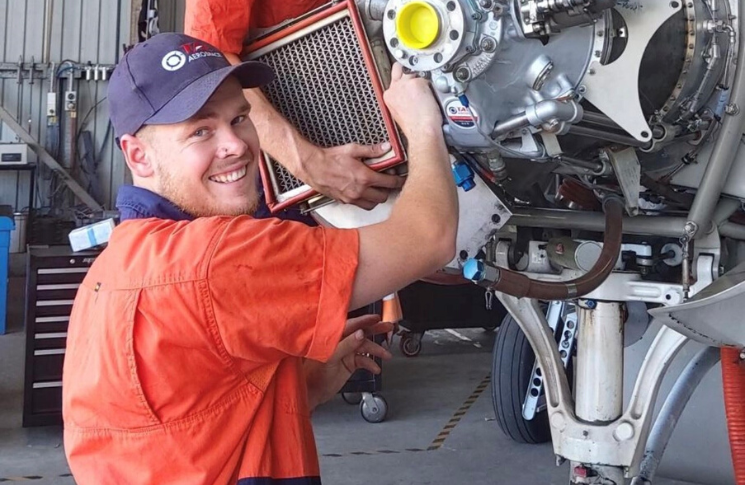
Embarking on a new career journey is a leap of faith that many are familiar with. For Josh Kilgour, a former car mechanic hailing from Lennox Head, NSW, the decision to switch gears in his professional life was sparked by a chance encounter and a passion that had been simmering quietly within him for years.

Josh’s transition from fixing cars to becoming an aircraft maintenance engineer (AME) was not a typical one. It all began with a simple conversation at Ballina Airport, where Josh was taking a break from cars and working as ground crew. Little did he know, this conversation would spark a newfound career path, culminating in being one of our successful AME scholarship recipients.

Reflecting on his early days, Josh fondly recalls his childhood spent with his father, who often took him to the airport to watch planes take flight. Despite his love for aviation, the idea of pursuing a career in engineering had never crossed his mind — until fate intervened.

‘I had a love for aviation, but I never really thought about engineering or even had an idea of how to get into it,’ he explains.

‘My wife Cody was working as ground crew as well and told me to have a chat to one of the engineers she knew. And from there I started doing work experience and just knew straight away that this was the job for me.’

Apprenticeship process

After starting his apprenticeship at Jetstar during the COVID-19 pandemic, Josh faced unexpected challenges, including relocating to Melbourne due to the permanent closure of the hangar.

Despite the initial hurdles, Josh remained committed to his studies, diligently working toward his diploma while adjusting to life in a new city – during a lockdown.

‘I’d never been to Melbourne before and had no extended family down there, which was tough,’ he says.

‘It was a huge sacrifice, my wife was heavily pregnant at the time, and financially it has also been very difficult, living on one apprentice wage. Some weeks I don’t know how we did it, but we did.

‘We were also living quite close to Aviation Australia, where I was already completing my apprenticeship, so I started doing my diploma.

‘In my second year, I started ticking off all my exams, and then we moved back up north. I took a break for a few months because it was just a bit chaotic as we have young kids.

‘I never really did that well in school but once I put my back into something, I try and put in 100%. I just want to be the best that I can, so I put in a lot of effort to make sure that I sat the exams only once and aimed for a mark in the 90s, which I achieved.

‘The feeling of passing the exams, the reward of it all, and now I’ve also just completed my diploma, so it’s all been worth it.’

Josh recalls one of his proudest on the job moments has been rectifying a defect on an A320 that had sat on the ground for 8 weeks.

‘The airline was planning on sending someone out from Airbus to correct the defect and another apprentice and I – we were in our third year at the time – kind of ran with the task and asked if we could, “have a crack”.

‘The [defect] was in a terrible spot, and I don’t think this issue had ever been rectified in Jetstar in Australia before. And we got it done. So that was pretty big, and it felt good and really rewarding.’

So rewarding in fact, that the airline awarded him runner-up in the apprentice of the year for 2023.

AME qualities

In reflecting on the qualities essential for success as an AME, Josh emphasises the importance of being adaptable and collaborative while highlighting the dynamic nature of the industry.

‘You definitely need to be a hands-on person, more of a “go getter” rather than standing on the sidelines,’ he says.

‘Be open-minded and a team player. The industry is forever changing and forever growing. It always throws different curve balls at you and keeps you on your toes.

‘I’d also probably say try and get an apprenticeship with one of the big airlines if you can. From my experience, I get to work on multiple different aircraft of larger commercial size with a lot of different maintenance aspects.’

AME scholarship

Josh admits he was both shocked and emotional when he got the call that he was one of CASA’s AME scholarship recipients.

‘It’s an insane feeling to get noticed or recognised,’ he says. ‘I’ve put in a lot of hard work and for it to pay off in the way that it has I am just completely grateful to CASA. I’ve used the money to pay for my last 4 exams, and then my final RPL [recognition of prior learning] for my diploma licensing.’

Currently, Josh – who now takes his own two-year-old to watch the planes, just like his own dad did – is in the process of completing an A320 type course. This course marks a crucial step toward achieving his next goal of becoming an A category line maintenance certifying engineer. Following this achievement, he intends to transition into a full-time role as a B1.1 aircraft engineer.

‘Then whatever else the career wants to throw at me, I’ll take it on, you know – arms wide and just go for it,’ he laughs. ‘I absolutely love the industry and I’m excited for where it takes me in the future.’


Drone flyer diary: Roberto Lujan Rocha

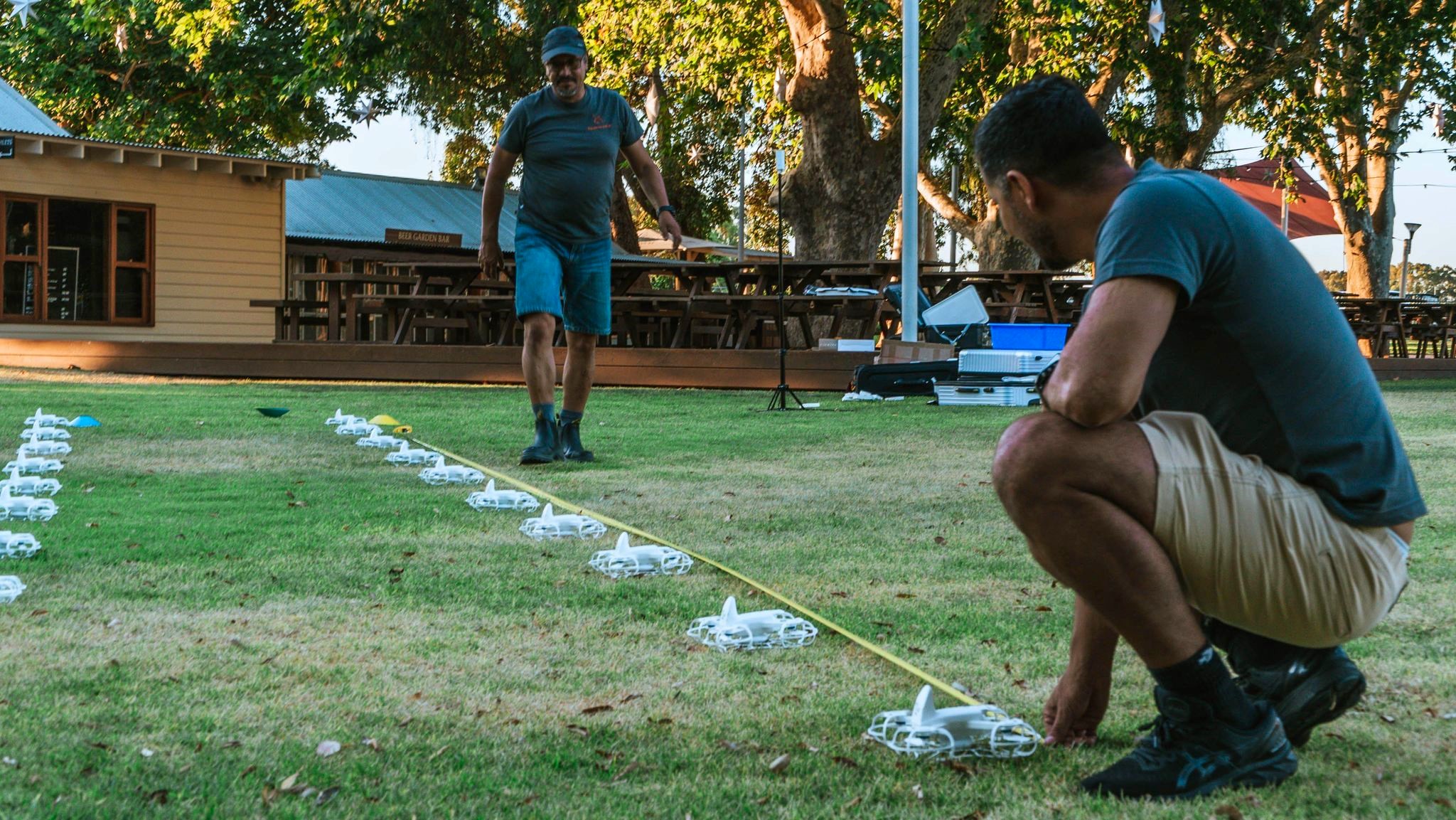
In the dynamic landscape of modern education, the call for STEM experiences is louder than ever before. Meet Roberto Lujan Rocha: an environmental scientist by trade, and a passionate drone enthusiast by heart. After recognising an opportunity to enhance curriculum, Roberto pioneered inventive teaching methods to get kids interested in drones. For young Australian minds he not only demystifies the skies but also makes safe drone flying an exhilarating activity for all ages.

Squadrone, Roberto’s Perth-based business, harnesses the untapped market of educational drone programming for kids and adults.

‘We specialise in interactive classes, within schools and privately, as well as performing drone light shows for events. The business provides opportunities for children and people outside the STEM realm, especially those from disadvantaged communities or backgrounds, to unearth talents they may not have otherwise discovered,’ says Roberto.
Roberto starts by teaching the kids to code the drones on a virtual simulator using tablets, phones, or computers.

‘Once they are comfortable with the virtual drones, we transition to the real thing. The participants are suited up in personal protection equipment (PPE) and take turns being pilot and overseer.’

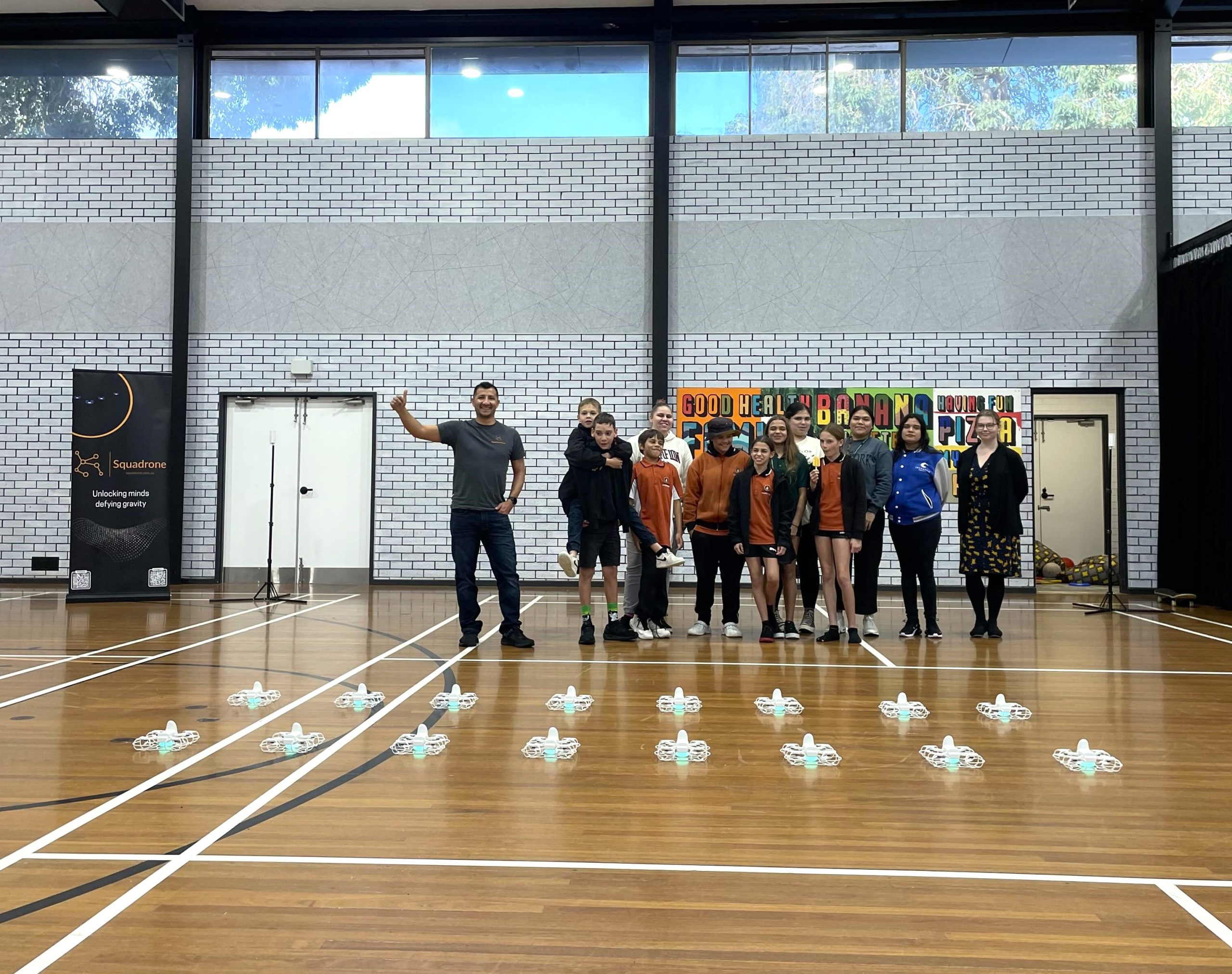
City of Melville workshop during science week (Credit: Squadrone team)

‘When teaching, I prefer indoor settings to help the kids maintain line of sight and avoid wind disruption’ Roberto explains. ‘However, on occasion, we venture outside and use a CASA-verified drone safety app to safely facilitate outdoor flights.’

CASA-verified drone safety apps are free and show operators where they can safely fly according to the airspace restrictions in their area.

Roberto chooses small sized drones that are easy to use and have important safety features like propeller guards and an emergency land button.

Roberto’s venture into the world of drones was sparked by their use in his professional research for photography, data collection, and monitoring. With a solid foundation in coding for statistics, he quickly recognised the potential for applying these skills to drones. This ignited his passion, leading him to obtain his remote pilot licence (RePL) to explore the possibilities of flying and coding drones.On top of his RePL, Roberto also holds a remotely piloted aircraft operator’s certificate (ReOC) and has authorisation to fly multiple drones, enriching the learning experiences for his students.

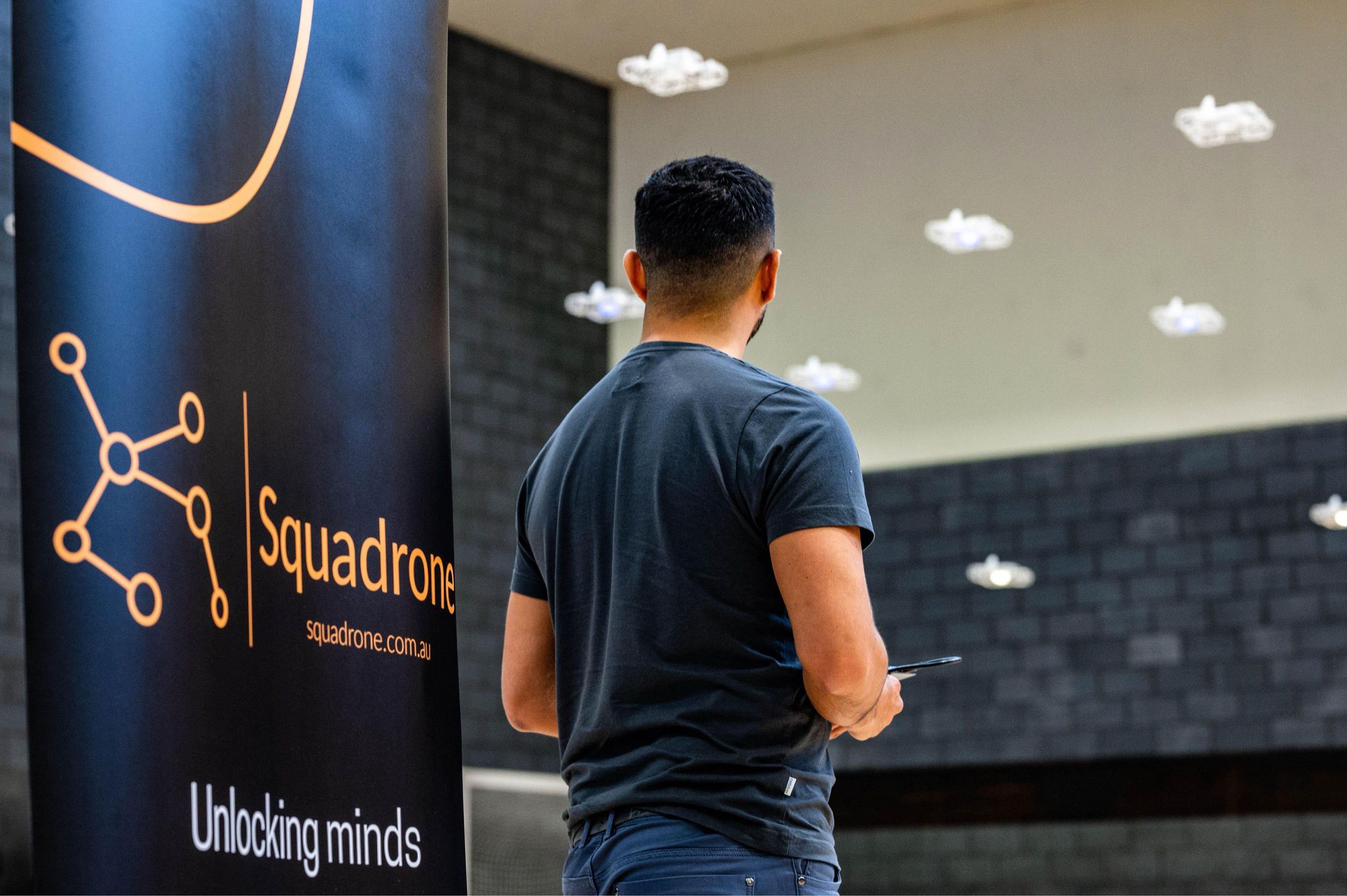
Roberto presenting a drone show at a library in the City of Melville (Credit: Yoshi Muroi).

One of his most memorable experiences was a workshop commissioned by the City of Melville for socially disadvantaged kids.

‘Seeing their progress and newfound confidence was incredibly rewarding’ says Roberto. ‘Especially from the point where they started flying, their personalities and smiles came out,’ Roberto reflects.

‘Seeing them realise their potential reaffirmed my commitment to empowering children through drone education.’

CASA’s Know Your Drone classroom resources have been a wealth of information for both Roberto and the people he teaches. ‘The animated safety videos, quizzes, and Plain English Guides have been invaluable’ says Roberto.

In fact, the best piece of advice he would give to any of his students wanting to get started is to make use of these free resources. He has also taken advantage of the CASA online store for student certificates and other merchandise.

Roberto’s biggest safety tip is to learn all the rules before you fly. ‘Just make sure you go through the Know Your Drone website and learn them before you get on the drone… Some people may think, ‘Oh, I can’t be bothered reading’ but there are also videos and it’s very important.’

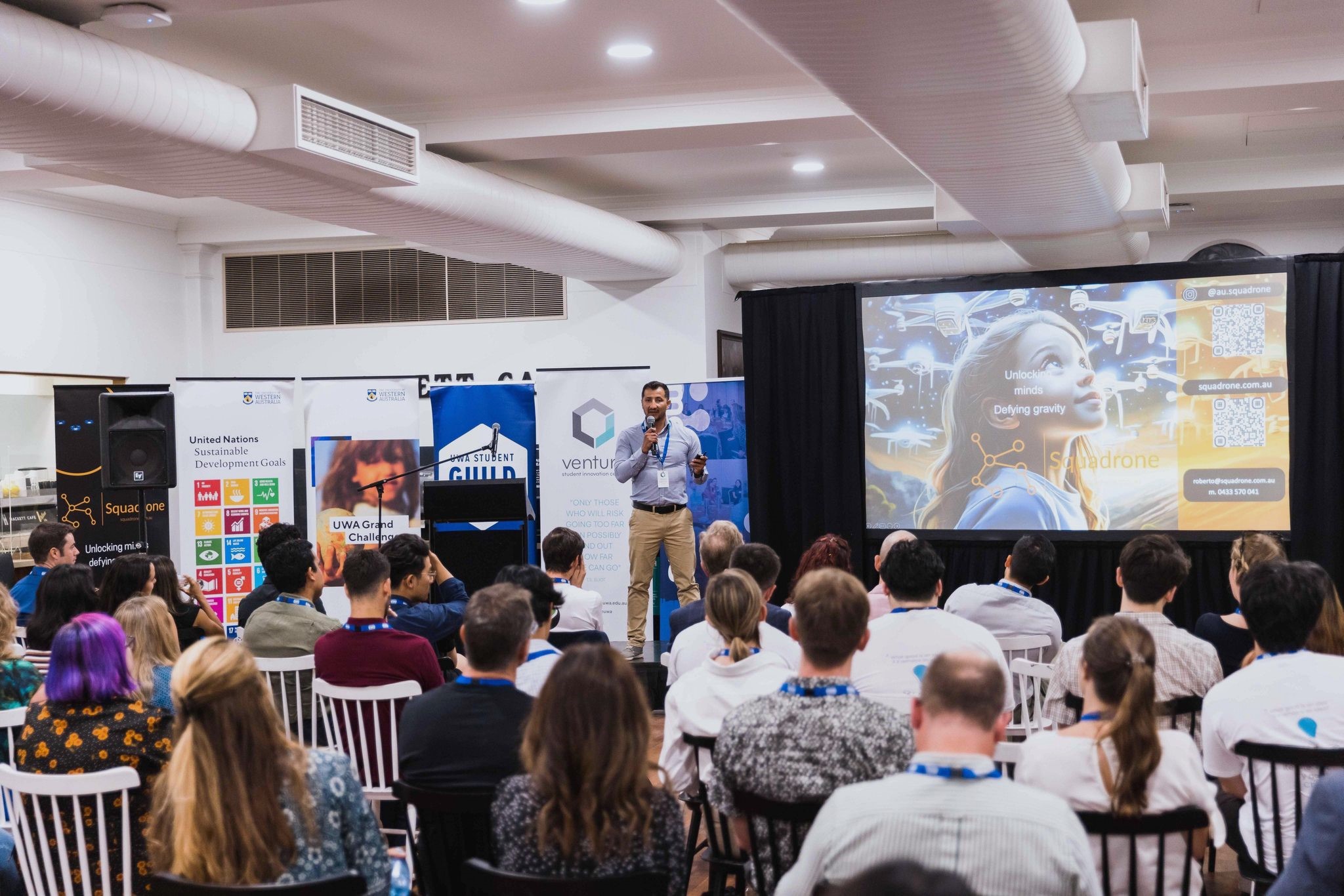
Roberto shares Squadrone’s vision at the University of Western Australia (Credit: Venture UWA).

Aviate, navigate, communicate, educate

Kreisha Ballantyne takes a look at the effectiveness of aviation safety awareness campaigns in Australia and overseas.

Some days the news seems too awful to take in. For general aviation (GA) and sport aviation, 2023 was like that every few months: 2 helicopters collide, a couple and their unborn baby are wiped out, 2 aircraft collide over a Queensland runway, an aircraft flown by an experienced pilot falls from 9,000 feet, killing him and 3 of his grandchildren, a father and son die after a wirestrike. I’m not even mentioning the single fatality crashes, let alone the injuries. Is it getting worse? How and when will it ever get better?

To tackle those seemingly intractable questions, we first have to identify the sectors with the highest accident rates, analyse the reasons for the deaths and then construct strategies that directly target the deficiencies uncovered.

A mammoth task, especially when you consider the type of accident leading to fatalities doesn’t seem to have changed in decades. VFR into IMC remains a leading culprit.

Analysing the trends

Australia has more than 30,000 active licensed pilots. And each year, a significant number of safety occurrences are reported involving Australian aircraft. Research shows that, from 2010 to 2019, the majority of fatal accidents and serious incidents occurred in the general and recreational aviation sectors.

According to the Australian Transport Safety Bureau (ATSB), 222 aircraft were involved in accidents in Australia in 2019. A further 155 were involved in serious incidents.

There were 35 fatalities in 22 accidents. The number of fatalities was consistent with the average of the previous 9 years (32.3 fatalities per year). The number of fatal accidents was also consistent with its average (23.1 fatal accidents per year). No deaths have occurred in scheduled commercial air transport in Australia since 2005.

Between 2010 and 2019, around one-third of GA accidents and 45% of fatal accidents involved aircraft conducting sport and recreational flying. Aerial work accounted for a further 37% of GA accidents and 33% of fatal accidents. The number of GA accidents per year increased over the period, with aerial work identified as the primary contributor. However, there was a decrease in the number of fatal accidents, resulting in 1.4 fewer fatalities, per year.

There was also an increase in the number of reported incidents for GA aircraft conducting instructional flying.

Over the 10 years, the majority of GA accidents, incidents and serious incidents were related to operational or technical issues. Additionally, the majority of fatal accidents were also attributable to operational issues.

Further, the number of GA operational-related accidents and serious incidents, per year, increased over the period. Instructional flying was the main contributor to this operational-related increase.

Australian awareness campaigns

The Civil Aviation Safety Authority (CASA) is working closely with the ATSB, Australian Maritime Safety Authority, Airservices Australia, Bureau of Meteorology and industry bodies to improve aviation safety through the ‘Your safety is in your hands’ campaign.

The campaign encourages GA and recreational pilots to engage in ongoing education to improve pilot behaviours and thereby the safety of Australian aviation.

CASA CEO and Director of Aviation Safety, Pip Spence, says the campaign was developed with input from pilots and using ATSB occurrence data.

‘With the help from the ATSB, we’ve been able to build our campaign and safety topics based on accident and incident data,’ she says. ‘Each quarter, we will focus on a new safety topic with information and online resources available through the CASA pilot safety hub.’

The hub provides a range of resources and useful information including webinars, podcasts and videos.
‘Airservices Australia and the Bureau of Meteorology have also contributed to our campaign by providing information and resources on operating at controlled aerodromes and navigating weather and forecasting,’ Spence says.

CASA is also working with industry associations including Recreational Aviation Australia and the Australian Helicopter Industry Association to help spread the safety messages.

Research explored pilots’ attitudes towards safety information and communication preferences. Analysis of safety occurrence data identified 4 common topics contributing to negative safety outcomes. These became the primary focus of the campaign

The research confirmed pilots seek easy and engaging formats for receiving safety information. This highlighted the importance of creating a centralised location to bring together a range of safety education resources, organised according to key safety topics in formats desired by the audience.

More than half the pilots said the campaign made them think twice about some of the things they currently do when planning flights.

Aviation safety campaigns overseas

Similar to the process used in Australia, the US Federal Aviation Administration (FAA) formed a GA joint safety committee. It is a partnership between the FAA and the GA sector to improve GA through voluntary risk-reduction efforts. These focus on education, training, best practices and installing new equipment and technologies in GA aircraft. Industry members include the pilot, manufacturing, business aviation and training communities as well as academia.

The committee uses a data-driven, consensus-based approach to analyse aviation safety data and develop risk mitigations. To date, it has deployed 46 safety improvements to address situations with a high-fatality risk, such as maintaining control during unusual attitudes, spatial disorientation and engine failure

The FAA and the committee member organisations have produced educational training materials on subjects such as aircraft transition training, flight deck resource management, promoting a positive safety culture and the potentially negative effects of certain medications.

In 2007, the FAA launched the aviation safety information analysis and sharing program to further evolve safety analysis. Instead of looking at only why an accident or incident occurred, the program can discover safety concerns before they result in a significant event.

The pilot safety campaign is exploring weather in the October-December quarter.

Awareness campaigns: anyone receiving?

After the launch of the pilot safety hub, CASA commissioned market research using qualitative and quantitative methods, including conversations with pilots and surveys, to validate the findings.

The research found the main engagement with the campaign was by holders of recreational and private pilot licences with relatively low flying hours, followed by more experienced pilots (53% have flown for at least 20 years). Those most sceptical of safety awareness campaigns were highly qualified pilots; of these respondents, 39% hold commercial or air transport pilot licences and 54% have more than 20 years flying experience. They were the least likely to engage with CASA on aviation safety matters.

Since launching in 2022, the pilot safety hub has had over 42,000 users. More than 11,000 people have viewed the safety webinars and the podcasts have been downloaded 3,800 times.

The research demonstrated that the hub allows pilots to more easily find reliable, relevant and understandable information, leading to increased engagement.
They say the hub:

  • makes aviation safety information easier to access (increase of 18 percentage points)
  • makes aviation safety information easier to understand (increase of 19 percentage points)
  • does a great job of educating pilots of the developments in aviation safety (increase of 14 percentage points).

Pilots are also engaging with aviation safety information more frequently and for longer. The proportion engaging with this information more than 4 times increased significantly, from 26% to 48%. The proportion of pilots engaging with this information for 6 to 10 hours also increased significantly, from 9% to 18%.

More than half the pilots said the campaign made them think twice about some of the things they currently do when planning flights (57%) and when they are flying (55%). Around two-thirds (64%) of pilots who saw the campaign indicated they took some sort of action after seeing it.

In conclusion, feedback on CASA’s safety awareness campaign drew the following insights:

  • CASA is widely regarded as a trusted source of aviation safety information. This insight served as a foundation for the campaign strategy, emphasising the need to build upon the existing trust and enhance CASA’s image.
  • Pilots expressed a desire for increased communication from CASA. Pilots felt there was room for improvement in effectively educating them about aviation safety developments. This insight highlighted the need for more proactive and engaging communication.
  • When it comes to the CASA website, pilots are looking for compelling formats that are easy to access. These findings underscored the importance of streamlining access and using innovative methods to enhance engagement.

In the USA, the introduction of safety improvements, particularly around loss of control, has demonstrated a significant decline in accidents with GA accidents decreasing by 11% from 2019 to 2020, according to the NTSB.

The future of aviation safety awareness campaigns

A change in the way pilots absorb information has also been critical. Podcasts, webinars, online quizzes and videos provide an effective way to engage with pilots.

The campaign focuses on one topic each quarter. After focusing on non-controlled aerodromes in the last quarter, the pilot safety campaign is exploring weather forecasts in the October-December quarter.

Amanda Palmer, Manager Communications Branch, says this gives pilots access to dedicated weather and forecasting resources. ‘We’ve been working with the Bureau of Meteorology on an accident investigation video that highlights the importance of planning and decision-making as well as always having a plan B,’ she says.

‘We also launched the new look Out-n-Back video series that helps pilots learn the essentials of safe flying in remote locations. The original 10-part series has been crafted into 31 shorter, easy-to-watch episodes, with each exploring a different safety topic.

‘The series has been updated to include new interviews and content to reflect regulatory changes and is available as a digital publication on casa.gov.au

‘In addition to this exciting video content, we’re producing webinars with weather and forecasting experts as well as new features and close calls about weather and forecasting for Flight Safety Australia.’

The ‘Your safety is in your hands’ campaign was recognised recently at the Public Relations Institute of Australia Golden Target Awards, Australia’s longest running and most prestigious public relations and communications industry awards. 
Each quarter, we will focus on a new safety topic with information and online resources available through the CASA pilot safety hub.
From chance encounter to career success

Scholarship recipient Spencer Holmes on his maintenance industry trajectory

A serendipitous stroll through his current workplace marked the beginning of Spencer Holmes’s journey into engineering.

Spencer, a recipient of CASA’s aircraft maintenance engineer scholarship program, found himself uncertain about his career path after high school. Despite his proficiency with hands-on tasks – including rebuilding his bicycle on the weekends – it was a visit to Seair Pacific Aviation, a tourism and charter operation on the Gold Coast, that ultimately set him on his career trajectory.

‘I witnessed what a day in the life of an aircraft engineer involves,’ Spencer explains. ‘It was so intriguing and a different side of mechanics that I’d never been exposed to. That opportunity inspired me to delve deeper into the aviation field and the Seair team even allowed me to do some work experience with them while I was studying.’

COVID challenge

Spencer, like the entire global aviation industry, then faced significant challenges during the COVID-19 pandemic.

‘I’d just finished my theory at [training organisation] Aviation Australia and was ready to get a job when the pandemic hit,’ he says. ‘I was very disheartened after months of trying to get a foot in the proverbial door, but Seair’s chief pilot Peter Gash once again threw me a lifeline.

‘I then worked hard to finish my apprenticeship and in 2 and a half years I tried to capture as much knowledge as I could. I wanted to soak up as much experience as possible, reaching out to other leaders in the industry, where I was able to get some further work experience with Lifeflight Australia, Air Gold Coast and Premiair.’

Now fully employed, when asked what the challenges of the job are, Spencer thoughtfully admits that while there are tough days, ‘they don’t define the overall experience of the job’.

‘Challenges arise but you learn and adapt,’ he says. ‘With the right mindset and the willingness to learn those challenges will become pivotal points in your career that will help you succeed.

Pride and resilience

‘Resilience and the ability to accept constructive criticism is key. Because at the end of the day it’s not about you, it’s about the safety of those who are flying in the aircraft you’re working on.

‘Being a team player is a huge part of the job. You need to be able to work collaboratively and rely on other people when on the big jobs. Another quality is being diligent and strict with procedures as this is the most important part of the job.’

Spencer recalls the pride he felt upon winning the scholarship, which provided him with the opportunity to continue along his burgeoning career path.

‘I felt a sense of accomplishment and recognition as I had worked so hard to get my apprenticeship completed,’ he explains, ‘and I had put in the extra time and effort before my apprenticeship to set up my foundation in the industry.

‘I work hard every day to better my career and learn as much as possible, so this was a huge financial relief and gave me the tools to keep following my path.

‘My goal with the scholarship is to complete my B1.1 licence, which is something I have already been working towards. After that, I’d like to keep pushing forward – whether that be different type ratings or working with new innovative technology within the field. I am excited to see what the future holds.’

The Coolangatta born and bred AME believes that this career path is ideal for individuals who are passionate about aircraft and aviation or those who excel in practical environments.

‘My advice is to network and establish connections in the industry so you can draw from their knowledge and experience,’ he says. ‘Ask to do work experience at different companies while you study. I was lucky enough to do this with Seair before I was employed by them, and it helped me tremendously.’

Cargo and baggage – a lack of restraint

Recent surveillance activity shows many pilots are unaware of the rules around carrying cargo and baggage.

Poorly secured items pose a risk to safety. Loose baggage or cargo can become projectiles or interfere with controls during turbulence. If they shift during flight, they can also impact on the weight and balance of your aircraft.

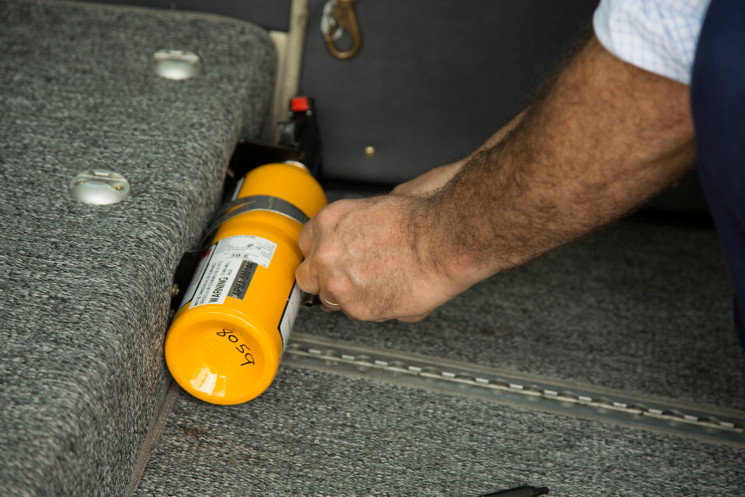
It’s not just the extra items brought onto your aircraft either. Many aircraft were found to have incorrectly secured first aid kits, survival equipment, fire extinguishers and toolkits.

So, here’s a reminder of what you must, and what you should, do.

Cargo
Cargo must be restrained using approved equipment or securely stowed in a place designed and approved for that purpose. There are exceptions, such carrying assistance animals in the cabin and carry-on baggage.

Cargo must not be carried:
• where it could damage, obstruct or cause the failure of any equipment essential to the safe operation of the aircraft
• where it is heavier than the load limitations for the floor structure or any other load-bearing components
• where it obstructs an aisle (except for the temporary access of passenger service or galley equipment)
• where it obstructs or restricts an emergency exit – unless CASA has given approval.

Carry-on
Carry-on baggage must be securely stowed when taking off, landing, or when you, the pilot, directs.It must be stowed in a place designed and approved for that purpose or otherwise securely restrained.

You must not stow baggage:
• in toilets or against bulkheads
• in a way that prevents overhead lockers from being latched
• where it impedes access to emergency equipment.

You should stow luggage:
• in a location in the cabin capable of restraining it
• with a restraint bar if it is under a seat.

Before take-off, landing or in turbulence, you should check that the baggage won’t:
• cause injury if it falls
• impede an emergency evacuation.

Add checking the safe stowage and restraint of your cargo and luggage to your pre-flight safety check.

Find more resources on flight planning in the pilot safety hub.

Further reading:
Plain English Guide – general operating and flight rules

Caught in the clouds

4

How thorough flight planning can avoid the trap of VFR into IMC

The recent accidents of a Van’s Aircraft flying into cloud and breaking up near Charters Towers and the Cessna R182 Skylane RG that crashed in heavy fog near Archerfield airport serve as a stark reminder of the importance of knowing what to do if you find yourself in the dangerous situation of VFR into IMC.

Inadvertent VFR into IMC is a serious safety issue, and one that is consistently ranked as a top contributor to aviation accidents worldwide. Inexperienced pilots, and pilots who are not trained to rely upon their instruments, can suffer from severe disorientation and loss of spatial awareness, resulting in the inability to make informed decisions and perform critical tasks.

What can you do to avoid flying into IMC conditions?

‘The most critical thing is pre-flight planning. IMC incidents can most certainly be avoided with thorough planning and careful consideration of forecasted weather events, both before the flight and during the flight if circumstances are such that the plan need to be altered, based on the prevailing weather,’ explains David Wilson, Senior Accident Investigator at the Australian Transport Safety Bureau (ATSB).

‘One in 10 VFR-into-IMC cases lead to a fatal accident. That’s the unfortunate truth of the matter.’

When it comes to planning for the weather, Rebecca Ryan, Aviation Meteorologist at the Bureau of Meteorology, says there are a number of documents pilots should be aware of and utilising when planning their flights.

‘It’s important pilots get weather forecasts from the National Aeronautical Information Processing System (NAIPS), as well as the aerodrome forecast (TAF), and the graphical area forecast (GAF)’, Ryan says.

‘When consulting these documents, it is essential pilots don’t just look at the forecast for the few hours that might be their flying window, but rather the forecast for the whole period, so they know about any potential weather possibilities that might eventuate should delays occur.’

Ryan emphasises the importance of looking at the GAF chart in particular, which provides weather forecasts in six-hour blocks. This information is useful for pilots intending on flying greater distances over a longer period of time because they can determine the forecast at a particular location at the time they expect to be in the area.

The Bureau has released a helpful video explaining how the GAF works and how pilots should use it when planning flights.

Source: Bureau of Meteorology

What should you do if you find yourself flying into IMC?

The most important thing to do is not panic. These words may be cold comfort but, from a human factors point of view, as soon as panic sets in, it is very easy to become overwhelmed by the myriad of tasks you need to do. Your capacity to effectively diagnose a problem and work towards a rational and safe solution is drastically diminished when stress levels are high.

As we know, VFR pilots need visual reference points to orientate themselves. Therefore, flying into cloud – with no horizon visible – is a very confronting experience for a VFR pilot, explains Corporate Air Captain Allison Lane.

‘The biggest risk of flying into IMC is: what do you trust?’ she says.

‘Typically, spatial disorientation is what starts developing when we fly into cloud – that we start trusting what the fluid in our ears is telling us, which is not always a good indicator of what is correct. As a result, pilots really don’t know where they are in space.’

Lane suggests if a pilot sees a stormfront on their track, the best thing to do is perform a 180-degree turn, fly away from the weather system and head to a suitable aerodrome where it is safe to land. Flight plans need to be flexible to give you the best possible chance to avoid the weather system and fly to a safe destination.

Once on the ground, pilots can begin the process of replanning their flight around the weather, or ideally, once the storm passes.

This scenario is the best possible situation to be in. Sometimes, when the weather changes rapidly, you don’t have the luxury of simply turning around and flying to a safe destination.

You should be prepared and capable of adapting to unfolding weather situations in case conditions deteriorate further.

Another way to fly out of cloud is to use the aircraft’s systems. Modern GPS equipment often includes basic variations of ground proximity (GPWS) and terrain awareness warning systems (TAWS). Although individual commercial brands are largely unregulated, they can still offer some degree of obstacle awareness in the absence of any visual references. Before using uncertified GPWS/TAWS, check you are adequately trained to use them properly.

For trained IFR pilots, instigating an effective visual scanning technique is a good way to orientate yourself during flight. But VFR pilots should be wary about this technique, as your natural inclinations might be different to what your indicators are reading, further adding to the confusion. Watch the below video about how your instruments and your brain compete, providing you inconsistent and contradictory information.

Source:CASABriefing

Despite the usefulness of in-built systems, pilot vigilance should always be the first priority. The best advice a VFR pilot can take is – if bad weather is forecast, double-check the current forecast and, if in doubt, cancel the flight rather than risk your life. It’s not worth it.

To find out more about inadvertent VFR into IMC, check out the weather and forecasting and flight planning topics on CASA’s Pilot safety hub.

Don’t forget to watch the AvSafety investigation about deteriorating weather, where the panel discuss a VFR-into-IMC close call incident.

Source:CASABriefing

Outback AME finds her niche


Scholarship recipient Ella Watson reflects on her win

If you’ve ever been lucky enough to visit Fitzroy Crossing, the small town located in the Kimberley region of Western Australia, you’ll surely have been struck by its breathtaking natural beauty. The town serves as a gateway to several national parks and attractions, drawing tourists keen on exploring the region’s natural splendour and rich cultural heritage.

The area also boasts a thriving aviation industry, which helps ferries the many tourists and visitors around this remote corner of the Outback.

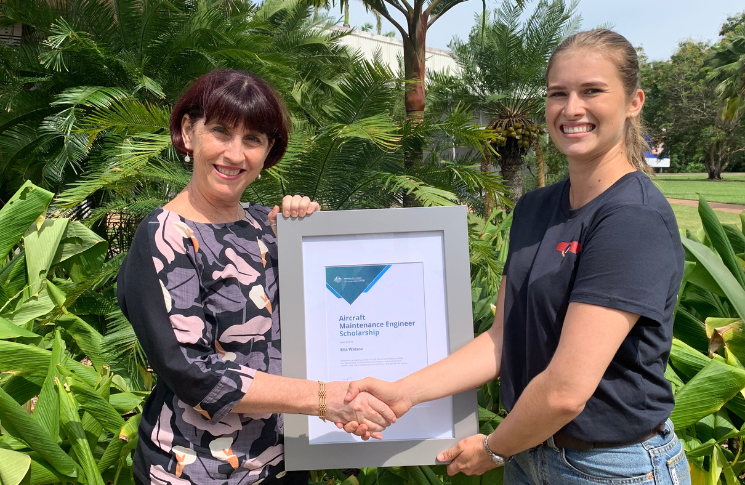
It’s also in this scenic locale, that former Sydneysider Ella Watson found her footing in the aviation industry. As the recipient of one of CASA’s aircraft maintenance engineer (AME) scholarships, she secured a ‘dream job’ with Kimberley Heli Maintenance – Helico.

Despite having no family history in aviation, Ella’s embraced her role as a Top End helicopter maintenance engineer with gusto and dedication.

‘Aviation wasn’t something I even knew much about before I began my apprenticeship,’ she explains.

‘I was always interested in mechanics and wasn’t sure which direction I wanted to go. My partner’s brother is an aircraft engineer and he offered me a week’s work placement in Kununurra with Northern Helicopter maintenance to see if I liked it – and I loved it.

‘So, I started studying with [training organisation] Aviation Australia at the beginning of the COVID pandemic in 2020, which was both good and bad in terms of travelling back to Perth for in-person classes.

‘Eventually I transferred to online learning and the teachers were really supportive. We created a great community within my class group, and I we still draw from each other a lot.

‘I’ve also got a good local network too. A lot of my engineering friends in Perth work on planes or turbine helicopters so it’s a great variety of people to know within the industry.’

Ella recently received her AME scholarship award from CASA’s Saskia Coleman, team manager, Regulatory Oversight Division, in Darwin. Image: CASA

Unique work location
Ella highlights the interesting challenges that come with working in remote locations such as Kununurra and Fitzroy Crossing but emphasises that the hands-on experience gained in such environments is worth the lack of city conveniences.

‘We fly into outback stations a lot and last year we actually did 2 aircraft recoveries,’ she says. ‘With one we had to take the helicopter apart, sling parts of it out and then put it on a truck and get it back to maintenance, which was I thought was a really cool experience.

‘I really love it because it just feels like it’s a big job, and it’s a challenge because you’re not in your normal work environment. There’s a lot planning that goes into it and thinking about how you’re going to execute the takedown. And then transporting the aircraft in a way that’s safe for us and safe for the aircraft too.

‘But there’s also constant ongoing pressure during the dry season because it is just go, go, go. It’s big hours and you’ve really got to be able to keep yourself switched on all the time and handle your fatigue.’

Engineer qualities

Even though she’s only a few years into her career, Ella acknowledges that attention to detail and patience are the key to becoming an aircraft engineer.

‘You also need to be really driven about your work because it can be so intense,’ she says. ‘Keep calm and collected and work through things as you usually would, no matter about the time pressure. It’s a really rewarding job. And it’s really inspiring too, and kind of fun as you’re always doing or learning something new.

‘Even engineers who I’ve worked with and been doing it for 10 years or more are always saying that they’re still learning.’

Despite the male-dominated nature of her industry, she has remained determined to advance and achieve her career aspirations as a female aviation engineer. With females only representing one per cent of AMEs in Australia, her persistence and dedication stand as a testament to breaking down barriers and paving the way for greater gender diversity in the field.

‘I was so worried when I first started out that I wouldn’t be taken seriously,’ she reflects, ‘but looking back now, it was just not like that for me.
‘And until recently I’ve almost always just worked with male engineers but now it’s myself and another female engineer at my workplace, which is great.’

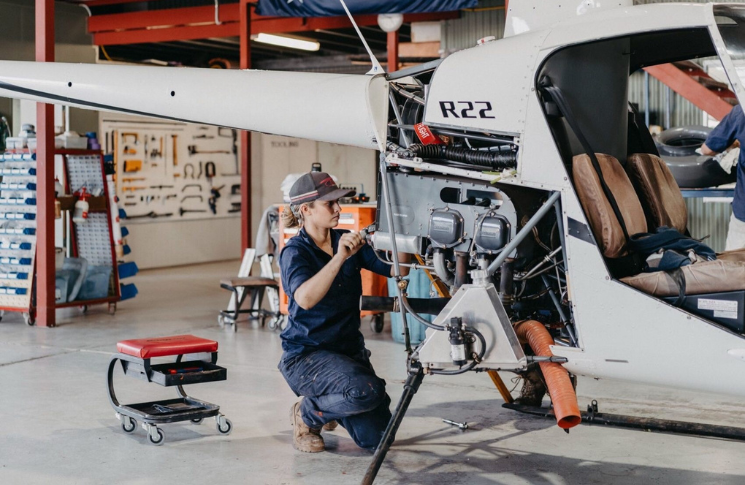
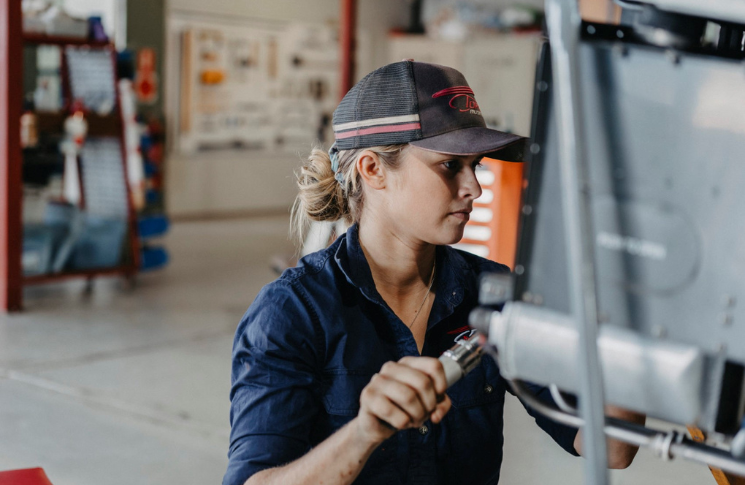
Ella in work action at Kimberley Heli Maintenance – Helico. Image: Ella Watson

AME scholarship effect
Ella’s journey shows the transformative impact that scholarships can have on students’ lives, providing not just financial aid but also the encouragement and motivation needed to excel in their chosen field.

‘I was over the moon,’ she laughs heartily, reflecting on the moment she received the news. ‘I wasn’t expecting it, and so when I got the call, I couldn’t believe it. It was unreal, and it has just been so helpful.’

This scholarship has provided Ella with invaluable financial support, allowing her to travel to Brisbane last year to complete many of her practical subjects.

‘It funded all of that,’ she says. ‘It’s also given me an awesome kind of leg up to finish things off, so, it really, really has been helpful to be able to get through to the last little bit of my studies.’

For now, Ella is focused on continuing to work with helicopters but doesn’t rule out travelling overseas to gain further experience. She’s also made the move Kimberley Heli Maintenance’s secondary base in Darwin.

Earth, wind and water

The elements humble a newly qualified pilot.

I was a freshly minted CPL with the world at my feet, or so I thought.

After arriving in a coastal town located in Western Australia, I’d managed to score that illusive first job in aviation – flying charter and scenics. Emotions were understandably running high.

I’d been checked to line only 2 days prior and had already witnessed the aftermath of a botched landing attempt at one of the strips we fly to regularly, probably an early indicator of the unforgiving nature of the task at hand.

It was a simple flight, just 40 minutes to the island strip, drop the passengers off and then straight back to town empty, with an estimated landing time of 5:30 pm, about 45 minutes before last light.

The weather was relatively good too, some cloud up high and only a PROB30 INTER TSRA 3000 to contend with. How many times I’d seen this and thought nothing of it – a 30% chance a thunderstorm will roll through intermittently – so it can’t be that bad if it turns up at all.

Everything went perfectly on the way out, then a turnaround and I was back in the air heading for home around 5 pm. It wasn’t until around 5:20 pm when the first sign of apprehension set in as I noticed what appeared to be a small amount of towering cumulus off in the distance.

Within 5 minutes, the chief pilot was frantically calling me, about the only time in my career I’ve been thankful of this! This system had come from nowhere. A late afternoon thunderstorm had spawned inside of 10 minutes and the coastline in front of me was disappearing under a layer of cloud at no more than 1,000 feet AGL.

The chief pilot was giving me ground reports of what he was seeing and it wasn’t good. Heavy showers, low ceiling and reduced visibility over the airfield, no place for a VFR aircraft to be. At 20 nm from home, I could see I wasn’t going to make it straight in so I began to slow the aircraft to conserve fuel should I need it.

Surely, a hole would open up and I could just come in and land, I thought naively.

I began slowly heading north, about 10 nm off the coast, and waited for the weather to pass through, still considering this an INTER event. Surely, a hole would open up and I could just come in and land, I thought naively.

As any prudent pilot would, I used this time to start thinking of alternate plans that were within reach before last light became an issue. The problem was, by the time I thought to consider turning back to where I’d come from (time now 5:40 pm), arrival there would be about 10 minutes past sunset. There is no runway lighting at the island and this wasn’t a risk I wanted to take.

If the storm began moving over the water, I would be stranded and forced to land at a relatively unfamiliar, short dirt strip in the dark. All of a sudden, my best option 5 minutes ago is no longer a good idea.

As I was distracted talking to the chief pilot, then faffing around pulling out my WAC chart from under my seat, then looking for all those small purple circles dotted along the countryside, my distracted self began drifting closer to the storm.

Then the turbulence hit. The WAC chart became unreadable as my head now bounced off the ceiling, knocking my headset off. I’d managed to spot something on the WAC chart and knew it was about 30 nm to the north of town. The storm was moving south-west, so getting to the north of it was the safest option.

After frantically calling the chief pilot again, he managed to send me a drop pin of the strip on Google Maps, as I headed further offshore to escape the brutal turbulence.

I managed to scud run north following the coastline, just below the cloud ceiling at 800 feet and, for a moment, things seemed to be going better. I finally had visual on the northern edge of the storm, the GPS location on my phone and a dropped pin I was tracking towards.

When I approached the strip, I was in luck – it was in clear skies by a margin no greater than 2 nm. It was hard to spot the dirt strip, it hadn’t been used in months and a quick strip inspection deemed it adequate for landing. As I wasn’t going anywhere else at this stage, I’d need to see a boulder in the middle of the strip to convince me otherwise.

With the sun dipping below the horizon, I touched down with one of the worst landings that poor Cessna had ever experienced. Turns out when you make it overhead the field after a stressful situation, you can’t just switch off and think, ‘Gee, I made it!’.

After rolling to a stop and parking the aircraft, I couldn’t help but notice the ground was wet, the storm had just rolled through. The realisation hit – if I wasn’t able to get in there, the only airstrip further north was another 20 minutes away, right on last light. No night rating in a day VFR aircraft – that surely would have tested the abilities of this hotshot fresh CPL.

It took a few hours to get a vehicle out to collect me and I was able to take that time to realise just how lucky I’d been. I discovered 41 mm of rain fell in 1.5 hours over the town, pretty impressive for PROB30 INTER I must say.

Lessons learnt

I was not prepared. Combine that with the arrogance of passing your CPL flight test and line check 2 weeks earlier, was a recipe for disaster.

I pulled out the WAC chart too late and couldn’t get any lead-in features to the airstrip while it jiggled in my hands. I’d never considered the possibility the weather could turn like it did that day, the speed at which it formed was astounding.

Also, the hard landing was a textbook human factors case of switching off after a highly stressful situation. It’s fair to say nowadays I’ve got an ‘escape plan’ for whenever I go flying, regardless.

Which way is the wind going? What airstrips are near my escape plan track and what landmarks are nearby to easily locate them? An idea I’ve since heard about is to visualise a circle around your current position. Fuel, last light and any other factor limit the radius of that circle, which is determined by time multiplied by ground speed. As your circle starts reducing in size, your options may start falling outside the circle. 

If the storm began moving over the water, I would be stranded and forced to land at a relatively unfamiliar, short dirt strip in the dark.

Weather and forecasting is one of the special topics on our Pilot safety hub.


Have you had a close call?

8 in 10 pilots say they learn best from other pilots and your narrow escape can be a valuable lesson.

We invite you to share your experience to help us improve aviation safety, whatever your role.

Find out more and share your close call here.

Disclaimer

Close calls are contributed by readers like you. They are someone’s account of a real-life experience. We publish close calls so others can learn positive lessons from their stories, and to stimulate discussion. We do our best to verify the information but cannot guarantee it is free of mistakes or errors.

Flying high: a century of excellence at the Royal Victorian Aero Club

Few aero clubs can claim such a storied history as the Royal Victorian Aero Club (RVAC), dating back to 1914 — just a few short years after the Wright brothers made their first historic flight at Kitty Hawk.
Founded with the intention of training pilots, a few notable members from the Australian Flying Corps in World War I, formed the Australia Aero Club, Victoria section (now RVAC) was originally located at Point Cook, where it operated several of the early aircraft that have since faded into the aviation history archives – machines such as the de Havilland Hummingbird monoplane and Gipsy Moth biplane.

During the war, the Corps played a crucial role in reconnaissance, bombing, and air defence for Australian and Allied forces, with its pilots and crews facing immense challenges and risks. The RVAC’s early involvement in military aviation set the stage for its future role in shaping Australia’s civilian aviation sector, with many of its members later playing prominent roles in the nation’s burgeoning airline industry.

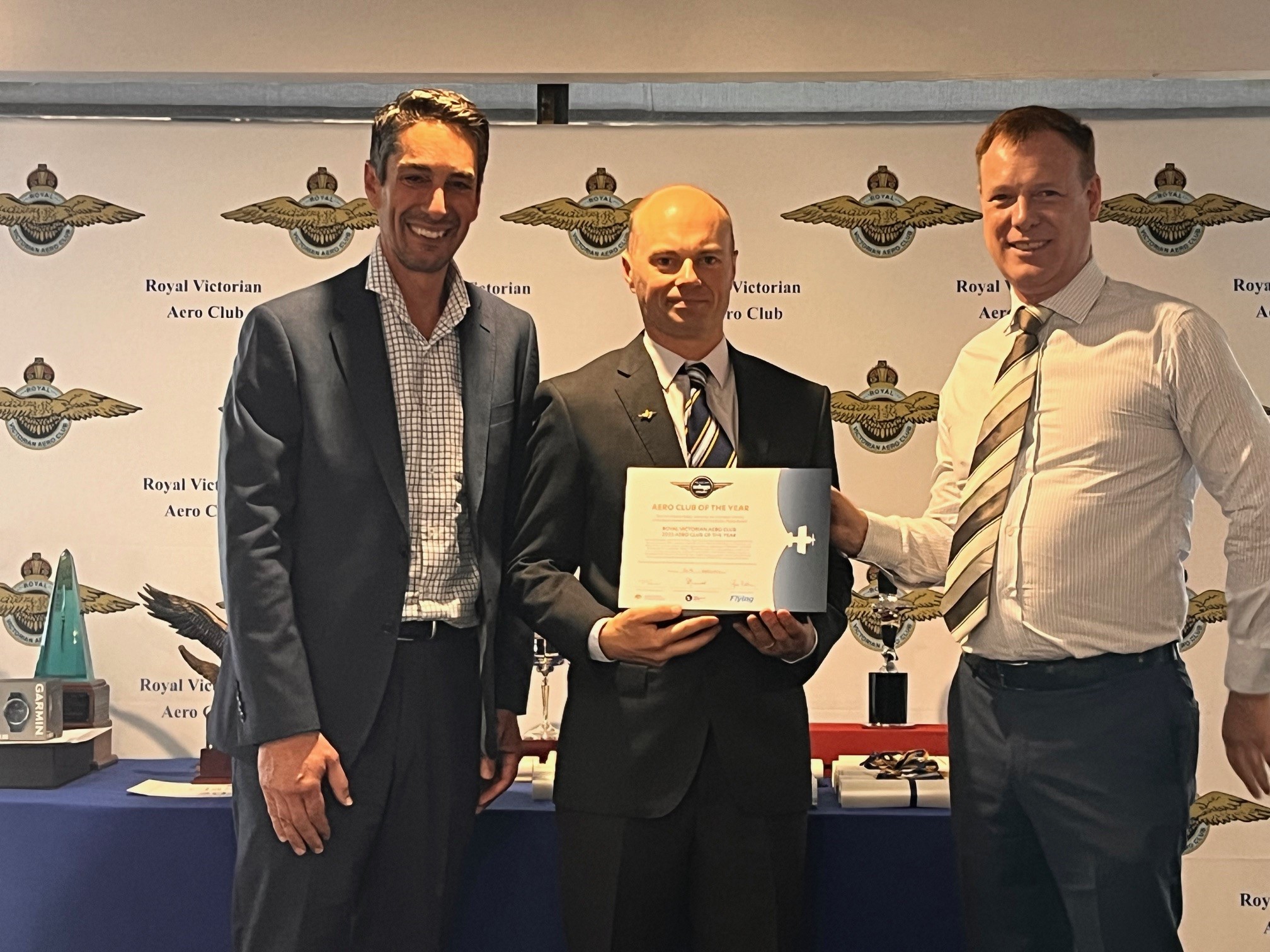
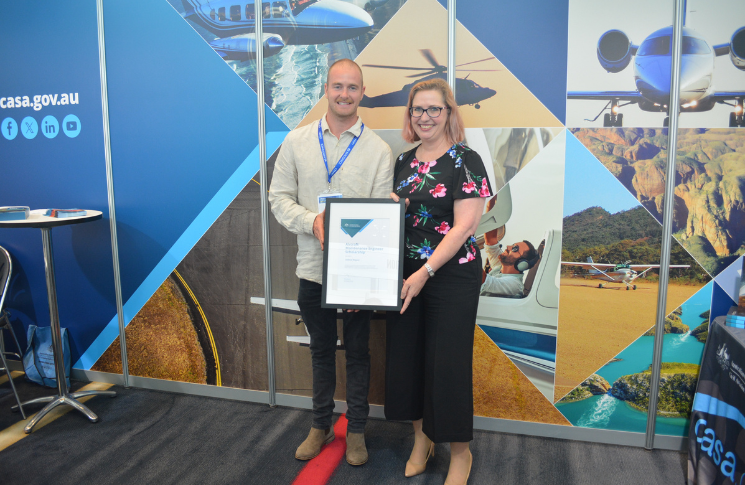
Over a century later, the club – now located at Moorabbin Airport – was recognised as the Australian Flying Wings Awards Aero Club of the Year at an event on Saturday, presented by CASA’s Andreas Marcelja, Executive Manager, Stakeholder Engagement division.

With a full-time CEO, monthly competitions, two flight simulators, and flyaways to fantastic locations such as Longreach, the club has also transitioned into 21st century technology by creating its own dedicated members app.

Club president Anthony Jones admits it’s been a long haul back post COVID, but the club continues to grow, with membership recently tipping over 400 members.

‘We’ve had a membership climb in the last 12 months after maybe 7 or 8 years of slow decline, which is really positive,’ Jones says.

‘This can probably be attributed to people coming out of the pandemic and wanting to get into flying again. We’ve also rejuvenated member activities such as flyways and added in a few more social events too.

‘Our safety sessions have focused on the topics that are relevant to our private members such as dealing with automation, advanced cockpits and the latest and greatest Garmin equipment.’

With members ranging in age from 16 to 80, the RVAC also fosters a vibrant social environment where individuals from diverse backgrounds and age groups come together to share their love for aviation.
‘We have a cohort of members called the “penguins”,’ Jones explains. ‘Obviously penguins are flightless but these are valued members who’ve had a licence at one point and for one reason or another had to give that up but remain in the club to maintain social contact.

‘One of our highlights is an annual trivial night with Lilydale Flying Club and Peninsula Aero Club and now that’s expanded to include the Latrobe Valley Flying Club too. It’s quite competitive but really enjoyable and each club takes a turn in hosting the event.

‘We also continue to commemorate the Battle of Britain with a dawn flight around Port Phillip Bay. It’s quite a sight seeing around 15 planes in a loose formation and we always cap it off with an interesting special guest speaker at our breakfast event afterwards.’

Jones explains that the club has also successfully managed to bridge the gap between flight school and flying club, with a strong focus on safety, a supportive learning environment, and member support.
‘The camaraderie of any flying club is that everyone has at least one thing in common, and that’s aviation,’ he says.

‘Having an aircraft fleet that members want to fly in and that are good for training is essential and that’s what our club has.

‘As a flying club, whenever we make decisions at a board level, we keep thinking about what our purpose actually is and what’s the vision and the goals of our organisation so that those choices benefit the entire club and keep us on track toward achieving our future objectives.’