Proficient approaching professional

0

Specific programs for weekend and fair-weather pilots to hone their skills are money well spent.

Imagine it’s a clear sunny day – perfect conditions. You’re flying a Cessna 182 off the coast of Byron Bay. You look down and see beachgoers scattered along the pristine sandy shoreline enjoying the warm weather.

You complete your run along the coast, following it back to Ballina airport. Suddenly, there’s a loud sound and you quickly begin to lose power. You don’t know what’s happened but you know you don’t have long to diagnose the problem. In the heat of the moment, would your flight training kick in and you’d know what to do?

For recreational pilots, flying is a much-loved pastime. Some fly every weekend, criss-crossing the countryside, visiting far away destinations, whereas others only fly every so often.

Unlike career pilots, recreational pilots tend to fly only when conditions are good. It is rare for a recreational pilot to venture out when a storm front is approaching. Blue skies are great for joy flying, but perfect conditions don’t adequately prepare pilots for less-than-ideal circumstances that might arise unexpectedly.

To address this potential gap in experience, several aircraft-specific groups hold pilot proficiency programs for their members to identify areas where skills might be lacking and offer refresher sessions on how to respond to adverse events that can arise during flight. These programs can take several forms, but are primarily a way for the aviation community to come together and talk about safety issues pertinent to their aircraft.

The proficiency check component of the pilot proficiency program involves having an instructor sitting in the copilot seat simulate a hazardous event and examine the response of the pilot in command, to determine if they are successful in troubleshooting the problem safely and effectively.

Events that can be simulated include minor incidents such as aerodynamic stalls, precautionary landings and weather deviations, as well as more serious events like system malfunctions, unstable approaches and engine failure at take-off or cruising altitude.

Australian Piper Aircraft Society president David Goode says recreational pilots must make a distinction between being competent and being proficient.

‘The vast majority of our members are competent pilots – they’ve passed their flight examinations and received their licences, so they have been deemed competent to fly,’ he says. ‘But this doesn’t necessarily mean they’re proficient in handling an incident they’ve rarely encountered, if at all.

‘It’s our responsibility to ensure our members are being as safe as possible when flying, and this includes doing our due diligence by making sure they know how to handle tricky situations if and when they happen.’

These sentiments are reinforced by Bruce Baade from the Australian Beechcraft Society.

‘The message we want them to take away is understanding the need to always maintain awareness of their surroundings and how the aircraft is operating – and develop the ability to calmly diagnose a problem and then act decisively,’ he says.

‘There are a lot of cowboys out there thinking they can just wing it when an incident occurs, but that’s a very bad mindset to have.’

When the groups are devising proceedings for their respective programs, they find being aircraft type-specific makes scoping topics much easier.

Baade points to this factor as one of the key reasons for the program’s success with Beechcraft owners.

‘Having a targeted approach is beneficial to members. I think that’s why pilots are so keen to come along to our event,’ he says. ‘They know the information presented will be useful to them and won’t just be a never-ending talkfest. They’ll get something useful out of it.’

Mooney masters

Baade says the weekend is also a great opportunity for pilots from all walks of life to catch up, share stories, network and connect with each other through their love of flying.

‘We can talk about safe flying forever but, at the end of the day, it’s a social event,’ he says. ‘We love having our members under the one roof, from all different parts of the country – some even come over from New Zealand to be involved.

‘Each of us bring different levels of experience to the conversations. It’s a great way for less experienced pilots to get deeper insights from those with a wealth of experience.’

Erik Mol, chief flight instructor for the Australian Mooney Pilots Association, which has been running pilot proficiency programs for close to 30 years, emphasises understanding an aircraft’s efficiency as a key take away for participants.

‘It’s not simply being proficient at flying but knowing how to efficiently operate the aircraft is equally important,’ he says.

‘For instance, in order for a pilot to get out of a tricky situation in flight, they need to know the capabilities of the aircraft, how it handles, which speeds are the best to perform manoeuvres or come in for a smooth landing.

‘Pilots need to know their aircraft inside out, its idiosyncrasies and its strengths and weaknesses, so it can be flown proficiently.’

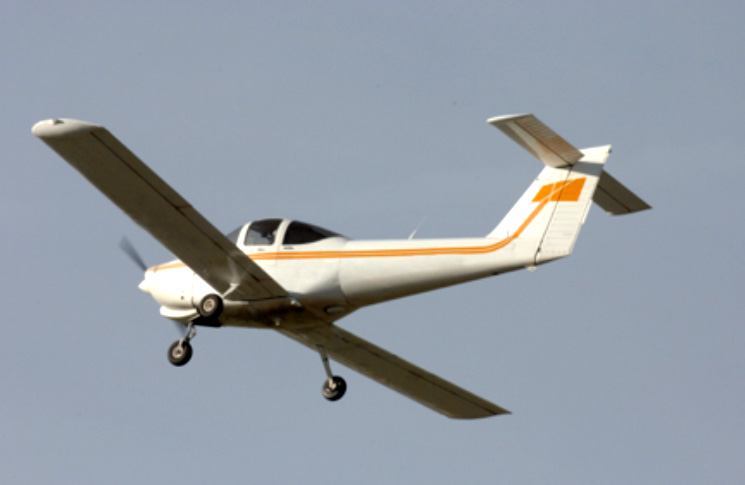
Mooney aircraft have a reputation for being a difficult aircraft to fly. Mol explains their pilot proficiency program was born out of the regulator’s decision to add additional requirements for Mooney pilots to attain their licence, which wasn’t applied to pilots of comparable aircraft.

‘Mooney pilots didn’t like the idea of having to gain additional accreditation to fly an aircraft they loved so much,’ he says. ‘So, as a compromise, we assured the regulator we would hold regularly scheduled proficiency checks to ensure pilots were able to refresh their knowledge and practise for difficult flying conditions – and CASA was happy with that.’

Like the Piper and Beechcraft group, Mol also praises the social aspect of Mooney events.

‘Our pilots are incredibly proud of their aircraft,’ he says. ‘The program gives them a chance to discuss safety related matters with other members, what they’re doing in terms of maintenance and upkeep, and reiterating best practice to ensure all members are flying as safely as possible.

‘We love seeing so many passionate people in the one room. It’s a great community atmosphere.’

image: Adobe Stock | Jakub

Piper perfectionists

Despite the positive engagement, the groups acknowledge there are always challenges.

‘We find the pilots who attend our program aren’t the ones who really need to be there,’ Baade says. ‘These pilots already conduct their flying safely. It’s the cowboy pilots I mentioned earlier who take unnecessary risks who should really be there. But they often don’t come because they think they’re invincible!

‘It’s a challenge to convince them to attend, but it’s not through lack of trying.

‘Risk-taking is part of human nature. We all take risks every day, whether we realise it or not. Even safe pilots take risks sometimes, such as skipping a step in a checklist or flying too close to clouds or storms.

‘Of course, we want our pilots to take away key messages of safety, but more importantly, we want them to build networks, discuss safety matters with like-minded people and enjoy the experience of being in our club. After all, it’s all about having fun.’

Goode has observed that when pilots fly alone or with passengers who know little about flying, they tend to take inadvertent risks, particularly when managing multiple tasks. There is a mindset of, ‘I’d have to be pretty unlucky for an accident to happen to me.’

To counter this mindset, the Piper group has begun holding a ‘Partners in flight’ program, which runs concurrently with the main pilot proficiency event.

‘Partners in flight is a great initiative we began a couple of years ago,’ Goode says. ‘The program invites partners and significant others to participate and familiarise themselves with all the tasks pilots need to undertake during any given flight.

‘Our members love taking their families up on joy flights. One day we had a brilliant idea: what if a passenger could assist the pilot in command by carrying out small tasks to alleviate their workload so they can concentrate on navigation and monitoring the controls.

‘We don’t expect passengers to be able to take control and get out of stalls or diagnose the cause of an engine failure, but they can help by providing valuable support during critical times of flight. This could be anything from looking up and entering radio frequencies or pulling up maps and charts.

‘We’re not necessarily treating the partner as a copilot but looking at it more from a crew resource management point of view. We want to encourage partners to participate in the flight, available to assist the pilot if and when required.’

David says if partners are aware of what is happening in the cockpit, the pilot is less likely to take unnecessary risks.

Beech barons

Wichita-based flight instructor Thomas P Turner, a regular contributor to this magazine, was planning to make his seventh appearance at the Beechcraft event.

‘The program is all about becoming an even better and safer pilot by sharing experiences with fellow Beech pilots and engineers, and learning from presentations about flying, maintaining and owning Beech aeroplanes,’ he says.

‘I believe the 3 key reasons pilots come to the program are:

  • the expert presentations by industry leaders on Beech aeroplanes, avionics and products and services that support and enhance flying efficiency and safety
  • the ability to share what they have learnt with other Beech pilots, and learn from them during informal discussions before and after the classroom presentations
  • the opportunity to have their Beech inspected by an expert engineer and to fly with a type-specific expert instructor to confirm that the way the pilot flies and maintains the aircraft is safe, detect and correct any bad habits and expand their knowledge and precision in the aircraft for normal, abnormal and emergency operations.

‘The key message I want pilots to take home is that there are very few unknowns in flying – the trick is to continually seek out what is known so it becomes part of how you fly.

‘Almost all accident scenarios are predictable and repeat the same issues other pilots have encountered, time and again. We can learn from mishap history to avoid repeating the mistakes. Once an accident scenario begins to unfold, knowing the aeroplane’s systems and procedures often determines the outcome.

‘Most questions pilots have about their aircraft are well documented in the pilot’s operating handbook and other resources, allowing us to learn and practise skills before we find ourselves needing them in flight.

‘In my lecture I will be stressing the importance of knowing the characteristics of the specific aeroplane so pilots may fly more easily and precisely. I also discuss techniques for getting maximum performance, efficiency and longevity from the airframe and engine and the effective use of checklists in a single-pilot cockpit including how to easily practise and remember emergency procedures.

‘My presentations are interactive, so I encourage those who will attend to bring their stories of stress and success so we may all learn from their experience.’

The Australian Piper Aircraft Society, Australian Beechcraft Society and Australian Mooney Pilots Association regard their programs as successful in delivering the desired outcomes for their members. The proof of that is all three programs attract large numbers of pilots.

CASA sponsors events such as pilot proficiency programs. Groups and aeroclubs wishing to apply for sponsorship should visit our website.

We find the pilots who attend our program aren’t the ones who really need to be there.
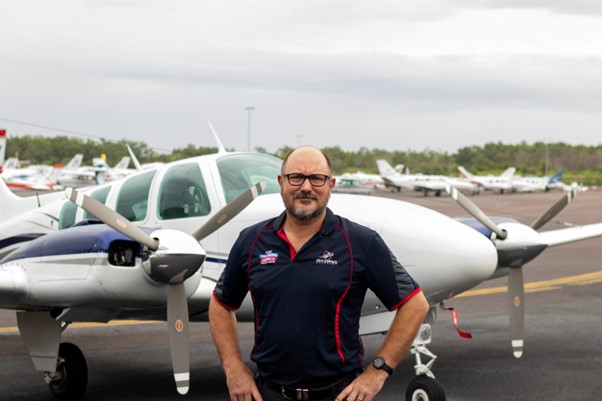
Wings Award winner profile — Trent Robinson

Trent Robinson’s life has been soaring among the clouds since he was a child. Growing up with a father who was an airline pilot with Ansett, aviation was more than a career path.

‘My decision was made for me at an early age,’ says Trent.

‘I was making paper planes and playing on flight SIM 2.0, so getting into aviation and flying was always something I wanted to do.’

Trent’s journey from childhood fascination with aircraft to being a seasoned flying instructor has been marked by determination and a love for the skies and flying. He began his formal training in 1995 at the Royal Aero Club of Western Australia, working his way up from a student pilot to eventually becoming a Grade 3 instructor in 1998.

‘I had to wait for the winter to pass, so I started chipping away at the airline transport pilot licence,’ says Trent.

‘Eventually, I started flying at the aeroclub as an instructor, and I was there for about 10 years.’

During his tenure at the aeroclub, Trent experienced a diverse range of flying opportunities, including joy flights in tiger moths and single-engine charters to remote mines.

‘It was a very enriching environment where I could both teach and fly commercially. Having that mix of experiences allowed me to pass on valuable insights to my students.’

In 2018, Trent made the move to Darwin, where he took on roles in aeromedical flying and eventually established himself as the head of operations at Darwin Flight Training.

‘Moving to Darwin presented new challenges and opportunities,’ says Trent.

‘I found myself drawn back to flight training and testing, which has always been a passion of mine.’

Trent’s commitment to aviation education extends beyond the cockpit. He hosts a popular podcast titled ‘Flight Training Australia,’ where he shares insights and expertise garnered over decades in the industry.

‘The podcast is about bridging the gap in the Australian aviation market,’ Trent explains.

‘I want to reach as many people as I can and provide them with valuable knowledge and practical advice.’

One of Trent’s key philosophies as an instructor is the importance of real-world training.

‘To become a flying instructor, it’s all just time and experience. But the real challenge lies in preparing students for emergency situations and ensuring they remain proficient in their skills.’

In the unpredictable skies of Darwin, Trent’s students are exposed to a wide range of flying conditions, from smoke-filled skies during burn offs to dark, challenging night flights.

‘It’s about making students aware of their limitations and teaching them to react appropriately in any situation,’ Trent says.

‘We practice drills and scenarios to ensure they’re prepared for whatever the skies may throw at them.’

Trent’s dedication to excellence in aviation instruction has not gone unnoticed; his innovative approach to training his students and commitment to safety has earned him the prestigious CASA Wings Award.

‘It’s an honour to be recognised for my contributions to flight safety, but this award is not just for me; it’s a testament to the hard work and dedication of all aviation instructors.’

Looking ahead, Trent remains focused on expanding his reach and continuing to make a positive impact in the aviation community.

‘My goal is to help as many people as I can and to raise the standards of flight training. Whether through my podcast, my work as an instructor, or my involvement in the industry, I want to ensure that every pilot is equipped with the knowledge and skills they need to fly safely.’

As Trent continues to pass on his wealth of knowledge to the next generation of aviators, his passion for flying remains as strong as ever.

‘Flying isn’t just a job for me; it’s a way of life. And I’m grateful for every opportunity I have to share my passion with others.’-

See you, see me: ADS-B

1

Automatic dependent surveillance–broadcast (ADS-B) could save your life which is why the government will pay you to fit it.

What is ADS-B?

ADS-B is a system that makes an aircraft visible to air traffic control and other aircraft (via a component called ADS-B OUT) and, depending on the configuration installed in an aircraft, allows the pilot to see other surrounding aircraft while in the air (via a component called ADS-B IN). It plays an important role in improving situational awareness for pilots.

ADS-B OUT works by broadcasting information about an aircraft’s precise location based on the GPS, barometric altitude, identification and other data to ground stations and other aircraft, once per second.

Since 2017 all aircraft in Australia operating under IFR are required to be fitted with ADS-B OUT. Aircraft operating under VFR are not required to have the system installed; however, this is strongly encouraged and several options are available to install lower-cost equipment. Australia does not currently require aircraft to be fitted with ADS-B IN.

The safety benefits

The Australian Transport Safety Bureau (ATSB) provides a strong argument about the safety benefits of ADS-B through its investigation of aviation accidents and near misses.

Chief Commissioner Angus Mitchell says, ‘When accidents occur in areas of no radar coverage, and where there are no survivors, no witnesses and no on-board recording devices, ADS-B data becomes very valuable evidence for our investigators and their investigations, which ultimately contributes towards better safety outcomes for the whole aviation community.’

A fatal mid-air collision

In February 2020 a Piper PA-44-180 Seminole and a Beech D95A Travel Air collided mid-air, 8 km south of Mangalore Airport in Victoria, resulting in the fatalities of all on board both aircraft. It was the first mid-air collision between 2 civil-registered aircraft operating under IFR in Australia.

While all IFR aircraft must be equipped with ADS-B OUT, neither aircraft had ADS-B IN capability to see each other.

Mitchell says the bureau’s visibility study produced in support of the investigation showed that had the aircraft been equipped with ADS-B IN, the pilots most likely would have located each other before disaster struck.

‘A cockpit display of traffic information with an ADS-B traffic alerting system, or an electronic conspicuity device connected to an electronic flight bag application, could have provided this advance warning of a potential collision to the pilots of both aircraft with this tragic accident probably being avoided.’

Near misses

In October 2023 ATSB investigators received a report of a near-collision within the non-controlled Moorabbin training area in Victoria. A Sling light sport aircraft and a Piper Cherokee came within 100 metres of each other at the same altitude. Although neither aircraft was equipped with ADS-B IN, the flight tracking data confirmed the report and showed investigators just how close both aircraft came to colliding.

‘The flight tracking data we obtained confirmed the Sling crew’s report, as well as showing us just how close both aircraft came to colliding mid-air. Neither aircraft was equipped with ADS-B IN systems, nor were they required to be,’ Mitchell says. ‘However, in lieu of a formal transport safety investigation into this near-collision, we are using this occurrence to further encourage all general and recreational aircraft owners and pilots to strongly consider equipping with ADS-B IN for improving situational awareness.’

RAAus pilot Don Townsend, who has been flying for more than 45 years recalls a similar moment several years ago where ADS-B proved invaluable. Equipped with an iPad running AvPlan, Townsend was flying in a friend’s aircraft when they noticed an aircraft appear at the same altitude heading south – straight at them. They received a traffic alert from the device but couldn’t visually see the aircraft until it was almost on top of them. They quickly descended and watched as it flew over.

‘Luckily, even though he wasn’t looking at it, he had AvPlan running which was what alerted us,’ Townsend says. ‘I often wonder what would have happened had he not had his AvPlan switched on or if he was using OzRunways which doesn’t show up on AvPlan. A system which shows up on ‘everything’ has got to be the way to go.’ [At least one third party app, AvTraffic, does this, by integrating aircraft details from AvPlan on an OzRunways display, and vice versa.]

The benefits of ADS-B across the industry

Within the world of air traffic management (ATM), ADS-B provides far more benefits than radar technology, which should provide greater peace of mind for pilots. The result is efficient spacing and routing in controlled airspace that sits outside of the conventional radar coverage.

Terry Fulton, Acting Head of Airspace Services with Airservices Australia, says it provides much greater visibility for controllers at a comparatively lower cost than radar surveillance.

‘This has resulted in more comprehensive surveillance coverage and increased provision of ATM surveillance services to our customers across continental Australia,’ he says.

At the Australian Maritime Safety Authority (AMSA), ADS-B data is used in search and rescue operations and provides critical information to help save lives.

AMSA’s CEO Mick Kinley says, ‘For aircraft in distress that are equipped with ADS-B, AMSA’s Joint Rescue Coordination Centre will use the aircraft’s last known ADS-B position to refine a distress location.’

See and avoid

Good airmanship dictates that all pilots should be looking out and not be solely reliant on technological means for traffic separation. CASA Advisory Circular AC 91-14 – Pilots’ responsibility for collision avoidance, discusses the see-and-avoid principle and related developments and notes: ‘The need to enhance a pilot’s situational awareness led to the principle of ‘alerted see-and-avoid’. The primary tool of alerted see-and-avoid that is common across aviation – from sport and recreational to air transport – is radio communication. Radio allows for the communication of information (in this instance traffic information) to the pilot from the ground (e.g. air traffic services) or from other aircraft.’

Because the see-and-avoid technique has its limitations, CASA is encouraging eligible operators to invest in ADS-B technology to improve their situational awareness.

More information

Need more information?

  • CASA Advisory Circular AC 91-23 ADS-B for enhancing situational awareness provides guidance and technical details on ADS-B.
  • More information about the importance of ADS-B is available on our ADS-B webpage.
  • Glider pilots – ADS-B can be a very useful aid for your situational awareness.

The rebate: get paid to display

The Australian Government is offering a rebate program to encourage general and recreational aviation operators to install ADS-B.

Eligible aircraft owners can get a rebate of up to 50% of the costs of purchase and, if needed, installation of eligible ADS-B devices, until 31 May 2024.

Grants are:

  • for the installation of ADS-B OUT or equipment that includes both ADS-B OUT and ADS-B IN
  • capped at $5,000 each
  • available for Australian-registered aircraft operating under VFR
  • available to buy low-cost portable ADS-B devices.

Drone flyer diary: Dean West

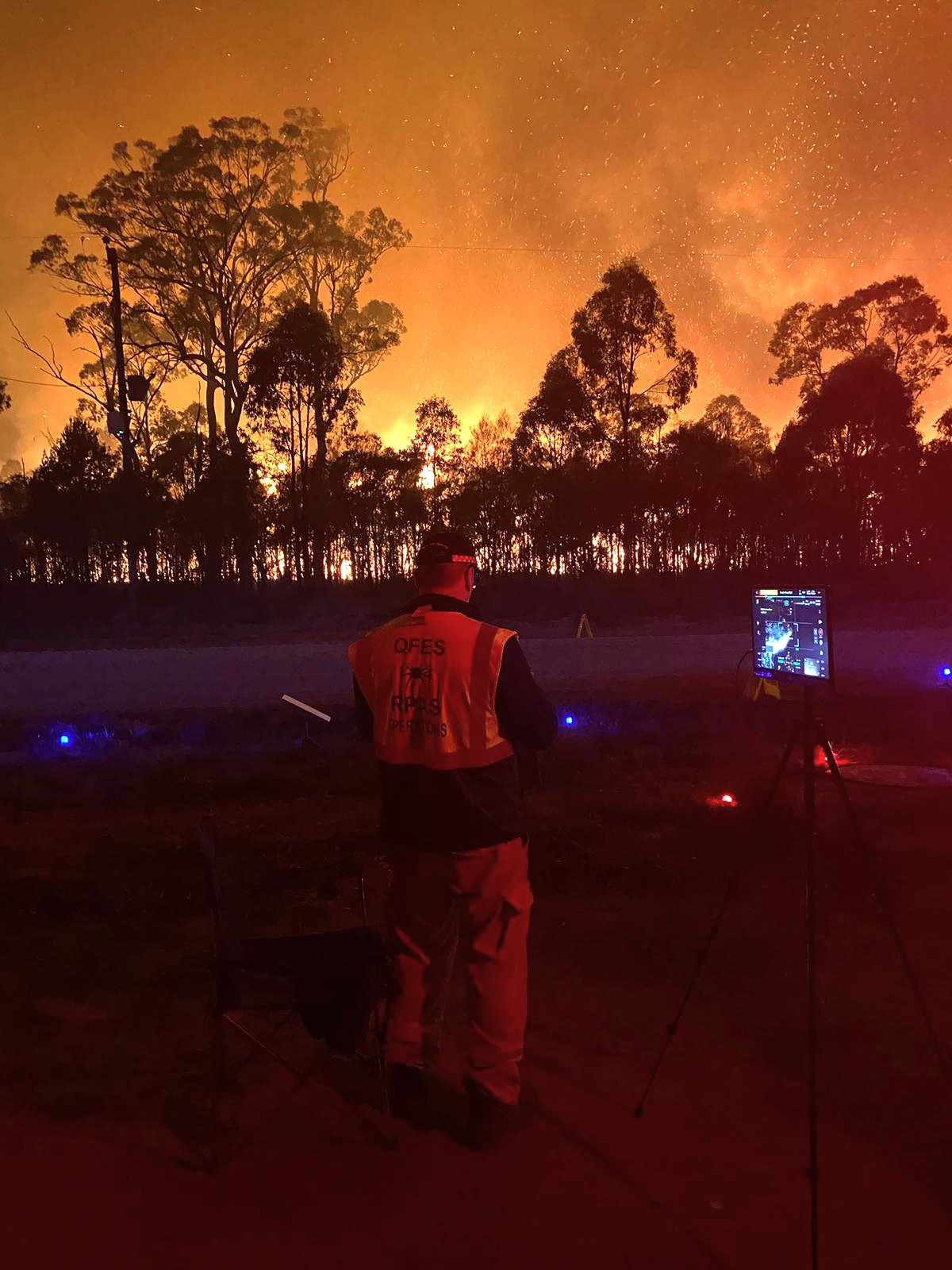
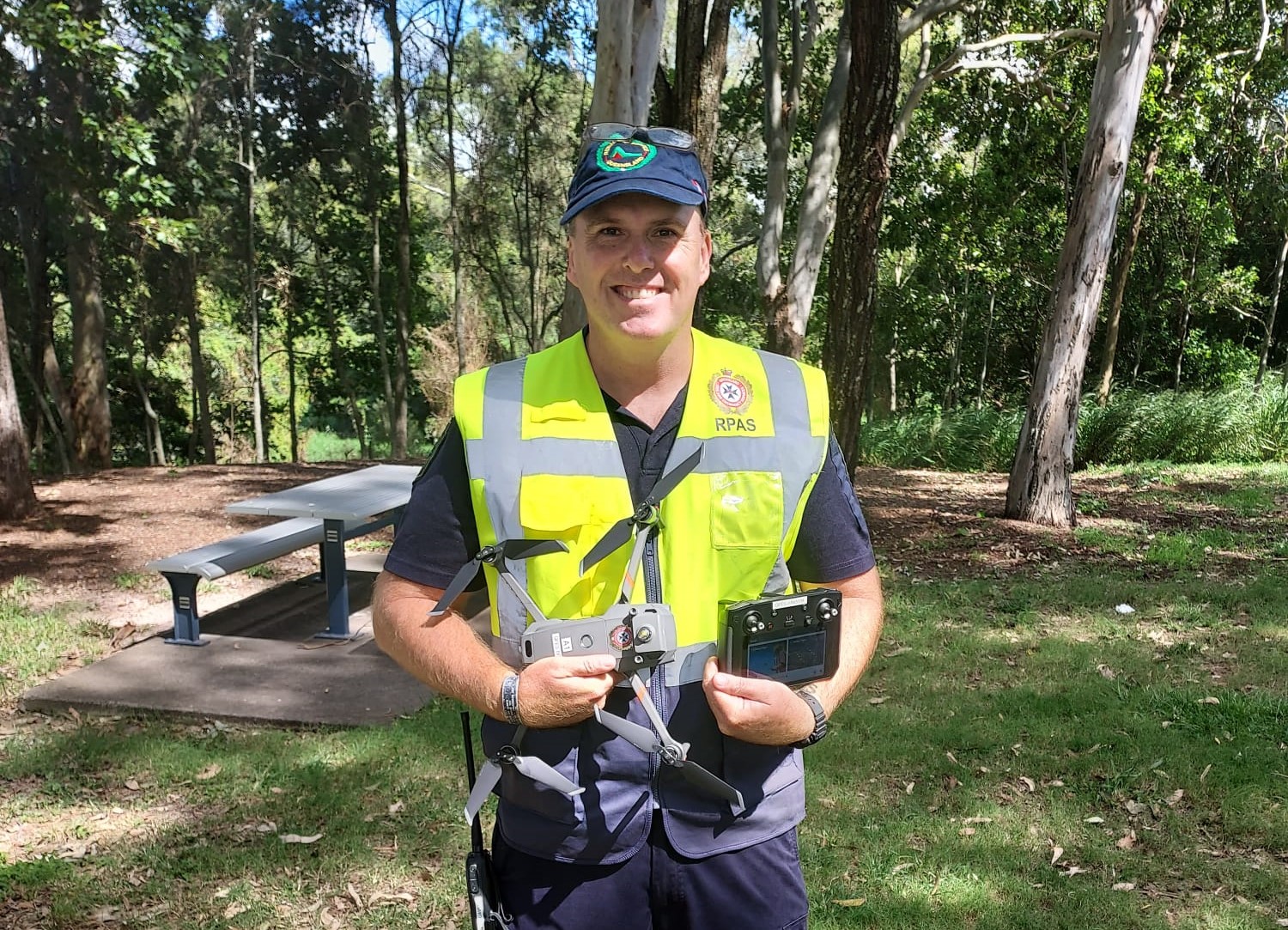
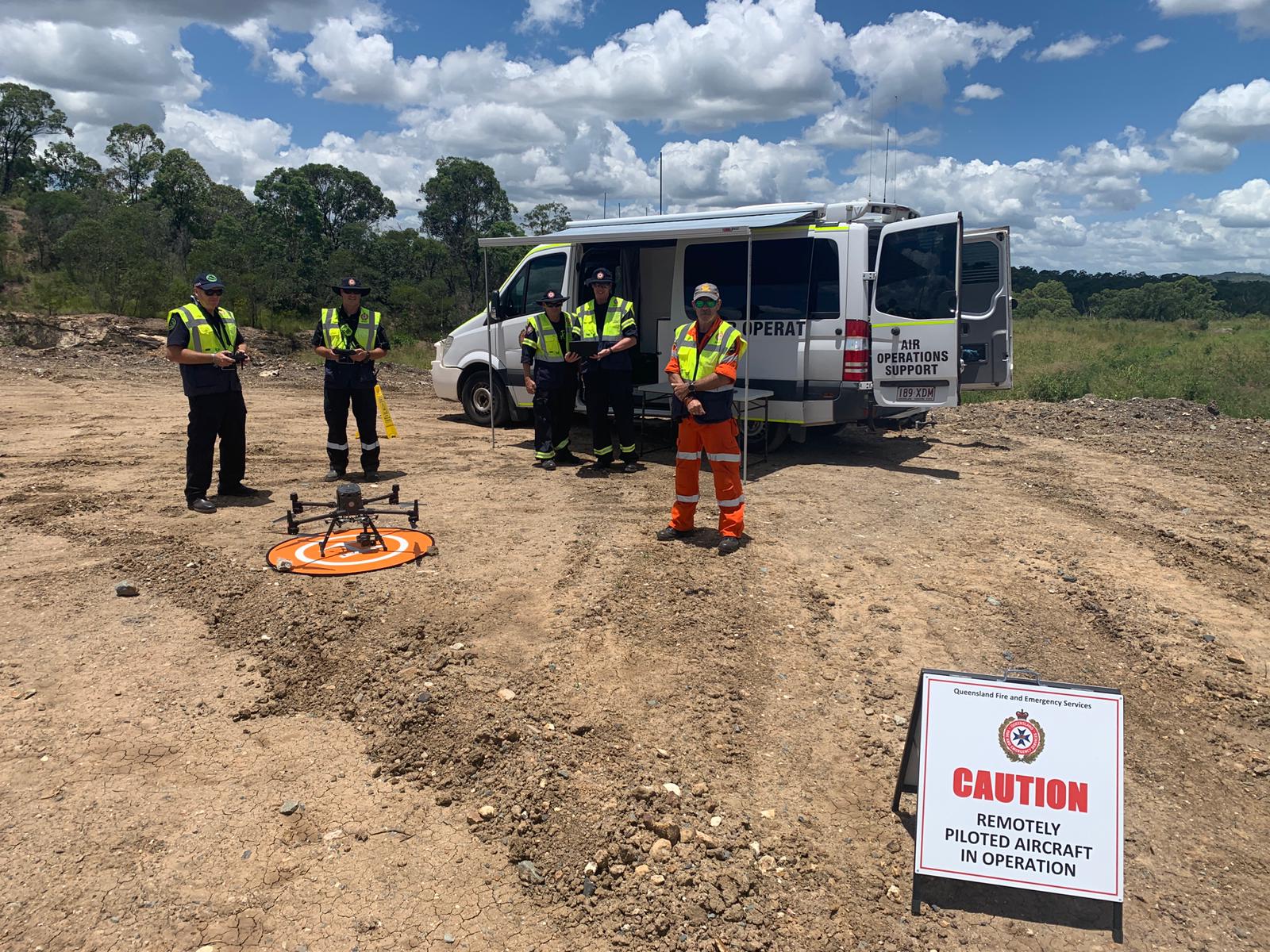
Meet Dean West, a Darwin-bred dad-of-four and veteran, whose day job involves supporting emergency services and averting disasters with the aid of cutting-edge drone technology. Over the past 8 years, Dean has been at the forefront of battling fires, locating people in flooded cars, and training to deliver critical medicine to those who need it – all from the skies above.

Dean’s exciting journey began as a simple desire to connect with his son, who was serving as a firefighter in South Australia. Little did he know, this decision would lead him down a path of service and innovation. Joining his local volunteer fire service was just the beginning. His passion soon landed him a position at the Queensland Fire and Emergency services (QFES) as a Senior Remote Pilot. QFES oversees all of Queensland’s emergency services, including State Emergency Service (SES), Fire and Rescue, and the Rural Fire Service.

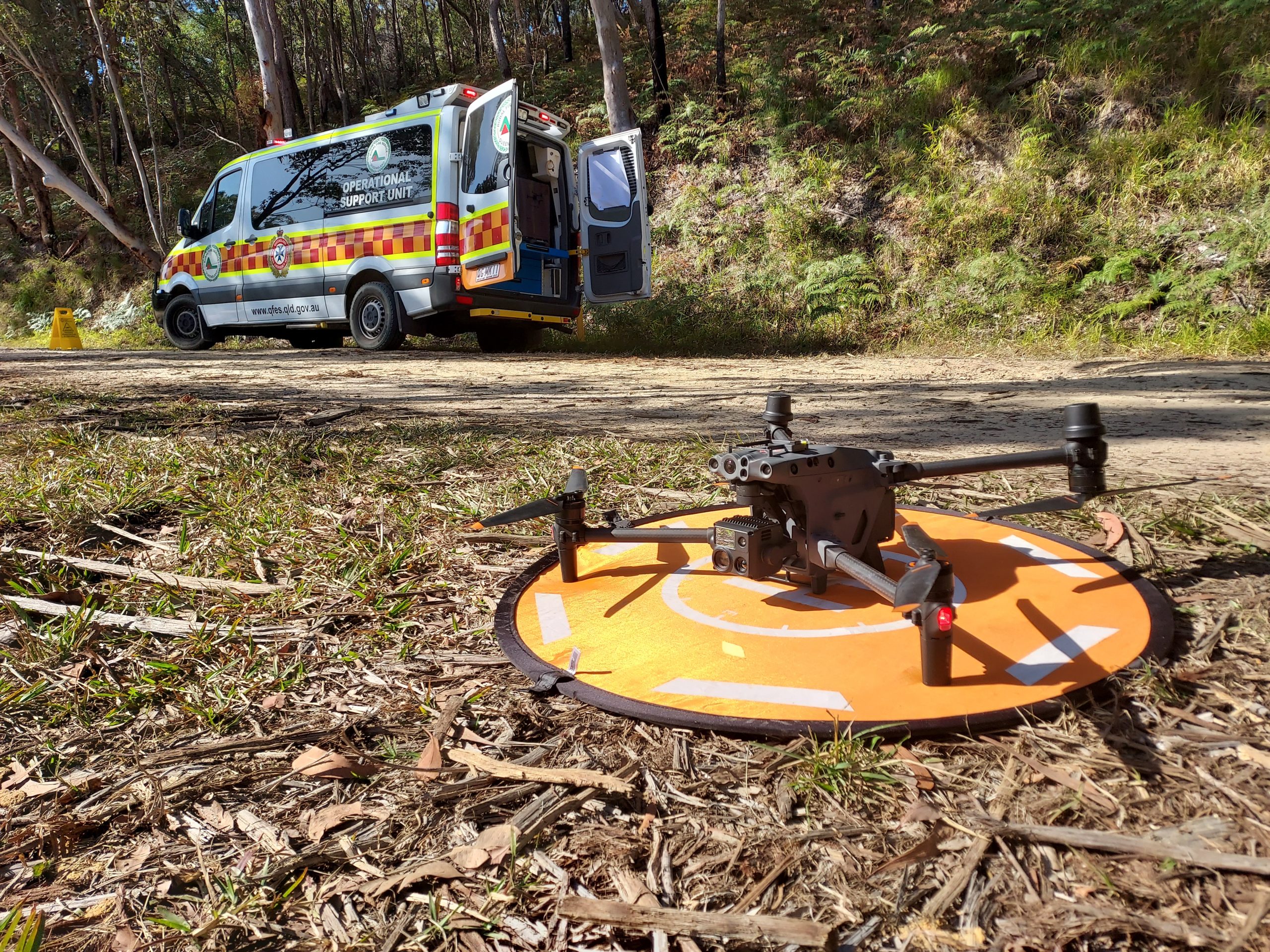
Rural Fire Service RPAS Van, North Stradbroke Island, Drone – M30T, Image – Dean West

Drones are at the centre of Dean’s day-to-day operations. The custom-built drones include features like speakers, dropping mechanisms, a spotlight, a thermal and zoom camera and waterproofing to navigate a variety of environmental conditions.

His team needs to be able to comb through vast areas of land (often at night using thermal cameras), operate in adverse weather conditions, and speak to people below.

To operate these drones safely, Dean has a remote pilot licence (RePL) to fly a 25kg multi rotor, a 7kg fixed wing rating and outside 3 nautical miles beyond visual line-of-sight (BVLOS) licence, as well as completing the QFES remotely piloted aircraft systems (RPAS) training program.

‘The QFES RPAS team provides vital aerial intelligence to decision makers on the ground. Our intel aids in strategic planning and resource allocation.

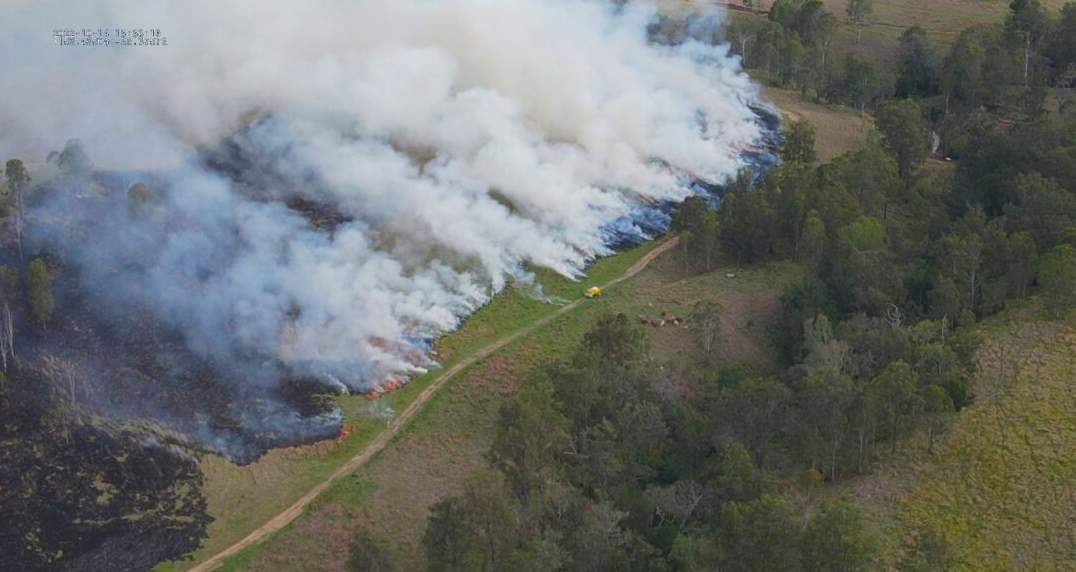
‘In firefighting situations, we work with the State Air Operations Unit to ensure the safety of our and uncrewed aviation on larger fires. We also map the disaster and provide live feeds to the Operation Centre to ensure the decision makers have the latest intelligence as the disaster unfolds.

‘In other emergencies, the QFES RPAS team investigate flooded streets, conduct damage assessments, and even search for missing people that might’ve washed away in cars.’

Hazard Reduction Burn, Jimna QLD. Image – Peter Georgeson

Dean’s biggest safety tip is to abide by CASA’s rules, specifically staying well clear of areas affecting public safety and emergency operations.

‘Allow emergency services to do their jobs, we need to operate as efficiently as possible without interruption.

‘We often get crewed and uncrewed recreational operators and sometimes media helicopters trying to get shots of car crashes, police operations, firefighting efforts, or search and rescue. Remember, if you fly, we can’t, and you are putting people’s lives and property at risk’.

Last year QFES Air Operations Unit completed more than 720 RPAS missions – a testament to the unwavering spirit of innovation and service.

Dean West, QFES RPAS Pilot. Image – Ben Macht

When reflecting on his journey, Dean offers sage advice for aspiring drone pilots.

‘Start by joining a local rural fire brigade, Fire and Rescue or a State Emergency Services (SES) unit and get those core skills around working in a disaster. A lot of the rural staff and SES are volunteers, so it’s an easy way to get your foot in the door.’

QFES RPAS Unit pride themselves on their professionalism. ‘We follow the CASA rules and do our best to keep the team safe by reading the fire and forecast its movement. We can teach you how to operate a drone, but you need to know how to be safe on the ground first.’

‘You can then move on to get your RePL and progress to the formal RPAS firefighting training.’

Looking to the future, Dean envisions a world where drones continue to revolutionise emergency response efforts.

‘We can do a lot more in the future if we do it in a safe manner.’

QFES RPAS pilots from all services. Image – Ben Macht

Confused landing led to sting in the tail

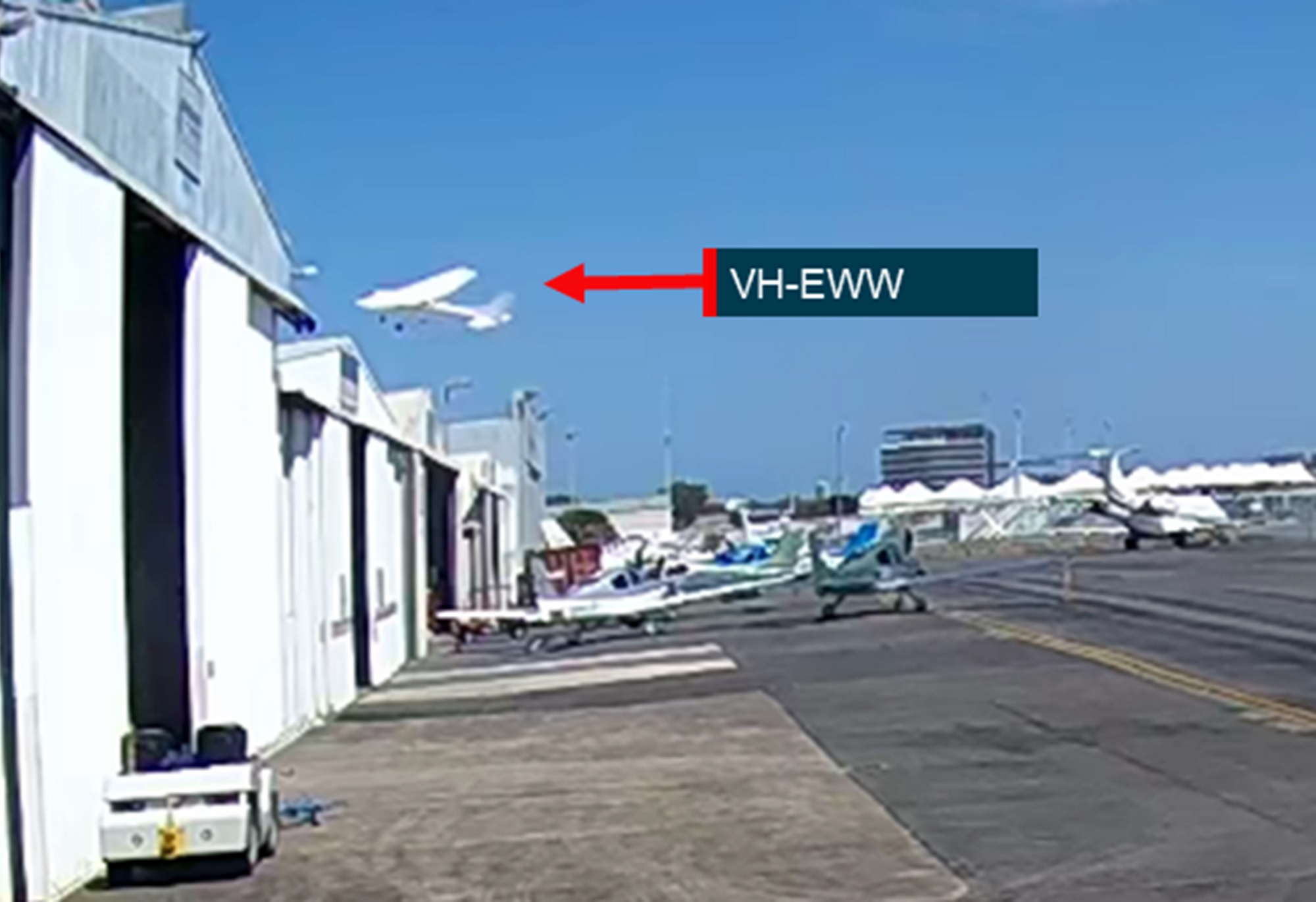
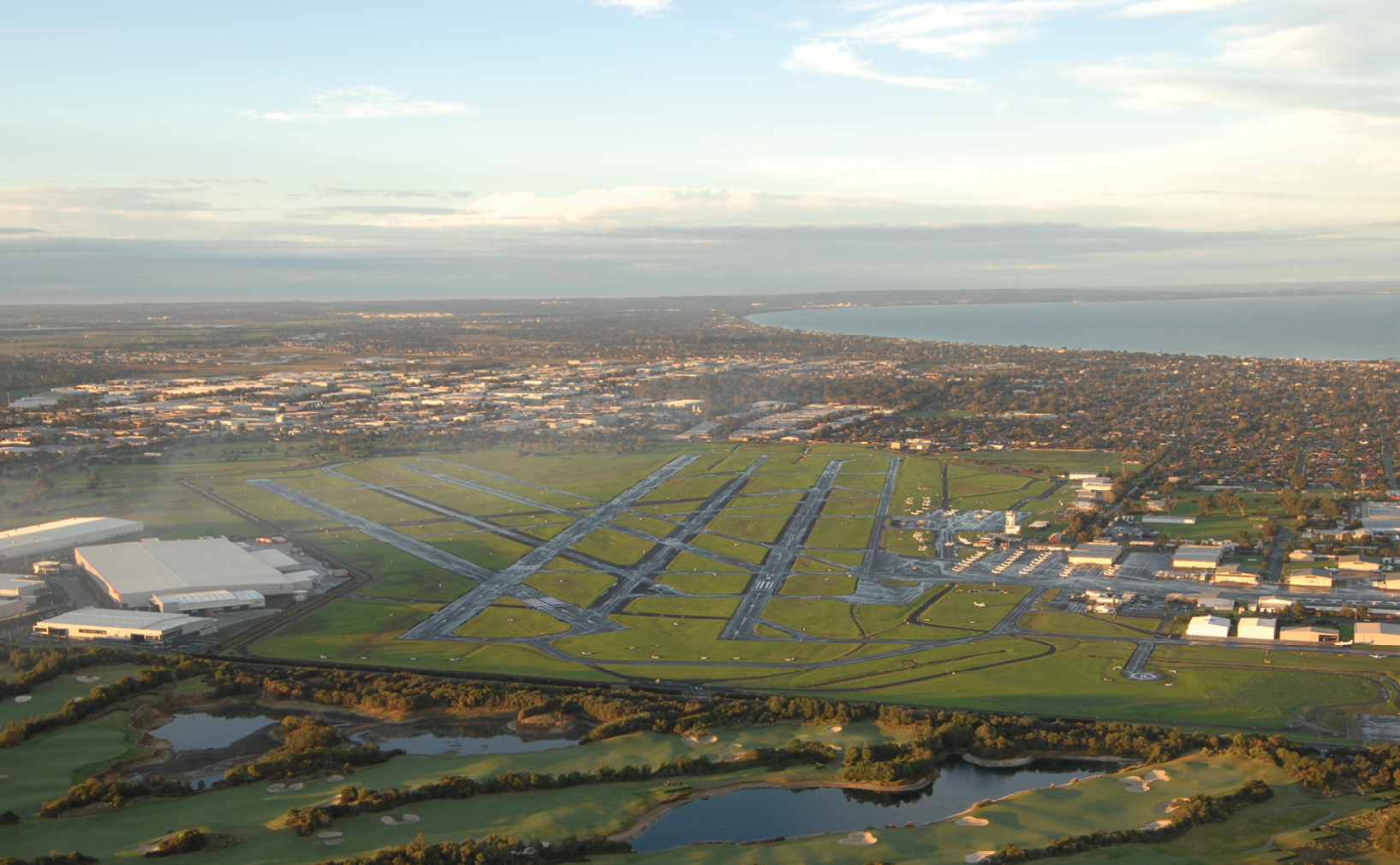
A chain of misunderstandings and miscalculations brought a student and instructor terrifyingly close to a hangar during a go-around after a tail strike. The incident happened in February this year at Gold Coast Airport, Qld.

The Australian Transport Safety Bureau (ATSB) published its report into the incident yesterday, which missed being a major news story by only a few metres.

The student and instructor were returning to the airport from a training flight when they received an initial air traffic control clearance to track direct to runway 32.

From the ATSB report: ‘About 40 seconds later, the flight crew accepted an amended clearance to track to the shorter runway 35 at “best speed”. When VH-EWW was at 1,000 ft and 1.9 NM from the runway 35 threshold, the flight crew were cleared to conduct an approach and maintain ‘best speed all the way in to crossing the runway’. Unsure how to comply with that instruction, the instructor directed the student to reduce the throttle to idle and lower the aircraft’s nose.’

‘The aircraft subsequently passed about 100 ft above the runway threshold at about 25 kt faster than the normal approach speed,’ ATSB Director Transport Safety Stuart Macleod said.

It floated along the runway before it touched down and bounced once.

As the end of the runway neared, the instructor took control of the aircraft from the student. The instructor attempted to brake and turn the aircraft onto a taxiway beyond the end of the runway. During this manoeuvre, the aircraft veered off the taxiway towards a ditch. In response, the instructor applied back pressure on the control column and full power for a go-around, during which the rear fuselage and tail struck the ground. Security footage shows the aircraft missing hangars by a few metres. The flight ended with a right circuit and landing on runway 32.

The ATSB found the aerodrome controller issued the ‘best speed’ instruction to the VH-EWW flight crew to facilitate traffic flow and allow it to land before an inbound Boeing 737. The controller had expected the Cessna crew would maintain a higher speed until the aircraft was a bit closer to the airfield than normal, and then reduce speed appropriately to make a safe landing.

McLeod said, ‘Although not standard phraseology, air traffic controllers may ask pilots to maintain “best speed”, and it is up to the pilot to determine what is best in this context, and more generally advise if an instruction is unclear or cannot be complied with.’

The ATSB final report notes the aircraft exceeded the speed for a stabilised approach, but the instructor did not conduct a go-around prior to landing, or while on the runway.

‘When operating in visual meteorological conditions, if an approach is not stabilised by the height specified by the operator – or generally by about 500 ft above the ground, or the approach becomes unstable after that point, go around,’ Macleod said.

‘Pilots are to always be ready to conduct a go‑around during the approach if any desired flight parameter, such as aircraft configuration, vertical speed, airspeed, or attitude, cannot be achieved.’

Controlled aerodromes and operations

Controlled aerodromes and operations is one of the special topics on our Pilot safety hub.

Flight operations quiz: Autumn 2024

  1. If the radio fails in Class C, you must:
    1. select 7600 on the transponder, continue to broadcast and remain in VMC and land at the most suitable aerodrome
    2. select 7700 on the transponder, continue to broadcast and remain in VMC and land at the most suitable aerodrome
    3. select 7600 on the transponder, continue to broadcast and remain in VMC and track clear of airspace
    4. select 7700 on the transponder, continue to broadcast and remain in VMC and track clear of airspace
  2. A flashing green light shown to an aircraft in flight means:
    1. track clear of Class C airspace
    2. clear to land
    3. continue circling
    4. return for landing
  3. Before entering Class D airspace, you must:
    1. obtain an ATC clearance
    2. establish two-way communication
    3. VFR flights are not required to do anything
    4. be granted an approval
  4. When navigating visually in controlled airspace, you must notify ATC if you deviate from the cleared track more than:
    1. 5 nm
    2. 2 nm
    3. 1 nm
    4. 3 nm
  5. After take-off in Class C airspace, on your first contact with centre approach or departures, you must report:
    1. altitude passing and last assigned level
    2. altitude passing
    3. assigned level
    4. entire clearance
  6. Operating in a lane of entry, aircraft must:
    1. keep to the right
    2. keep to the left
    3. require a clearance
    4. report on entering
  7. When operating at a controlled aerodrome, you must obtain ATC clearance when:
    1. taxiing, entering or crossing a runway
    2. taking off
    3. landing
    4. all of the above
  8. Unless assigned a discrete code by ATC, pilots of a flight in Class D airspace should squawk:
    1. 1200
    2. 4000
    3. 7600
    4. 3000
  9. A danger area is airspace within which:
    1. the flight of aircraft is prohibited
    2. the flight of aircraft is restricted in accordance with specified conditions
    3. activities dangerous to the flight of aircraft may exist at specified times
    4. an approval is required in order to operate
  10. A pilot taxiing at a controlled aerodrome:
    1. may cross illuminated stop bars
    2. must stop and hold at illuminated stop bars
    3. may cross illuminated stop bars with clearance
    4. must stop at illuminated stop bars but then cross without clearance
  11. 1When operating Special VFR, you must maintain:
    1. clear of cloud and 1,500 m visibility
    2. 500 ft separation from cloud and 1,500 m visibility
    3. clear of cloud and 1,600 m visibility
    4. 500 ft separate from cloud and 3 km visibility
  12. An aircraft landing in Class C airspace will not be permitted to cross the threshold of the runway on its final approach unless a preceding departing aircraft:
    1. has become airborne
    2. has become airborne and commenced a turn
    3. has commenced its take-off run
    4. presents no risk in the opinion of the controller
  13. The following parts of an ATC clearance must be read back:
    1. route clearance, holding instructions, radio frequency instructions
    2. altitude and radio frequency instructions
    3. route clearance and radio frequency instructions
    4. directions and altitude instructions
  14. VFR aircraft departing a controlled zone without submitting flight notification should, on first contact with ATC, give their callsign and ‘flight details for departure’, then:
    1. destination, preferred level, ATIS code
    2. destination, first tracking point, ATIS code
    3. first tracking point, preferred level, ATIS code
    4. destination, first tracking point, preferred level, ATIS code
  15. For operations seeking access to Military Operating Areas (MOAs), aircraft must:
    1. squawk 2000 and maintain a listening watch
    2. request a clearance to transit a MOA and conditions of entry may be imposed.
    3. remain clear at all times
    4. be aware of high levels of activity and take precautions against any safety risks

To view the answers, go to the next page using the page navigation buttons below.

The comfort of control

The benefit of flying in controlled airspace is you are no longer alone in the sky but have a team working to keep you safe.

Controlled airspace is a subject I get weirdly passionate about. One reason is that I’m forever coming across pilots who do everything in their power to avoid flying through controlled airspace (CTA) and I consider that a tragedy. There are so many benefits to operating in CTA, but I’ll get to that later.

CASA is also considering broadening access to controlled airspace which puts this topic again into focus.

In the meantime, I have to attend to something else. It seems we have a few new kids on the block, who we need to get to know. Back in November when I started writing this feature, someone said to me, ‘So, have you heard about the SUA and MOAs that are coming in?’ ‘The WHAT?’ ‘And have you checked out the latest VTCs for East Sale and Newcastle? How about that total redesign of the Williamtown airspace?’

OK, stop speaking. Seriously, I turn my back on coastal flying for a few months, direct my gaze into the outback and look what happens.

As of 30 November 2023, we’ve been introduced to SUA (Special use airspace) and MOA (Military operating areas).

If you never fly near the coast, you probably haven’t noticed. But otherwise, if you haven’t already done so, you need to get a hold of the current Aeronautical Information Circular from the Airservices website and study it. It explains the background and concept of some newly categorised military airspace, prefixed ‘M’ on your charts, which you’re going to need clearance to enter when active.

The AIC lists the military locations where the new MOAs took effect as of 30 November 2023, i.e., Cerberus (Vic), Edinburgh (SA), East Sale (VIC), Nowra and Williamtown (NSW).

MOAs at 3 other locations will take effect from 13 June 2024: Pearce, Stirling and Learmonth (WA).

This is certainly not the forum for a lesson on MOAs, but more of a heads-up that these changes are in place, or coming.

On the subject of Williamtown (just north of Newcastle), now’s not the time to go blasting off through there with an old map. There is new Class C airspace, revised restricted airspace, and various sections of the military airspace that have been reclassified. If you’re headed that way, get yourself settled into a comfy chair with the current Newcastle maps, the ERSA entry for Williamtown and AIC in your lap, and get familiar.

The PRD section at the back of your ERSA looks different now too. It is headed Special use airspace (SUA) and includes MOAs. Check it out. All relevant contact numbers for queries about Restricted, Danger or Military Operation airspace are at the end.

Moving on

Now, what I really want to talk about are all the upsides of flying in controlled airspace!

CTAs and CTRs are in place to ensure the airspace is safe for every pilot. It’s not there to intimidate or make you look foolish. Don’t get me wrong, a certain amount of homework is required to raise an inexperienced pilot’s standards to operate comfortably within this airspace or keep abreast of changes. I even recommend conducting a dual instructional flight into airspace that you are not confident trying on your own. Why not do that? You’ll have way more fun, won’t give yourself a nervous breakdown and will probably find yourself asking your instructor a dozen questions about your flying that you’ve been mulling over for ages.

In safe hands

It never ceases to amaze me, once you are comfortable with CTA published procedures, how it can open up a new world of benefits. Number one is the knowledge that you are in the hands of highly trained air traffic controllers whose sole aim in turning up for work every day is to keep you safe and help you get to where you want to go. How good is that?

There is one plea from ATC that CASA hears regularly from tower managers at airports all around the country: ‘If pilots don’t understand our procedures, they are more than welcome to call and ask us. We’d far prefer helping them out before their flight and give them a heads-up on what they can potentially expect when they get here. It’s far safer than us assuming they know what they are doing, and then trying to untangle their mistakes in the air.’

When we take PPL nav students from the tiny town of Coonabarabran in regional NSW into Tamworth’s Class D airspace, we get them to call the tower the day before for any tips. One hundred percent of the time, ATC would happily give the student as much time as they needed on the phone and thank them sincerely for making the call.

Saving time and miles

Planning through controlled airspace can often save you significant track miles, rather than taking the long way around a sizeable CTA you’d rather avoid than engaging with ATC. Lack of confidence due to rusty knowledge about airspace procedures, fear of fumbling a radio call and the risk of ‘getting into trouble’ from ATC are common reasons that some pilots steer clear. I know I keep coming back to it, but homework and a dual flight with an instructor opens up so many options.

Flight Instructor Andrew Smith, GM of Central Coast Aero Club, shepherds students through the busy Sydney basin routinely. He is convinced flying in controlled airspace actually alleviates your workload. Inexperienced pilots tend to avoid controlled airspace as they feel it will increase their workload, when in reality, the reverse is usually the case.

Smith says: ‘VFR aircraft may encounter delays getting a clearance through CTA too close to Sydney but this is where an early call to ATC, say 15 minutes out from the CTA boundary, often works so well. You may request a more direct route, which could shave time off the trip, keep you higher and out of turbulence, clear of traffic and have ATC watching your back. Less fuel used, safer and honestly, less stress!’

You are in the hands of highly trained air traffic controllers whose sole aim in turning up for work every day is to keep you safe.

Tropical touring

Then there are parts of Australia where it’s just plain logical to plan via CTA. The Queensland coastline is literally teeming with those blue CTA arcs. There’s actually not much daylight between all the different control zones as you cruise down, or up, the coastline. Start at Cairns (actually, start at Mareeba – it’s way cheaper and GA friendly) and track all the way down that incredible Great Barrier Reef coastline through the CTAs of Townsville, Mackay, Hamilton Island, Rockhampton and Sunshine Coast.

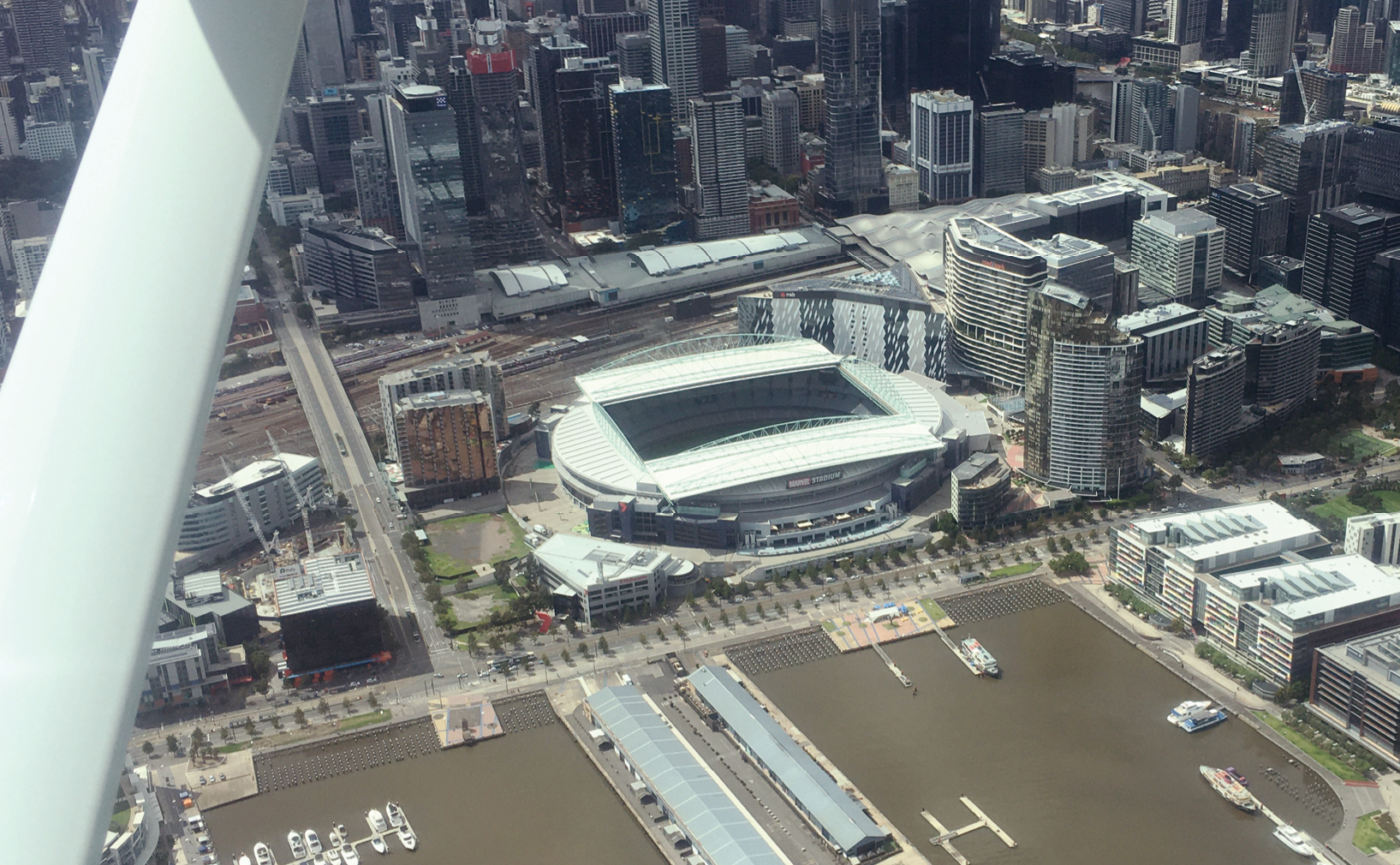
image: Docklands Stadium| Shelley Ross

Be armed with the current charts and ATC will do their utmost to accommodate your preferred route and level through their airspace, and give any assistance with weather diversions if necessary.

Another bonus for me, as a photographer, is the stunning vistas that are on offer, often available at your preferred level upon request. A few jaw-dropping clearances in my memory are:

  • being bang overhead the MCG while being vectored into Essendon
  • tracking along the beach past the Swan River and high-rises of Perth
  • the biggest show pony of them all – Sydney Harbour Scenic 1.
image: Sydney Harbour | Shelley Ross

Overseas, it’s even wilder. I’m drifting offshore a bit here, but the magic of controlled airspace has:

  • tipped me onto the piano keys at Cape Town International Airport
  • poured me into the insanity of South Florida’s jammed airspace cruising at 500 ft coastal past the Miami skyline
  • allowed me to be ushered into the circuit at Quebec, in what, I think, was French.
image: View of Miami South | Adobe Stock | miami2you

All character-building, but irreplaceable memories. I’d tell you about landing at a Botswana airport, but I’m still in therapy after that one.

Homework and a dual flight with an instructor opens up so many options.

From the boss

I always write from a practical perspective, about methods that have worked for me over the years. However, Airservices and CASA are full to the brim with experts on aviation safety and regulation. So, I sought the advice of Section Manager Industry Engagement at CASA, Kirstie Winter. Also a former ATC, she’s all over those MOAs and SUAs so, while I had her attention, I asked her what CASA’s big ticket tips are about flying in controlled airspace that she’d like to share with us, that make life easier and safer for everyone.

image: Adobe Stock | Carlos Barquero

Kirstie Winter’s points make a decent checklist:

  1. Call ATC early when seeking clearance into CTA. Reduces the likelihood of delays.
  2. Responsibility is on the pilot! Pilots need to understand the onus is on them to complete thorough pre-flight planning. Read all relevant NOTAMs, including FIR (Head Office) NOTAMs. This is where you’ll find gems like temporary restricted airspace.
  3. Use current charts and note all the waypoints on your VTC, in case you’re directed elsewhere from your planned route.
  4. There’s sometimes a heavy reliance on EFBs. Don’t just follow the magenta line, nor rely on the screen for other traffic. It’s a great situational awareness tool, but use your windows and ears too.
  5. Keep your phraseology concise. AIP Gen 3.4 is all about radio calls. Read up on these and get to know what to expect ATC is going to say to you. Use the IMPAIR format. Correct readbacks are vital, and timesaving.
  6. Critically – don’t try to stumble through a direction from ATC that you don’t understand. Say, ‘I don’t understand’ or ‘unfamiliar’. They can rephrase their instruction or offer you an alternative. If traffic and time permits, they can guide you through with kid gloves, in the knowledge you are unfamiliar.
  7. Know how to avoid CTA. Don’t assume your clearance will be issued; have your Plan B in place should ATC advise you to remain outside CTA. This is another reason to seek clearance early. Do I orbit at the boundary? Not recommended. Do I descend to remain OCTA? It’s an alternative plan, but may not suit the circumstances.
  8. If unfamiliar with a particular CTR, think about the time of day you are arriving. You may be able to avoid heavy traffic.
  9. If you’re OCTA and concerned about bad weather, contact ATC to assist in guiding you into clearer air. If you are under duress of weather, they are there to help you. Don’t squeeze under low CTA over high terrain and leave yourself with no options if weather comes in!

Controlled aerodromes

Controlled aerodromes and operations is one of the special topics on our Pilot safety hub.

In 2023 CASA published a discussion paper about access to Class C and D controlled airspace for sport and recreational aircraft. Further consultation on the proposed policy is expected to occur in the coming months. Find out more about how this work is progressing on our Consultation hub. Visit Consultation hub and search ‘airspace access’.

Subscribe to our Consultation and rule making list to find out when consultation opens.

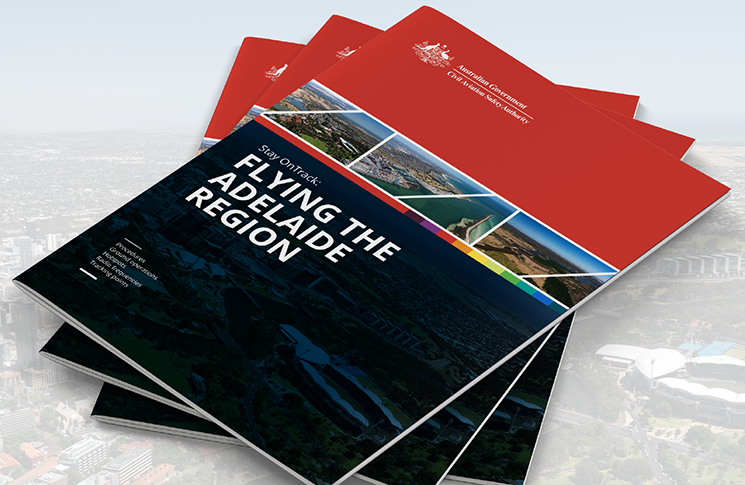
Stay OnTrack: Flying the Adelaide region

We’ve developed another booklet in the popular Stay OnTrack series to help pilots operate in and around metropolitan areas.

That can be intimidating and nerve racking, as you share the airspace with a diverse mix of traffic.

The latest offering – for Adelaide – is geared to help VFR pilots plan and conduct their flights.

The booklet has information about avoiding restricted airspace, runway incursions and airspace infringement hotspots, as well as arrival and departure procedures, radio procedures and helicopter operations.

Parafield is a Class D aerodrome during tower hours, catering for high-density operations. It has 2 sets of parallel runways and, by day, simultaneous contra-circuits may be conducted using separate tower frequencies.

The aerodrome hosts emergency services aircraft and charter companies, plus fixed-wing and rotary-wing flying schools. Their aircraft regularly conduct circuits, as well as flights to and from the western training area; this can make the airspace congested.

The booklet contains charts showing airspace infringement hotspots as well as maps of the runways and apron area. The charts also show VFR reporting points for inbound and outbound traffic. Sample radio calls are included to guide you through airways and taxi clearances, with the relevant frequencies listed.

Parachute ops are conducted at several airfields and other areas surrounding Adelaide. These can include landings into wineries and coastal beaches.

The Bureau of Meteorology outlines what type of weather patterns pilots can expect in the region. Adelaide experiences a diverse range of weather conditions, with the best flying days occurring in autumn but with aviation hazards in all seasons.

Pilots using this guide still need to follow flight planning requirements by checking documents such as charts and ERSA for updates to airspace and procedures, as well as NOTAMs and weather briefings.

Stay OnTrack: Flying the Adelaide region is available – along with the Brisbane, Gold Coast, Perth, Darwin and Melbourne guides – in print from the CASA online store for $2.95 or download for free from the CASA website.

One wrong turn

A recreational pilot’s first flight after learning the basics of navigation unravels into an embarrassment that could have been a disaster.

I was so excited to be undertaking my first real cross-country flight, having recently obtained my RAAus cross-country endorsement. I had hired the small Tecnam P2002 that I’d flown for about 50 hours previously, as part of flying training and the endorsement and, with confidence, had decided I was competent and ready for my first real adventure.

I had been living for several years in a remote mining town in the mid-north region of South Australia, with the nearest aerodrome and flying school located at Port Augusta. My real hometown was Mount Gambier, located about 1,000 kilometres to the south-east, so what better place to make as my destination for a proper cross-country flying experience.

I planned my flight in 2 stages – the first leg from Port Augusta to Gawler with an overnight stay and the second from Gawler to Mount Gambier. I had studied my charts and NOTAMs in great detail and was very confident, despite the complex restricted airspace structures around Gawler. What could possibly go wrong?

I departed on a cloud and visibility OK (CAVOK) day from Port Augusta and followed my planned flight path meticulously until I approached the Clare Valley region. Ahead of me was a dense bank of low cloud. I considered my options and made the decision to divert around the cloud.

The Tecnam had no electronic navigation aids so everything needed to be done from charts and dead reckoning. I altered course to the east, flew around the cloud bank, then adjusted my flight path to my original course once I had clear air ahead of me again. Or at least this is what I thought I had done!

In fact, I flew past my original planned flight path and assumed a track further to the west. Without realising, I had mistaken the township of Freeling for the similar township of Kapunda on my chart and was happily flying on an unintended route that had me traversing active restricted airspace.

I was completely oblivious to my misdemeanour until I heard a call over the radio, ‘Aircraft in the vicinity of Freeling, this is helicopter [callsign] flying tourist route at Barossa Valley. I think Adelaide Centre is trying to contact you.’

Is that call about me? Adelaide Centre! Trying to contact me? How could this be? I hadn’t heard anything on my radio.

Oh, wait! I’m not monitoring the correct Area frequency. I hadn’t changed it since departing Port Augusta.

I instantly checked the correct frequency from my WAC chart and immediately called up Adelaide Centre.

‘Adelaide Centre, Tecnam 4998, do you read me?’

‘Tecnam numbers, go ahead.’

‘Adelaide Centre, Tecnam 4998, am currently at 2,500 feet, in the vicinity of Kapunda. I believe you may have been trying to contact me.’

‘Tecnam 4998, please IDENT.’

I pressed IDENT on my transponder.

‘Tecnam 4998, we have you identified. You have just flown through restricted airspace. You needed to be below 1,500 feet.’

I had just flown right through restricted airspace, completely oblivious to the seriousness of my situation.

‘Adelaide Centre, Tecnam 4998. Thank you. My apologies.’

I wasn’t sure what else to say at this point. Besides, my head was now completely bamboozled trying to establish what had occurred. If I wasn’t in the vicinity of Kapunda, then where was I?

The Barossa tourist helicopter pilot had previously said something about Freeling – where is that?

I found Freeling on my map and figured the general region where I must now be. Not wanting to get further into the unknown, and with the Adelaide Hills approaching ahead, I decided to fly in circles until I could establish my actual location. It seemed like an eternity and I was starting to feel the effects of panic set in. Eventually I spotted a winery that I knew. I had been there several times and was sure of its proximity to my intended destination. I followed a main road and, sure enough, soon found Gawler aerodrome. I landed safely and alighted the aeroplane somewhat shaken by the whole experience.

I had just flown right through restricted airspace, completely oblivious to the seriousness of my situation.

Upon reflection, and notwithstanding the fact that I had made errors when navigating from my charts, I realised my failing had been to forget that aspect of my cross-country training whereby I run through the CLEAR-OFF checklist – compass, log, engine, altitude, radio, orientation, fuel, forced landing.

I had been trained to follow these checks at every waypoint, of which one is selecting correct radio frequencies, but on this flight, I had not undertaken this key aspect of cross-country flying. How could I have forgotten? I still cannot understand; however, having made this mistake, every element of CLEAR-OFF is now very much at front-of-mind on all cross-country flights.

The next day, I continued my flight to Mount Gambier and on my return home, discussed the matter with my flight instructor. I decided to self-report using the RAAus occurrence management system. A couple days later, I was contacted by the RAAus Operations Manager and we discussed the incident in detail. My cross-country endorsement was suspended, only to be reinstated after successful completion of a further, more stringent, cross-country exercise with my flight instructor.

Lessons learnt

I consider myself fortunate not to have initiated a serious air safety incident. I learnt the hard way of the importance of radio management.

This was also a wake-up call on my abilities to properly read a map. I was over-confident and did not make enough positive ground fixes while diverting around the low cloud. Even though I now fly with the aid of an electronic flight bag, I still plot my flight on charts and make positive ground fixes enroute as a backup. I do not ever want to have my software fail, then be in that same predicament of staring at a map and not knowing my location.


Have you had a close call?

8 in 10 pilots say they learn best from other pilots and your narrow escape can be a valuable lesson.

We invite you to share your experience to help us improve aviation safety, whatever your role.

Find out more and share your close call here.

Disclaimer

Close calls are contributed by readers like you. They are someone’s account of a real-life experience. We publish close calls so others can learn positive lessons from their stories, and to stimulate discussion. We do our best to verify the information but cannot guarantee it is free of mistakes or errors.

Notice a fault with your radalt?  

CASA wants to hear from you 

CASA is monitoring the introduction of 5G across Australia following international concern about the interaction between 5G and radio altimeters (radalts). We want to ensure that the rollout of 5G can be done in a way that ensures the safety of aircraft.

To help us record potential effects of 5G on radalts, we are encouraging all aircraft operators to report possible 5G interference at or below 2500 ft AGL. This is particularly helpful if you regularly fly near one of the 19 airports with instrument approach procedures reliant on radalts.

Operators should report any incorrect radalt displays or indications during take-off and landing, as well as any aircraft system faults caused by radalt inputs. We have developed Airworthiness Bulletin AWB 34-020 which provides more information about what to report.

Safety mitigations into 2026

To protect against the risk of 5G interfering with radio altimeters and to minimise disruptions, there are a range of mitigations in place at 19 airports across Australia where instrument landings using radio altimeters are permitted.

The mitigations restrict wireless broadband deployments in the 3.7-4.0 GHz band around runways and approaches at the identified airports. The mitigations end on 31 March 2026.

Find out more about what we’re doing to monitor the rollout of 5G.