Four failures and a lucky break

0

A helicopter incident is a reminder of the ever-present hazards of bearing deterioration and metal fatigue. If not for sheer luck, the headline here would have been 4 failures and a funeral.

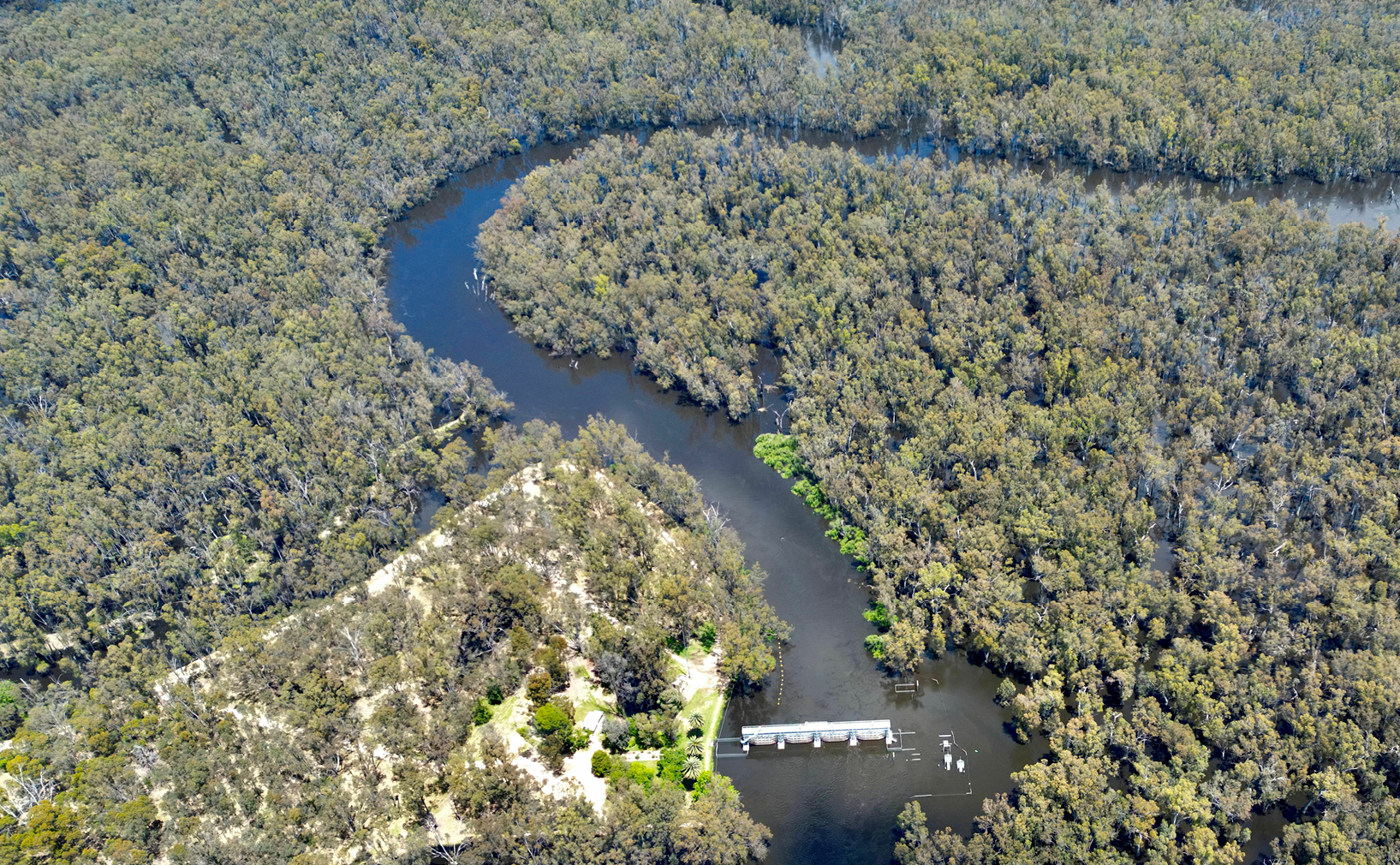
Bell 206L-3 Longranger 60 km south-west of Deniliquin, NSW Wednesday 9 December 2022.

The first sign of trouble was unequivocal: a loud ‘bang’ from above and behind the pilot. The helicopter pitched nose up, rolled left and began to vibrate severely. The flight was surveying a forest in western NSW less than 30 feet above the treetops, meaning there was no near place to land.

The pilot moved the cyclic to counter the pitch and roll and flew straight for about 10 seconds, when suddenly the vibration stopped. The pilot made a quick assessment that the helicopter was still flying well and flew a slow turn to reach farmland about 2 kilometres away.

Those few seconds must have seemed to pass agonisingly slowly. The pilot made a precautionary landing on open land, without further damage to the helicopter or injury to the 3 people on board.

An inspection found the right, forward, pylon support link assembly had fractured. This assembly forms part of the nodal beam transmission suspension system, that isolates and supports the main rotor transmission and rotor, and reduces cabin noise and vibration to tolerable levels. The link is an alloy forging with an X cross-section on its shaft and an eye at each end, like an oversized ring spanner. Within these eyes are simple bearings surrounded by shims and cushioned by rubber-like elastomeric material.

Many fixed-wing aircraft use elastomeric materials as part of their engine mounts. Most of these, like the elastomeric bearings used in the incident helicopter, are made by the Lord Corporation (now part of the Parker Aerospace conglomerate), which has made isolating mounts of one sort or another since 1924.

The link had failed from metal fatigue (see sidebar on next page) but this had been caused, at least in part, by the deterioration of the elastomeric material surrounding the bearing at one end. As the elastomer deteriorated, it lost its ability to absorb the vibration of the helicopter transmission, and this had been passed through to the link, shaking it until it broke.

From the Australian Transport Safety Bureau (ATSB) report:

  • Bell concluded that the shim fretting damage and wear, and deterioration of the elastomer was consistent with bearing degradation during service and that, as the bearing degraded, loads in the link would have increased.

The ATSB found the Longranger’s airframe had accumulated 8,054 hours over 39 years of operation in the US and Australia. The link had been installed in July 2003 at 3,507 airframe hours. It was an overhauled item, regarded as having zero hours.

The ATSB laboratory found no manufacturing defects and the manufacturer verified it was a genuine component. There was no record of the link assembly having been overhauled since its original installation, meaning it had 4,547 hours in service at the time of the occurrence. Lord’s general advice on elastomeric bearings was they were designed for long life and had ‘gradual’ modes of degradation.

Enquiries with the helicopter’s maker Bell turned up 3 other two-link assembly fractures in helicopters. Two were in the same right, front location and fractured in approximately the same place as the link on the Australian helicopter.

From the ATSB report:

  • The first occurrence involved a hover-taxi at an airport at 20–50 feet above the ground. A large ‘crack’ sound was heard, after which the pilot was unable to maintain level flight. A hover-autorotation was attempted and resulted in a hard landing. The pilot and passengers were uninjured.
  • The second occurrence happened during a sightseeing flight at around 900 feet. A large ‘bang’ was followed by an uncommanded left bank. The pilot attempted to compensate with control inputs, but was unable to maintain both altitude and direction. The pilot attempted a ditching but upon flaring the helicopter, it rolled left and impacted the water. All occupants were able to escape and swim to shore.
  • There was one case in 2008 of a left rear link assembly fracture, which resulted in a precautionary autorotation landing.

The accidents highlighted the lucky break that saved the pilot and survey crew on the Australian helicopter, who had neither altitude nor a suitable landing area nearby. The fractured ends of the link had become fouled on each other; this had stopped the airframe vibration and given the pilot a semblance of control that lasted until landing.

RTFM

Of the myriad acronyms in aviation, RTFM is among the most profound in its safety implications, particularly concerning maintenance. It stands for ‘Read the manual’, with a vulgar word added to emphasise the fundamental importance of doing so. The point is that delicate sensibilities are acceptable collateral damage, so long as this message – R-T-F-M!!! – is received and understood.

In the polite words of the ATSB report

However, the helicopter maintainer had not been removing the link assemblies in accordance with the helicopter manufacturer’s maintenance manual inspection requirements. This reduced the likelihood of detection of the degraded bearing.

The most recent airframe inspection had been on 8 November 2022, one month, but only 12 flight hours, before the occurrence. Inspection of the link assemblies had been done without them being removed from the helicopter. No defect was recorded.

Chapter 63 of the Bell 206L3 Maintenance Manual says, ‘Inspection of elastomeric bearings is feasible only with the link assembly removed from the helicopter.’ But the helicopter’s maintenance organisation told the ATSB it had not been aware of the need to remove the links.

Its procedure was to examine them in situ for evidence of ‘dust’ or ‘crumbs’ that would indicate deterioration of the elastomers. The links had been removed from the helicopter during inspection of the main transmission, 587 hours before the failure and probably inspected then.

There was a further barrier to detecting elastomeric degradation: a varnish-like coating had been applied to the elastomers to protect against oil contamination. This had had the effect of trapping the dust and crumbs of deterioration, making them more difficult to see. Lord Corporation advised it had not applied this coating. This procedure was included in the maintenance manual, which cautioned the coating thickness should not prevent inspection of the component for deterioration. But the maintainer told the ATSB it would abandon sealing elastomeric bearings as one of the lessons it was determined to learn from the incident, along with removing the link assemblies for detailed examination, in accordance with the maintenance manual.

Once a fatigue crack begins, it grows every time the load is applied – slowly at first, then very fast.

Elastomeric bearings removal criteria: Lord’s commandments

In every case in which removal criteria exist in a maintenance manual, these should be followed. However, when the elastomeric bearing is not covered by a maintenance manual, the following general guidelines may be used:

  • If the bearing is visibly degraded to such a degree that it allows excessive motion or vibration, remove and replace it.
  • If the bearing has visible compression set and it appears this will lead to difficulty in installation or increased vibration, remove and replace it.
  • If enough elastomer has been extruded to allow the shims to touch or if there are any cracked shims, remove and replace the bearing.
  • If the bearing is separated (due to fatigue or bond line damage) over more than 25% of the bonded area, remove and replace it.
  • If the bearing is ‘oil’ contaminated to a slight degree, it should be cleaned with a water-based detergent, rinsed and dried. If the contamination damage is extensive, removal and replacement are required.
  • If the bearing exhibits a very unusual damage condition, it should be returned to the maker for further analysis.

The best removal criteria are always based on the maintenance manual and experience. However, when in doubt, take it out!

Source: Lord Corporation white paper, Elastomeric Bearing, Dampers and Isolators: ‘Comfort, care and feeding’. Revision 2, 2006
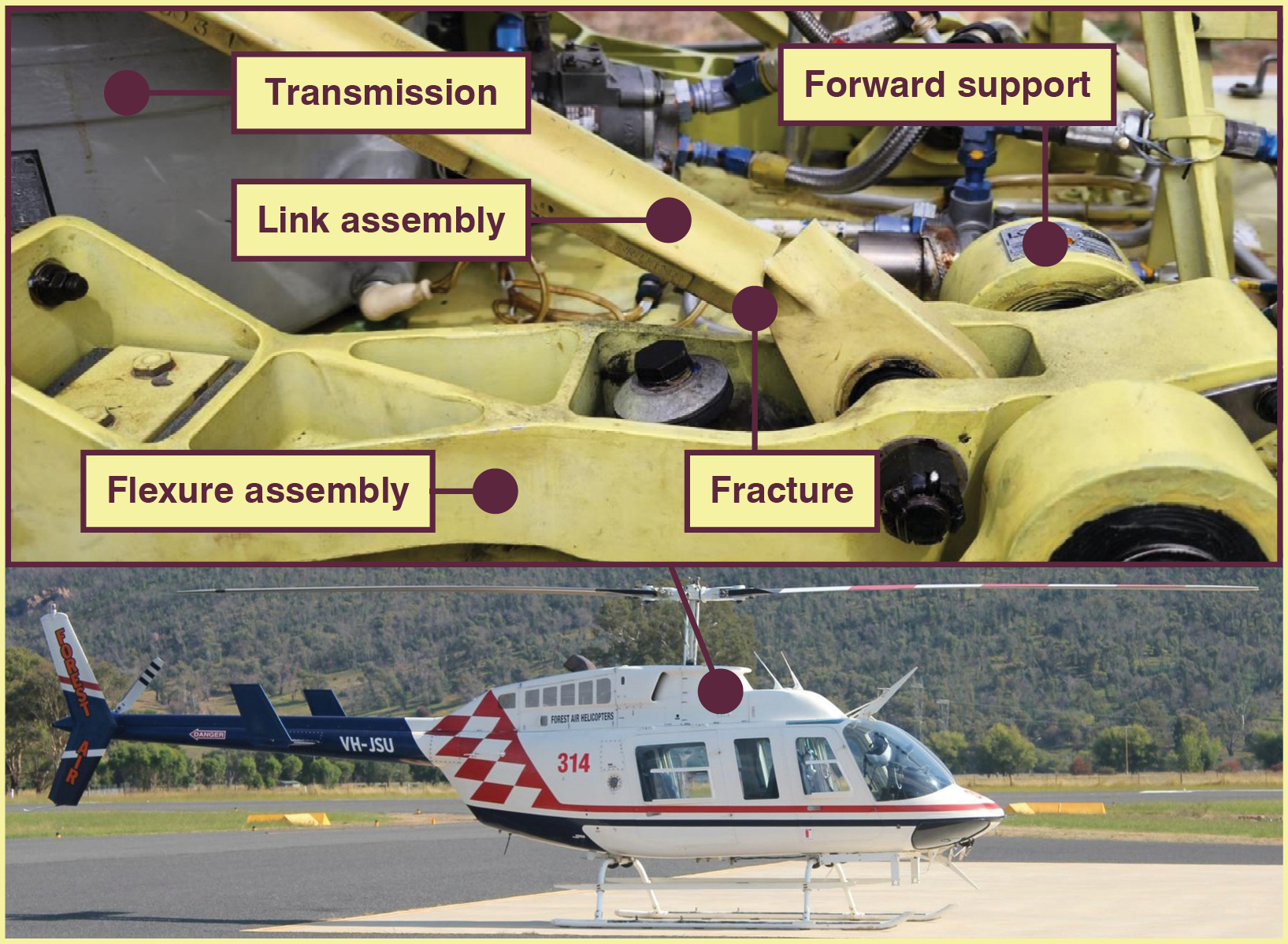
image: ATSB

Metal fatigue

Metal fatigue, defined as the initiation and propagation of cracks in a metal component or structure due to repeated loading, is the enemy of all metal aircraft. Once a fatigue crack begins, it grows every time the load is applied – slowly at first, then very fast. This can often be seen in the cross-section of a failed part; a series of marks like tree growth rings give way to a sudden instantaneous fracture. The frightening thing is, before failure there is no easy way to tell the difference between 2 identical parts that have been subjected to differing fatigue environments, except by analysis under an electron microscope.

Fatigue is a particular foe to helicopters. A 2013 study by AgustaWestland covering 30 years of its helicopter operations found fatigue accounts for approximately 55% of all failures in helicopter components.

CASA Airworthiness Bulletin 2-015 of 2006 remains a thorough and sobering guide to metal fatigue in helicopters. It says fatigue becomes especially significant if a helicopter is operated outside what would be considered by the manufacturer (and specified in the Type Certificate) as the operations for which the helicopter was designed and certified.

Examples of situations where fatigue lives may be affected are:

  • Operation of helicopters in low-level flying, agricultural, mustering or other operations where high loads may be encountered more frequently than envisaged by the designer/manufacturer.
  • Operations where there are a high number of landings and take-offs per operating hour.
  • Where there is history of design or flight manual limitations being exceeded, even if only for a short time and on an infrequent basis. A single exceedance is enough to cause damage that may potentially lower the fatigue life of a component.
  • Frequent operations at or near maximum all-up weight. Fatigue damage may be caused to components and not be apparent during any routine inspections. The component may still be capable of taking limit loads, but may fail unexpectedly at a lower life than published. In many cases, there will be no warning of an impending fatigue failure, as progression from a small flaw to final fracture can be very fast.

The bulletin recommends all operators and maintainers keep a detailed record of the operational history, beyond recording hours and cycles. The things to record include:

  • Times, dates and durations of any flight manual limit exceedances, no matter how transient – even if they occur only once. The manufacturer should be consulted for advice if a transient overstress or flight limit exceedance occurs.
  • Times, dates and durations of unusual operations, for example – a helicopter goes from being a private helicopter used for personal transport to an agricultural or mustering machine. This change in operations needs to be managed and the risk properly assessed. The manufacturer should be contacted for advice on how the change in operations affects component fatigue lives.
  • Times, dates and circumstances of changes in the helicopter’s operational environment i.e. long period of storage in hot, humid, salty environments or storage in dry, dusty environments. Long periods of storage in an aggressive environment can sometimes lead to increased corrosion, which can worsen or initiate fatigue cracking.
  • Operators of aircraft where more than 4 rotor full stops per hour are achieved should consult the manufacturer giving full details, including previous history of all operations, for possible life revision.

Learn more about the effects of fatigue on life limited components in CASA Airworthiness Bulletin 2-015.
Ignore the sirens

In Greek mythology, the sirens’ seductive voices lured mariners to their deaths. In modern aviation, the siren is pilot fixation, as Luke Bayly was lucky enough to discover early in his training.

‘Cherokee Zulu Tango Quebec, cleared to land, runway zero three right.’

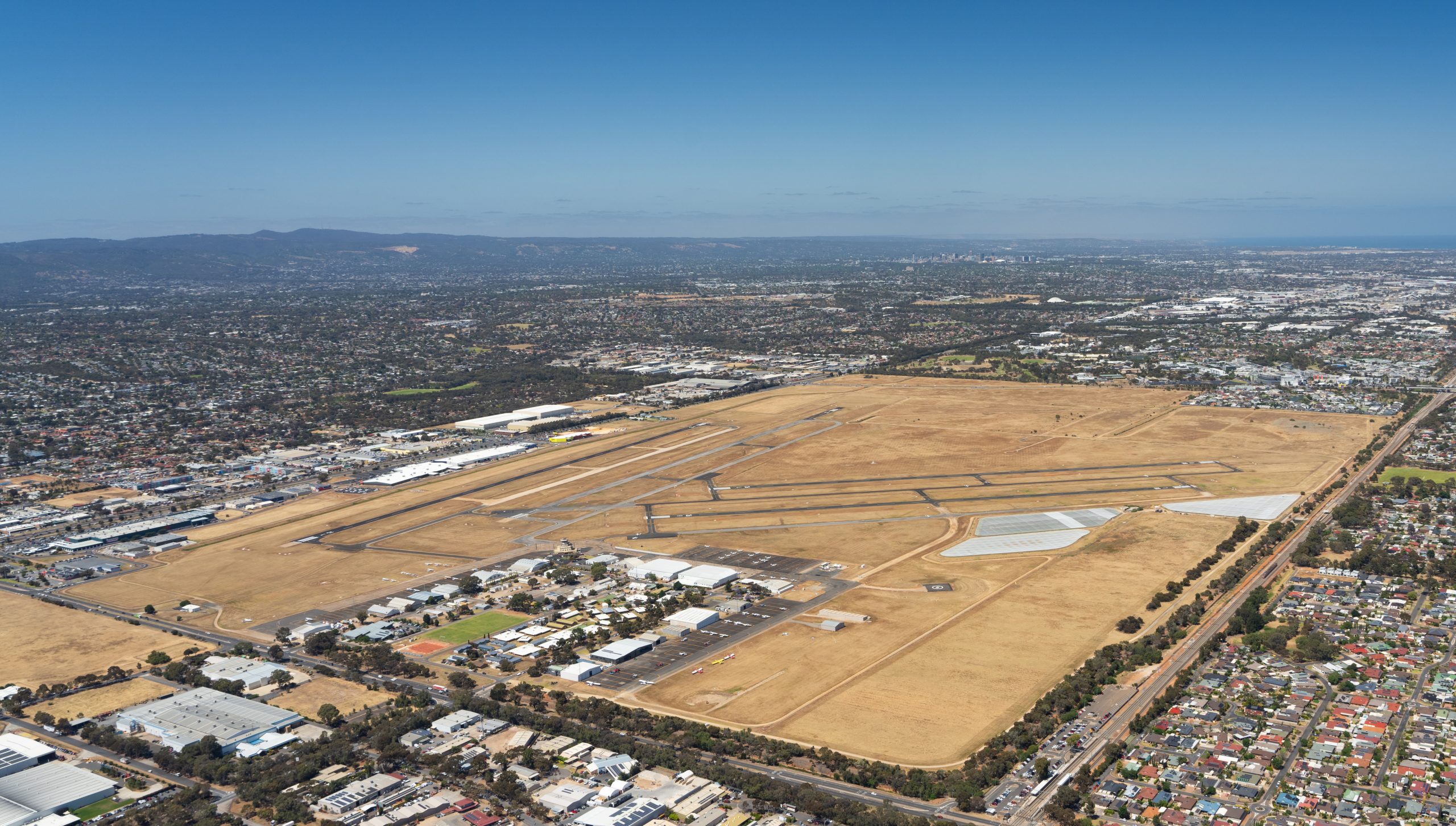
That’s the call I heard from Parafield tower in Adelaide one sunny afternoon. I repeated the information to ATC and began a right-hand turn onto base, ready to line up with the centreline of the right-hand parallel runway.

I spotted the runway, visualised my approach path towards it and began a slow turn onto final. The only problem was – I was fixated on the wrong runway and about to cause an incursion into the parallel traffic!

Recently I had completed some additional flight training to move from an RPL to a PPL, after flying RAAus aircraft for more than 15 years. So, by now I should recognise that, under stress, a pilot can tend to fixate on an object, gauge or task – and neglect all of the other information around them.

The sequence typically begins: ‘I am looking for something and have found something that meets 90% of the description and I have now convinced myself this is the thing I was looking for.’

Or sometimes it may be: ‘That is an interesting thing I have spotted and I didn’t expect it to be there. What could cause that? I will continue to ponder this while staring at it intently until it answers my questions.’

While we may think that we don’t typically experience this on a flight, then you are probably right about 95% of the time. The reason we do not usually experience fixation in most of our flying is because we have become used to the typical events in the cockpit and, thus, are not under the stress that leads to fixation.

But the day when IMC conditions push us low, or we have a medical emergency onboard, or are being beaten around in poor weather trying to get home or have a broken instrument – suddenly the stress means we can become subject to fixation.

Every instructor will have stories about student pilots conducting practice forced landings in the vicinity of an aerodrome but instead picking a paddock to land. Why would they select rough ground rather than a prepared runway? The answer is they were under stress – they identified a paddock and convinced themselves this was the best and only alternative.

This is especially true for a right-hand circuit because the runway is partially blocked from the student in the left-hand seat. I freely admit doing this – being embarrassed by selecting a paddock when the airfield was right next to me, but again, only when under significant pressure applied by a CFI.

I was once asked by an instructor to conduct a precautionary search and landing over someone’s paddock, after a diversion during a navigation exercise. I incorrectly identified the area I was searching for. At 200 feet AGL, the instructor casually said, ‘Wouldn’t it be nicer over there?’

I looked over and saw the correct, grassed aircraft landing area (ALA), just 200 metres away! So, what had happened? In my mind, I had found the thing I was looking for in the area I was looking for, which met 90% of my expectations. Fixating on the paddock meant I was completely blind to the actual ALA I was looking for and had not given myself room to assess anything else.

So, back at Parafield and still fixating on the incorrect runway (as the correct runway had been obscured by the cockpit pillar during the right-hand base), the instructor quickly took control and lined up on the correct runway before I could receive an urgent call from the controller about incursions.

Fixating on the paddock meant I was completely blind to the actual ALA I was looking for.

I was lucky it was a training exercise as I firmly believe I would have continued onto the wrong centreline, had the instructor not intervened. The scary part for me is that I hadn’t been mixed up about the runways – I had just confirmed on downwind leg what was the correct runway, against the aerodrome diagram, as a double check.

So, I reflect and think – how do we stop ourselves from falling into this fixation?

The first step is to try to reduce the stress in the cockpit by remembering the final check before hot mags is, ‘Am I fit to fly?’ If life is getting on top of you, as it does for everyone from time to time, then maybe come back another day to fly with a clear mind.

Another way to reduce fixation is to follow training. Use checklists as appropriate to guide you through stressful situations, as these are designed to support your critical decision-making and capture errors. Remember that, more often than not, rushing causes errors that lead to increased risks.

Safety behaviours: human factors for pilots (2nd edition), which is available from the CASA store, outlines, ‘Once you recognise an undesired aircraft state, you must use the correct countermeasure rather than fixate on the error.’

Finally, remember to use positive scan techniques. Practising a good scan on every flight is an excellent way to ensure you will continue to remain aware of multiple inputs when pressure builds up.

Lessons learnt

Consider the risk of fixation on your next flight. If you haven’t experienced cockpit stress in a while, seek some additional training to both improve your skills and test your ability to handle a new operating environment. When things go wrong, we don’t rise to the level of our training – we fall to the level of our proficiency.

Controlled aerodromes and operations is one of the special topics on our Pilot safety hub.


Have you had a close call?

8 in 10 pilots say they learn best from other pilots and your narrow escape can be a valuable lesson.

We invite you to share your experience to help us improve aviation safety, whatever your role.

Find out more and share your close call here.

Disclaimer

Close calls are contributed by readers like you. They are someone’s account of a real-life experience. We publish close calls so others can learn positive lessons from their stories, and to stimulate discussion. We do our best to verify the information but cannot guarantee it is free of mistakes or errors.

Staying safe in Class D airspace

To stay safe in Class D, it’s just as important to ‘fly according to the rules’ as it is in Class C at a major airport. The key to staying compliant and safe is being prepared. Understand the regulations for controlled airspace and familiarise yourself with the peculiarities of the Metro or Regional Class D airspace for your flight.

Airports in Class D often have flying schools and a variety of industry organisations. The traffic mix can be anything from light aircraft to corporate jets and airliners. They are also often located close to Class C airspace. Class D can be busy and challenging.

Some common errors in Class D are:

  • entering at the wrong altitude
  • deviating from the correct altitude
  • making lateral and vertical deviations
  • infringing neighbouring controlled airspace
  • not departing as instructed or by published procedures
  • not sighting and following traffic as directed
  • calling on the wrong frequency.

The good news is that there are plenty of ways to set yourself up for success and avoid some of these common mistakes when flying in Class D airspace.

Planning

Be properly prepared for your flight before departing – the best place to start is the relevant charts and the ERSA.

Airspace can change, so begin by ensuring you have the up-to-date charts. Study the airspace and the surrounding airspace thoroughly. Where does it intersect, lie under or butt up against other airspace? Where, and at what altitude, are the ‘steps’?

Read the relevant ERSA entry thoroughly. This is where you’ll find local flight procedures, including:

  • published approach routes, tracking points and flight altitudes
  • noise abatement requirements
  • circuit altitudes and directions
  • communication failure procedures
  • departure procedures and altitudes.

You can also find the correct radio frequencies in the ERSA. Some Class D airports have different frequencies for different runways and circuits. For example, Moorabbin has sets of parallel runways with different frequencies for eastern and western circuits. It pays to have your radio ducks in a row so you can call on the correct frequency confidently.

Approach

Familiarise yourself with the designated approach points or routes published in ERSA and ensure you have the correct ATIS information. Having the right QNH set is critical and means you will enter and operate in the airspace at the correct altitude.

Make sure to set the correct frequency as you approach and ask for clearance well before you enter CTA. Read back instructions using the correct phraseology.

While you need to prepare to fly into an aerodrome you have never been to before, you can still say ‘unfamiliar’ when you first establish contact with the tower. Air traffic controllers are there to help and saying ‘unfamiliar’ will get you that little bit of extra help, making your flight in Class D airspace more enjoyable and safer for everyone.

Lateral and vertical deviations

Enter and fly at the cleared altitude and track via the published tracking points unless directed otherwise. Losing or gaining altitude or not staying on the flight path as published or directed (within 1 nm) are called vertical or lateral deviations and are potentially unsafe.

Descend, climb or track as and when directed by ATC. Sometimes ATC might be directing aircraft with only 500 feet separation – not much margin for error. If you need to climb or descend for operational reasons, ask first (unless for collision avoidance or due to aircraft malfunction or emergency).

Sight and follow

ATC may instruct you to sight and follow aircraft. Don’t say ‘sighted’ if you do not have the traffic sighted and then hope you will eventually see it; if you can’t sight (or lose sight of) the aircraft you are supposed to be following, you must advise ATC.

Circuit departures

If the airport’s ERSA indicates a departure leg, then depart on that leg unless otherwise instructed. Published circuit departure procedures are designed to keep you from infringing surrounding airspace and keep you segregated from arrivals. You may also have to comply with standard departure altitudes at some aerodromes.

In Class D, ATC is there to assist you, but you are still the pilot in command. Therefore, it is your responsibility to know the rules, fly your aircraft safely and sight and avoid other traffic: aviate, navigate, communicate.

To find out more about Class D airspace, visit the Pilot Safety Hub.

Stay OnTrack has fantastic resources about some busy Class D airports. However, your knowledge of Class D airspace does not stop there – to stay compliant and safe, make sure you understand the rules in the AIP.

Where are they now?

Career updates from the AME scholarship class of 2021

A lot has changed since 2021. We’ve battled bushfires, floods and a global pandemic, seen a new prime minister sworn in and even secured the hosting duties for the 2032 Olympic Games.

Things have also changed for 4 talented individuals who, over the last few years, have made impressive advances in their careers within the aircraft maintenance industry.

Inaugural scholarship program

In 2021, CASA began the aircraft maintenance engineer (AME) scholarship program for aspiring engineers.

The scholarship provides eligible apprentices and trainees the means and support to pursue careers in aviation maintenance and engineering.

Successful applicants get access to professionals within the industry for mentoring, as well financial support to complete their studies.

Flight Safety Australia interviewed the first recipients of the AME scholarship. In the years since then, they have excelled in their careers and have kindly sat down with us again to chat about their achievements.

Here’s what they had to say.

Maddy Candy

Maddy has always been humbled by her success within aircraft maintenance engineering.

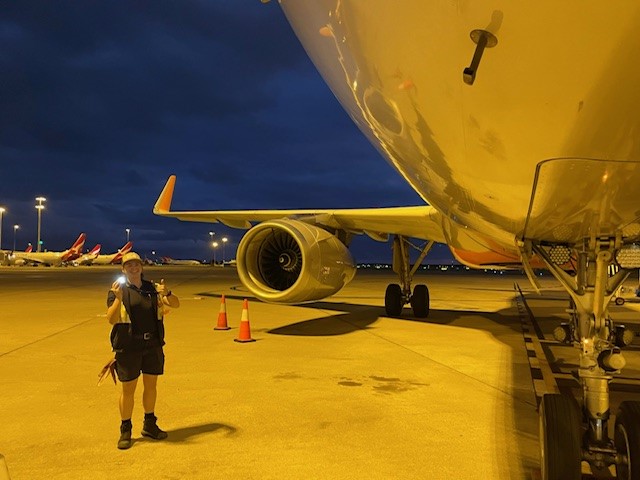
She got her start as an apprentice at Jetstar in 2016 and has remained with the company, currently working as a LAME on their fleet of A320s.

‘It’s an amazing job! I’ve met some of the most wonderful people who took me in, showed me the ropes and mentored me through the rigors so I could get my licence,’ Maddy explains.

‘And that was one of the best things about participating in the CASA AME scholarship – the number of doors it opened for me to meet people with years of experience and expertise. By going through the process, I learnt a lot about the industry. It also created new opportunities for me to learn more about a wide range of aircraft types.’

Having the scholarship funding kept Maddy’s motivation levels high, to push through until she completed her studies.

‘Studying to become a licensed engineer is pretty tough and can be very demanding on your time, but if you stick it out, ultimately it’s a very rewarding experience,’ she says.

‘Aircraft maintenance is a great career to get into if you genuinely have a love for aviation and the dedication to ensure the safety and reliability of the aircraft you service. After all, if you love what you do, you’ll never work a day again in your life!’

Maddy say the AME scholarship is an invaluable resource for aspiring engineers to tap into financial support for an already expensive vocation.

She says it’s also a great opportunity for junior engineers to grow within the industry, which makes it an ideal pathway for people who are good with their hands and have a passion and drive to succeed.

Preelan Naidoo

Shortly after gaining the CASA AME scholarship, Preelan obtained his Part 66 licence. At the time, he was working for HeliEdge Aviation at Archerfield Airport in Brisbane’s south.

‘My Part 66 licence has enabled me to work and tour many picturesque locations around Australia, and working on helicopters is awesome’, Preelan says.

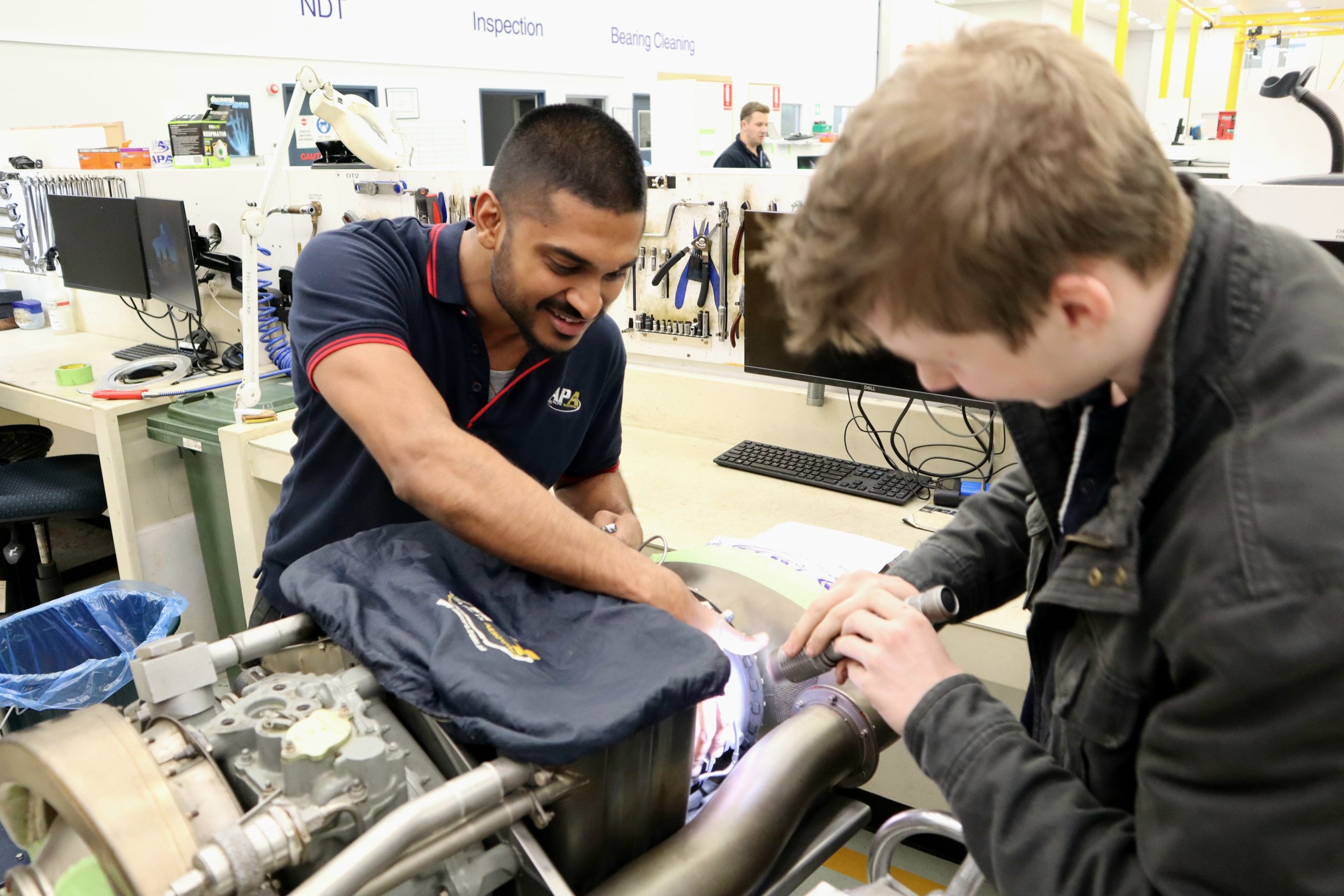
Currently at Asia Pacific Aerospace, Preelan gets to build Rolls-Royce M250 and RR300 turbine engines for aircraft all over the world.

‘I’m now also working towards obtaining my Level 2 non-destructive testing (Penetrant Testing (PT) and Magnetic Particle Testing (MT)) certification, as well as my GE T700 type course,’ he says.

He still occasionally gets back in the field working on helicopters, utilising the skills he learnt while studying for his Part 66 licence.

Preelan explains that once you’ve proven yourself in aircraft maintenance engineering, companies and other LAMEs are willing to invest the time and effort into you.

As for career highlights, Preelan has a few.

‘I’ve recently gained approval to solo build M250 gearboxes and turbine modules but that’s not the main highlight. One of the things I’m most proud of is being able to train and guide aspiring AMEs; knowledge while working in the field really aids their learning.’

Preelan sees the aviation industry growing considerably over coming years and reiterates that being a LAME opens a lot of doors.

‘You will have to work where the wind takes you,’ he says. ‘Word of mouth carries its weight in gold in this industry, so be mindful to always make a good impression when you start out at your first job.’

There isn’t a day that goes by that Preelan isn’t telling aspiring engineers to apply for the AME scholarship. Aircraft maintenance is an expensive interest, and many AMEs are out of pocket at some stage of the journey.

‘The scholarship is an awesome initiative by CASA – it has the potential to spark many fruitful lives and careers.’

Deborah Dewar

Deborah was almost at the end of her study journey when she received a call saying she was successful in securing funding from the AME scholarship.

At the time, Deborah was an apprentice at Premiair Aviation based at Jandakot Airport in the southern suburbs of Perth.

Since then, Deborah has worked her way through the aircraft maintenance industry to become a B2 LAME at Omni Executive, also based at Jandakot, working primarily on Pilatus PC12s and Cessna Caravans, and supporting the organisation’s business operations.

‘Completing my studies with the help of CASA’s AME scholarship program has opened up many exciting job opportunities for me,’ Deborah explains.

‘In this industry, you’ll quickly discover most aircraft maintenance organisations are interested in hiring licenced AMEs for their specific skill sets. Once I got my licence, having those sought-after skills gave me more options and flexibility about where, when and how I work.

‘Maintaining a good work-life balance is important to me. Thanks to Omni Executive’s flexibility, I’ve been able to go to part-time, giving me time to enjoy my hobbies and do some renovating.’

Deborah has been able to put the skills and knowledge she has learnt over the years to good use in a range of interesting projects.

‘At Omni Executive, I played a major role in a legacy PC12 avionic upgrade to a Garmin G600txi system,’ she says. ‘For my work, I was awarded the Recognition Award 2024 Aerospace, which was an honour!’

Deborah encourages anyone with the aspirations to become a LAME to apply for the scholarship. ‘In such a difficult industry to start in, it gives you a much-needed boost up.’

Frank Watkins

The last time we spoke to Frank, he was working as a contract licensed aircraft maintenance engineer (LAME) in general aviation. Now he’s a chief engineer who owns, operates and runs his own CAR 30 maintenance organisation.

‘Running my own aircraft maintenance business has certainly been a challenge, as you’d expect, but it’s been incredibly rewarding,’ Frank explains.

‘I applied for my AME scholarship when I was already halfway through my studies to become an AME. But when I saw it, I thought, “Wow, I better apply for that!’

Frank saw the scholarship as just the thing he needed to see through the rest of his studies.

‘Participating in the program provided me the opportunity to study for my turbine licence too, which I might not have been able to do so easily if I was embarking on it on my own.’

Since opening his maintenance business, Frank has been run off his feet – in a good way.

‘Business is certainly booming! I never knew how busy it could get. It’s a lot of hard work and long days, but it’s a good busy,’ he says.

Due to his overflowing bookings diary, Frank has been able to take on work experience students a few days a week and even hire a full-time apprentice to help keep up with demand.

‘I enjoy talking all things maintenance. Information sharing is very important in this industry, and I like to take on that mentorship role with some of the more junior engineers and students,’ he says.

‘I’ll always try to provide guidance and advice where I can. After all, I was in their position not that long ago.’

Frank believes it is well worth the time to apply for the AME scholarship but advises potential candidates to be passionate about the industry.

‘Don’t do it unless you’re passionate and motivated about aircraft maintenance,’ he explains. ‘You really need to love the industry to be successful in your studies. If you’ve got the enthusiasm and the drive to stick it out through the tough times, you’ll be rewarded with a fulfilling career in aviation maintenance.’

Applying for the AME scholarship in 2025

CASA runs the AME scholarship program every year.

To be eligible, applicants must:

  • have begun structured training towards a licence outcome or be working in the industry and gaining experience as an engineer
  • have a minimum of 2 years’ experience in the industry with a developed journal of experience
  • not already have a CASR Part 66 B licence.

Applications for the 2025 AME scholarship open in February. For the latest updates, subscribe to our aircraft maintenance engineer mailing list.

We thank the recipients of the 2021 scholarship program, as well those from recent cohorts, for being excellent ambassadors for the program. Your contribution to the aviation industry is immeasurable.

Maintenance safety month 2024

This May we’ve been talking about all things maintenance safety, with a month-long program of topics celebrating the people who keep the aircraft flying safely.

Visit the links below for more maintenance safety content:

Maintenance safety month webinars

Toolbox talk

Newsletters and articles

Tackling a toolbox talk with maintenance engineers – carbon monoxide

Maintenance personnel play an important role in ensuring the structural integrity of aircraft. This toolbox talk dives into the topic of carbon monoxide and discusses different ways potential leaks can be mitigated.

Tips on what to cover

Aim

• increase awareness and understanding of what carbon monoxide poisoning is
• recognise the symptoms and how it can affect the human mind and body
• look at what your workplace is doing or can do in relation to this issue.

Background

Carbon monoxide (CO) is a colourless, odourless, and tasteless gas that cannot be detected by the human senses.
It is a by-product of fuel consumption in piston engines and is expelled through an engine’s exhaust system.
In an aircraft, if the integrity of an engine casing and associated components are compromised, carbon monoxide gas can escape the engine before it is expelled and flow into the cabin, exposing the occupants.

Why is CO poisoning a risk in the workplace?

We often think carbon monoxide exposure is an issue for pilots rather than engineers, but this isn’t so. Maintenance personnel can unknowingly become exposed to CO at low levels during engine testing.

Exposure to carbon monoxide gas can cause:
• headaches and migraines
• dizziness and disorientation
• nausea
• cognitive impairment
• personality disturbances
• fainting
• death.

Symptoms can begin to show even at low levels of exposure.

Discussion scenario 1:

Your co-worker has just completed extensive engine ground run tests on a Cessna 172. They walk into the break room, sit down and start talking to you. The first thing you notice is their shortness of breath. You realise their movements are slow and they seem confused.

What would you do? Take 5 minutes to discuss.

How to avoid being exposed to CO

An inaccurate or incorrect fitment of an engine part can result in small gaps for carbon monoxide to leak out. Simply knowing that a correct fitment has been performed does not guarantee a leak won’t occur. There are steps you can take to mitigate against this:
• have dedicated steps in your documentation addressing thorough inspection of all potential leak points for the engine exhaust system
• check nuts, bolts, joining components in exhaust system for condition and security
• replace old parts and components to avoid leak points forming through continued wear and tear
• use an approved active carbon monoxide detector to test for presence of CO each time you ground run and sign-off an aircraft back into service
• report significant maintenance defects through CASA’s Defect Reporting Service (DRS).

Discussion scenario 2:

The aircraft you have been working on all day is now being ground run to check all engine operating parameters and performance. You are sure that all components are secured properly, and that all the work you carried out was done with due diligence. Fixed to the interior of the aircraft is a colour-spot carbon monoxide detector. During the engine ground runs, you notice it changing colour slightly, possibly indicating the presence of CO, but you are unsure because you’ve heard that these can be unreliable, and you have never noticed the patch change colour previously.

What would you do? Take 5 minutes to discuss.

Responsibilities of management

Management plays an integral role in driving safety in the organisation and maintaining a duty of care for their staff. Managers can influence positive safety behaviour by:
• amending documentation that address thoroughly checking for carbon monoxide leaks
• encouraging the use of personal protective equipment, specifically specialised masks that filter carbon monoxide and other toxic fumes from being inhaled
• supplying and maintaining serviceability of active carbon monoxide detectors and mandating their use when testing piston engines
• instilling safe working practices in their organisation
• providing further training by holding regular toolbox talks, as well as supplying engineers with safety awareness material.

Discussion scenario 3:

You are the manager of a medium-sized aircraft maintenance organisation. You’ve been operating for a few years and have an impeccable safety record. One day though, a pilot has a near miss caused by a carbon monoxide leak in one of your aircraft. The pilot was thankfully able to land safety.

You realise the significance of this event as a close call and that your team’s knowledge and attitude towards CO exposure will need to change. Regular and detailed maintenance is required for tackling this issue. You decide to have a toolbox talk to your maintainers about the following areas of inspection:
• cracks in the manifold
• cracks or openings in the engine firewall
• exhaust system holes or cracks
• bad seals or gaskets in exhaust system or around doors
• cracked heat exchanger
• soot at cockpit vents
• smoky odour in cockpit.

Regardless of how well an aircraft is maintained, problems can sneak up on us. A part can crack between scheduled inspections, or landing on a rough strip might stress a worn part or shake something loose. Cracks aren’t always visible on pre-flight inspections.
After further reading you realise that the most common source of CO poisoning in light aircraft is heating, when air flowing over the exhaust manifold picks up exhaust fumes. The best prevention against this source of fumes is careful maintenance. A Federal Aviation Administration report found that inadequate maintenance and inspection has contributed to many carbon monoxide-related accidents.

What would you do? Take 5 minutes to discuss.

Key takeouts

• Carbon monoxide poisoning can affect anyone who may have exposure to engine exhaust gases.
• Processes and procedures should be in place to minimise exposure to carbon monoxide poisoning.
• Maintenance engineers play an important role in managing CO risk.
• Managers are reminded that regular training sessions about maintenance-related safety topics are beneficial for staff.

Helpful links:

For further information on carbon monoxide poisoning and carbon monoxide detectors, visit these sites:
CASA carbon monoxide fact sheet
CASA carbon monoxide case study
CASA Airworthiness Bulletin – Preventing carbon monoxide poisoning in piston engine aircraft
ATSB Safety Advisory Notice – Carbon monoxide
Warning on carbon monoxide poisoning | Flight Safety Australia
ATSB report – Sydney Seaplanes accident, 31 December 2017

Hit your target – or learn to handle rejection

1

Take-off is no time for wishful thinking.

Pilots tend to be optimists. Advancing the throttle(s) for take-off, expectation bias lulls us into ‘seeing’ all is normal and power is full, while complacency and familiarity might prevent us from crosschecking indications at all.

We might not detect a loss of performance or power, remembering that a landmark 2010 Australian Transport Safety Bureau (ATSB) study found that partial power loss occurred 3 times more frequently than total power loss, creating a hard-to-identify, demanding and time-critical threat to those aboard.

To better evaluate take-offs in real-time, it’s helpful to identify 5 take-off targets and use them to continue or abort the take-off if needed. If you fail to meet these targets, you must immediately reject the take-off attempt.

Pre-take-off target

A successful take-off begins before you board the aeroplane. This is when you evaluate aircraft, pilot technique and environmental factors that affect take-off performance.

How much distance will your take-off require and how long is the available runway? Are obstacles or rising terrain on your departure path? What’s the aeroplane’s weight? How strong is the wind? What specific technique will you use for this particular take-off? Should you use flaps? Answering these questions and knowing and planning to achieve the goals of your take-off, needs to be done before flight, in the pre-take-off phase.

Power target

Are you getting maximum available power? You won’t know for certain unless you establish some specific power targets. Flying a fixed-pitch propeller aeroplane? You should know the static rpm (tachometer reading at full throttle with no forward motion) and compare it to what you see at the beginning of your take-off roll. Same goes for the expected rpm further into the take-off when airflow often permits a fixed-pitch prop to spin faster.

In aeroplanes with controllable-pitch propellers, know the expected manifold pressure and rpm at take-off power. Most normally aspirated (non-turbocharged) engines will read about one inch below ambient pressure at full throttle. At sea level, that’ll be around 29 inches of manifold pressure, with maximum manifold pressure decreasing about one inch for every 1,000 feet of field elevation above sea level. Turbocharged engines should achieve their full, rated manifold pressure regardless of airport elevation.

In all petrol aircraft engines (as opposed to diesels or turbines), mixture control is vital to achieving take-off power. Many pilots who learn to fly at near-sea-level aerodromes never learn what needs to be done with the ‘red knob’ before a higher altitude take-off. As pressure drops, a corresponding reduction in fuel flow is needed for maximum available power. This is exaggerated in larger, fuel-injected engines as they tend to be set excessively rich (extra fuel flow) at the full-rich position.

Check your aeroplane’s pilot’s operating handbook (POH) for specific guidance but, in general, fixed-pitch propeller engines need to be leaned for maximum propeller speed at full throttle. Those with controllable pitch propellers should be leaned per POH fuel-flow tables (often placarded on the fuel-flow gauge) or for a target exhaust gas temperature setting. Know what indication you’re leaning for in the aeroplane you’re flying and lean the mixture to achieve that target before beginning your take-off roll.

Turbine pilots may have torque or temperature limits for take-off, and often will not be able to go ‘full forward’ with the power levers and remain within one or the other limit. Flying a turbine, you need to know the limiting factors for a specific take-off and ensure maximum available power within those limits.

Acceleration target

You’ve made your pre-take-off calculations and full power is available. But are you accelerating as quickly as expected? The measure of acceleration is usually subjective. Does it feel right?

A better measure of acceleration is to visualise the point at which you expect to reach lift-off speed. Pick a taxi turn-off, a runway distance remaining sign, a tree alongside the runway’s clear area or some other feature to positively identify the spot by which you’ll become airborne.

Some pilots like to use the 70/50 rule, which says you should be at 70% of your lift-off speed when you reach 50% of the calculated take-off ground roll distance (not the runway length, as is sometimes erroneously suggested). Others modify this by stating the aeroplane should attain 70% of lift-off speed within a certain number of seconds after brake release. Both work at sea level; the second will not be accurate as field elevation and density altitude increase and acceleration reduces. The 70/50 rule has its detractors, with some good arguments, but it makes calling for an abort simple if you fail to reach that speed by that point.

Lift-off target

Reaching your lift-off speed target at the predetermined distance down the runway, raise the aeroplane’s nose to the necessary attitude. An aircraft has one attitude that provides optimum climb performance. Achieve that attitude and the aeroplane will climb smartly. A few degrees more ‘up’ and induced drag may seriously degrade climb performance; a few degrees down from optimum and climb rate may also be significantly eroded.

Note that the aeroplane’s attitude is power-dependent; it will be lower at higher density altitudes when power is reduced and the consequences of improper pitch are worse. On take-off, especially when conditions require maximum performance, attitude is everything.

Initial climb target

For initial climb from lift-off until the transition to cruise climb (the transport-category folks call it ‘first-stage’ climb), you should have a pre-take-off idea of your expected climb attitude and vertical speed. Compare real indications to what you expect to decide if your take-off is going as planned, or if you need to re-check attitude, configuration (flaps and landing gear position) and power to safely climb away from the airport.

With knowledge of what you can expect in each phase of take-off, you can establish specific goals or take-off targets. Achieve a take-off target and you know it’s safe to continue. Fail to meet a target and it’s time to abort the take-off without hesitation.

Pilot certification standards do not require evaluating partial power loss scenarios in flight. There’s nothing to require flight instructors to train pilots for anything other than total loss of thrust. Have you ever been put in a partial power loss scenario by your instructor? Is it something you should request be covered in your next flight review?

Know your take-off targets, and actively crosscheck actual indications and performance to your expectations as you charge down the runway. In most cases you’ll detect an anomaly with plenty of time to abort the take-off on the remaining runway – or at least go off the departure end under control at a slow and decelerating speed.

You can’t completely avoid the possibility of sudden loss of power shortly after becoming airborne; however, if the genesis of engine failure occurs before you lift off, you should never find yourself in the air struggling to find a survivable place to quickly put the aircraft down.

image: (modified) Adobe Stock | Gerrit Rautenbach

Handling rejection

What if you don’t achieve one of your take-off targets? What if a door or window pops open, an animal appears on the runway or you’re taking off into IMC and realise you left your instrument approach charts in the clubhouse? Here’s what you need to do to safely reject a take-off:

  • pay attention: do everything you can to avoid the need for an abort before you ever reach the runway. Don’t skimp on your pre-flight inspection; don’t absent-mindedly rush through the before-take-off checklist. The purpose of all this preflight work is to keep you from having to abort in the first place.
  • maintain control: there’s no better way to maximise your chances of survival and minimise the danger of damage than to keep the aeroplane under control. Keep its wings level and the nose pointed straight ahead. Even if you go off the runway, doing so under control maximises the chance of the aeroplane structure protecting you and your passengers. Stay positively on the controls as long as possible.
  • reduce power: get the power to idle. The speed with which you need to reduce power – whether you should reduce or chop the throttle – depends on your circumstances:
    • aborting from well below lift-off speed, with lots of remaining runway? Bring the power smoothly back to idle.
    • rolling toward the last few hundred meters of the runway? Get the throttle to idle now.
    • lose an engine on take-off in a twin-engine aeroplane? Chop the throttles to remove asymmetric thrust that threatens to force you off the side of the runway.
    • going off the side of the runway? If you’re pulling to the left, reducing power (in most single-engine aeroplanes) will make control easier. If drifting to the right, maintaining some power may help you keep it on the runway. But if you can’t hold it on the prepared surface, bring power swiftly to idle.
  • apply brakes: after reducing power, brake as needed to come to a safe stop. If you feel the wheels slipping, then ‘pump’ the brakes (apply and release the brakes in quick succession) until your speed is under control. Don’t lock up the brakes – a skidding tyre can quickly blow, making directional control almost impossible. It may be helpful to pull all the way back on the control yoke to keep weight firmly on the main wheels to maximise brake effectiveness.

Some POHs call for retracting any take-off flaps to increase braking. If so, be very careful to select the proper handle for flap retraction. Many pilots have inadvertently pulled up retractable landing gear when they thought they were retracting flaps.

Regardless of the circumstances of your aborted take-off, the most important thing is to maintain control.

Going off the runway

Is your aborted take-off taking you off the side or the end of the runway? As time and maintaining aircraft control permit:

  1. Pull the mixture control(s) or condition levers to idle cut-off. This quick action stops most fuel circulation in the engine compartment(s), important for fire prevention if your runway departure leads to a collision and engine compartment damage.
  2. Turn fuel selector(s) OFF to prevent additional fuel from flowing to the engine(s) where things are hot and ready to burn.
  3. Turn off the alternator or generator and battery master switches. Electricity can spark a fire if you collide with something after leaving the runway; turning off the switches shuts off this dangerous ignition source.
  4. Do not pull the propeller(s) to low rpm in aeroplanes with controllable-pitch props. At the higher rpm position, propeller blades create significant drag – keeping the propeller(s) full forward will help you stop sooner.

In some multi-engine turbine aeroplanes, it may be safer to continue to climb if you lose one engine or otherwise fail to meet some take-off targets. Trust me, the ‘accelerate-go’ option rarely exists in multi-engine piston aeroplane operations, and often is outside the realistic realm in some turbines. If accelerate-go is available to you in the aeroplane you fly, you’ll know it because you’ll have practised it in a simulator that realistically mimics that aircraft type.

History shows take-offs are potentially more fatal than landings. We need a way to identify and respond to problems before they lead to accidents. By establishing take-off targets to anticipate performance, gauging actual to expected performance during take-off, and immediately executing a pre-planned take-off abort technique if you fail to achieve a target, you will be better able to handle rejection and avoid a serious take-off mishap. If you must perform a rejected take-off, swiftly follow the procedures to minimise hazards and maximise your chances of survival.

An aircraft has one attitude that provides optimum climb performance

Drone flyer diary – Melanie Olsen

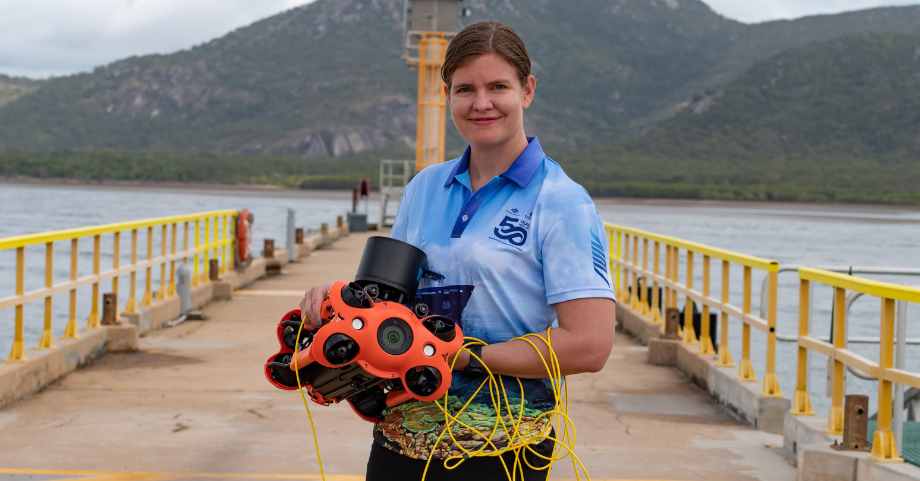
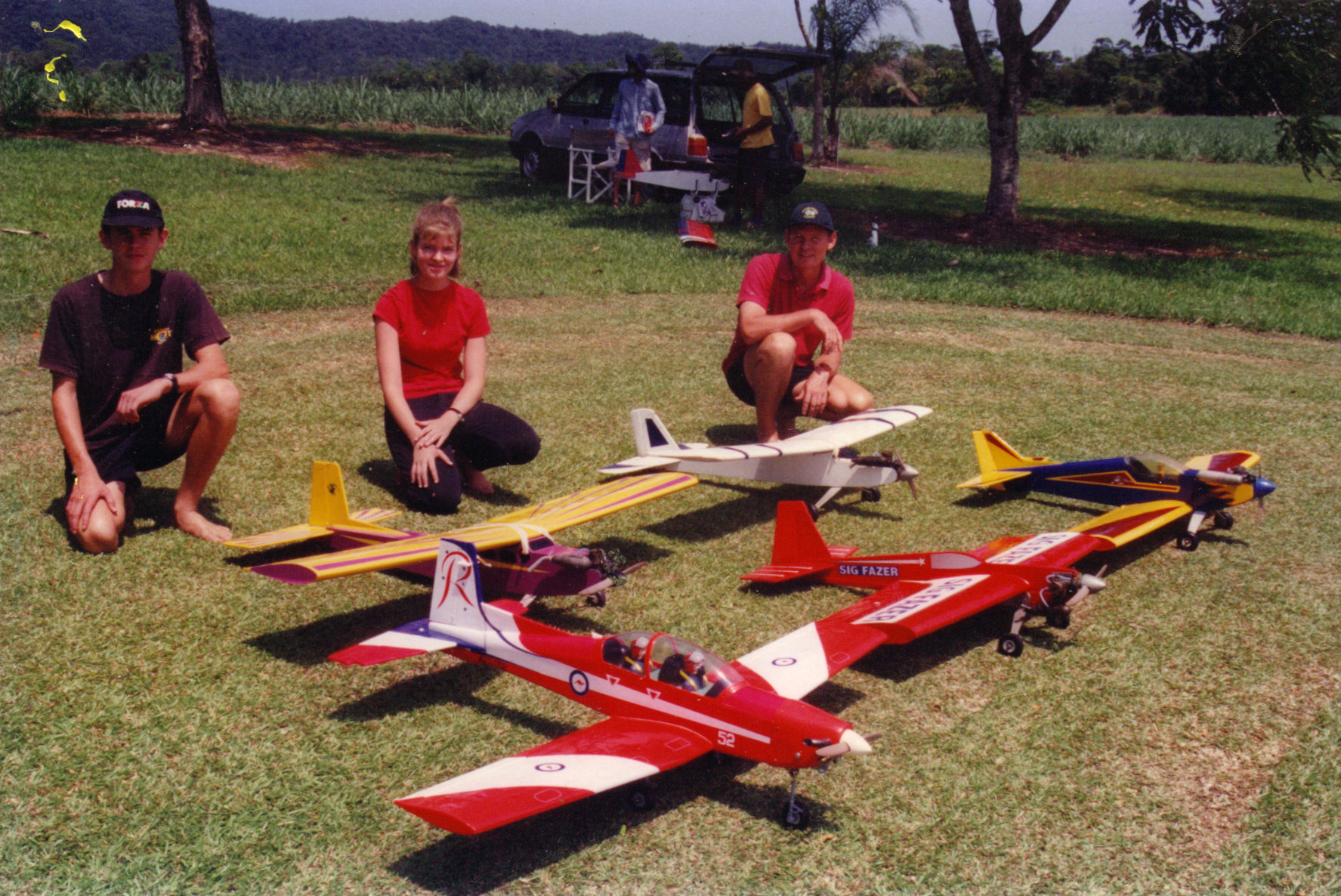
When Melanie Olsen was just a kid growing up on a farm, she couldn’t have dreamt she’d go on to work with drones in autonomous marine systems. After a childhood of building and flying remote-controlled planes, a school visit from a James Cook University lecturer with his multi-copter inspired her to pursue a career in drone technology and engineering.

image: Melanie Olsen (middle) with her self-built remote-control plane (purple and yellow 40-60). Far North Queensland, 1997

Today, Melanie leads the ReefWorks marine technology test range and development at the Australian Institute of Marine Science (AIMS). Her work involves using drones to gather marine environmental data and monitor infrastructure, as well as large-scale testing of autonomous drone capabilities.

The ReefWorks team uses aerial drones and underwater drones to capture high-resolution data on coral reefs and other ecosystems. They have also collaborated with the Queensland University of Technology to develop an autonomous underwater vehicle, aptly coined ‘the Coral AUV’.

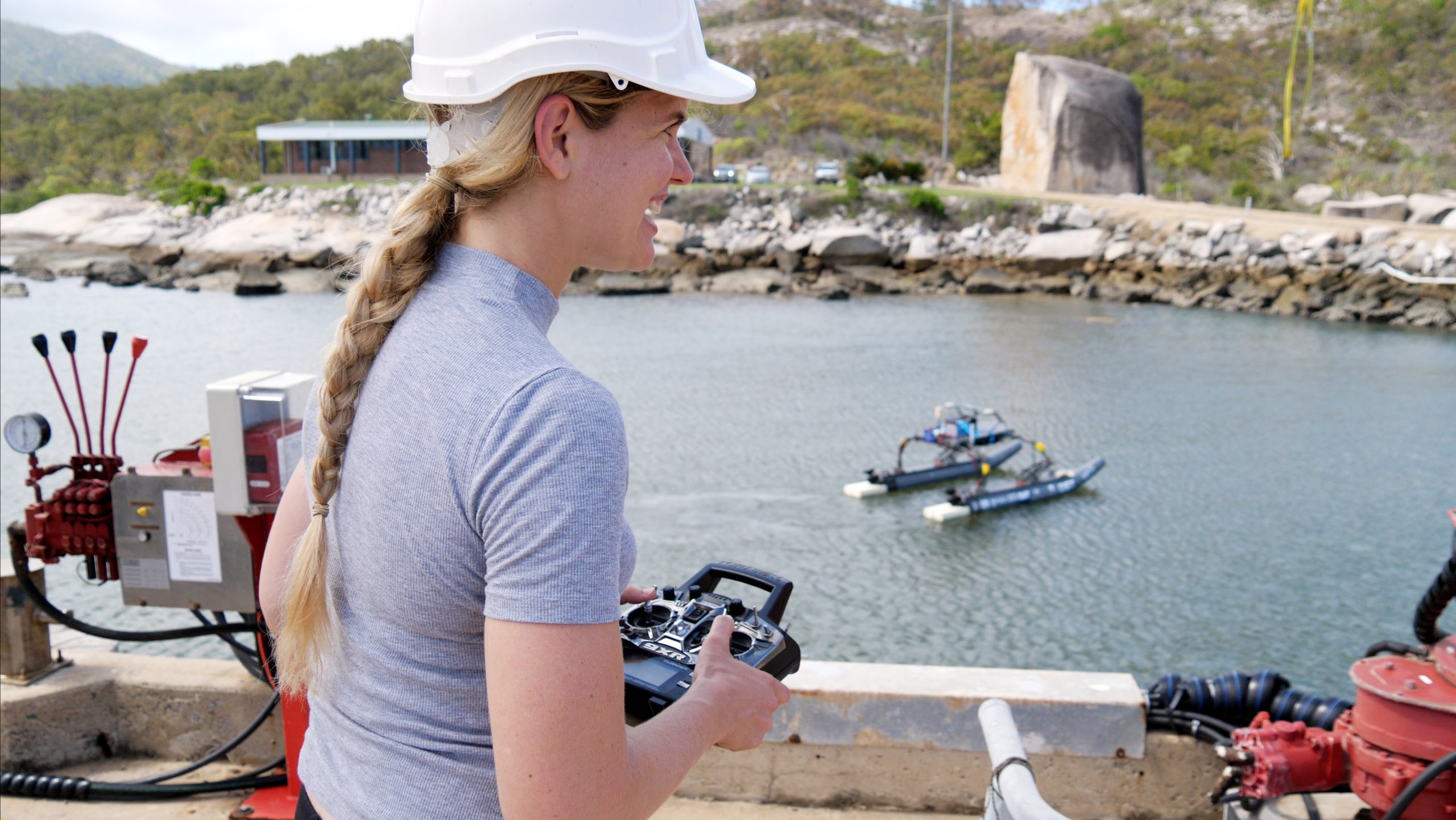
image: Melanie operating James Cook University WAM-V, 2021 | AIMS

In the skies, Melanie’s fleet of drones is equipped with high-resolution cameras for collecting coral reef imagery and checking for crocodiles when divers are undertaking missions in infested waters. Some drones also have thermal cameras, used to monitor pest species like the crown-of-thorns starfish or inspect infrastructure.

‘While the underwater drones are busy gathering data during a mission, the aerial drones watch from above to support and monitor the operation,’ Melanie says.

She highlights the critical role these aerial drones play in safety and efficiency.

‘When you have tech in the sea, particularly multiple uncrewed vessels, it can be difficult to quickly gain situational awareness when issues occur,’ Melanie explains. ‘Aerial drones provide vital support; they beam live video straight to the control room to assist with a rapid response to any issues.’

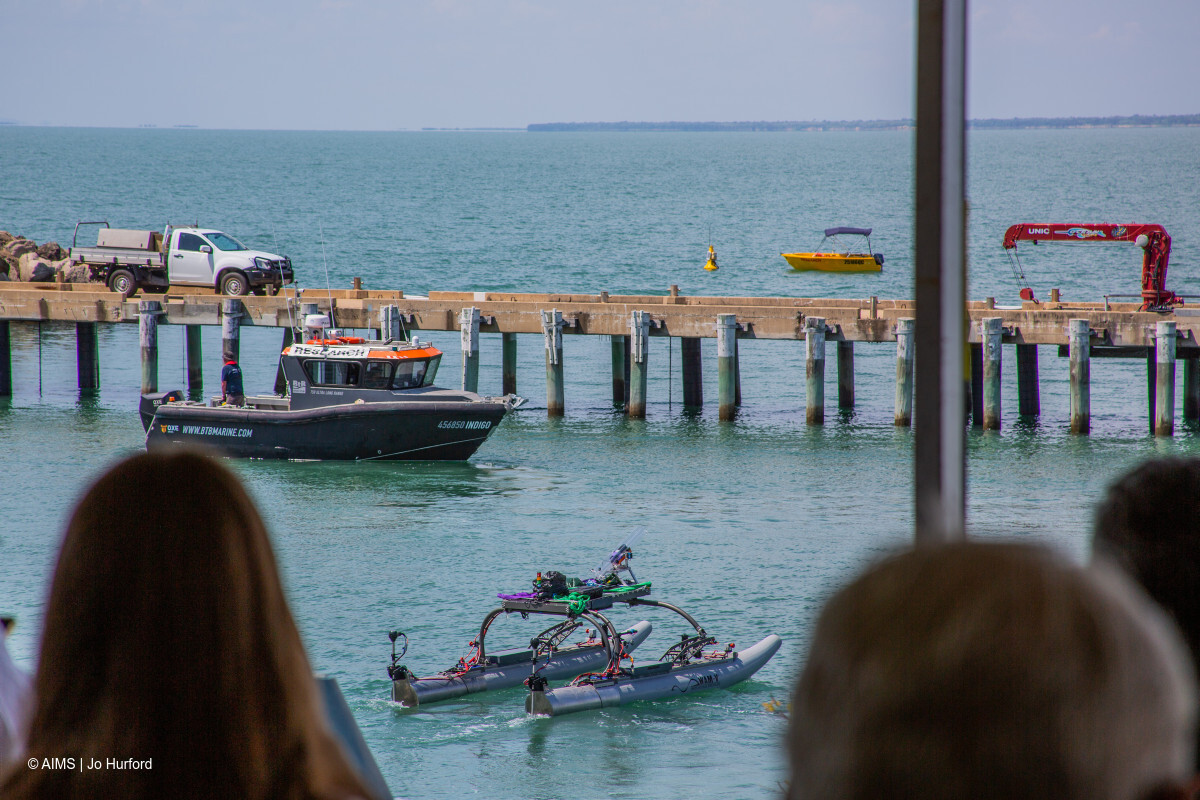
image: Trusted autonomous systems event at ReefWorks, September 2022, Townsville | AIMS, Jo Hurford

The information the drones collect includes coral, seagrass, fish and mammal health imagery and sensed environmental data. They also measure ocean parameters such as waves, currents, temperature and salinity.

‘The tropical marine environment is a biodiverse ecosystem, which means we need high quality and different methods of collecting data.’

In contrast to human-based dive methods, drones can provide more data over a larger geographical area. Drones can also operate in deeper, darker and predator-infested waters that are unsafe for divers. They can be fitted with fully integrated oceanographic and imagery sensors.

The data they collect enables researchers to inform decision-makers in combating climate change impacts on marine environments.

Ensuring safety on missions is a top priority for Melanie. Following the drone safety rules, conducting regular briefings and continually refreshing safety risk assessments keep her and her team members safe.

AIMS aerial drone operators all hold a remote pilot licence (RePL) and complete additional in-house training to ensure safe operation of drones from moving vessels.

As well as Melanie’s CASA-issued RePL, she holds a boat licence and marine radio licence and has completed an autonomous marine systems fundamentals course. Using these certifications, she can ensure marine drone operations are conducted safely at sea. She also applies for and holds environmental permits and permissions needed to conduct her work, especially in the Great Barrier Reef.

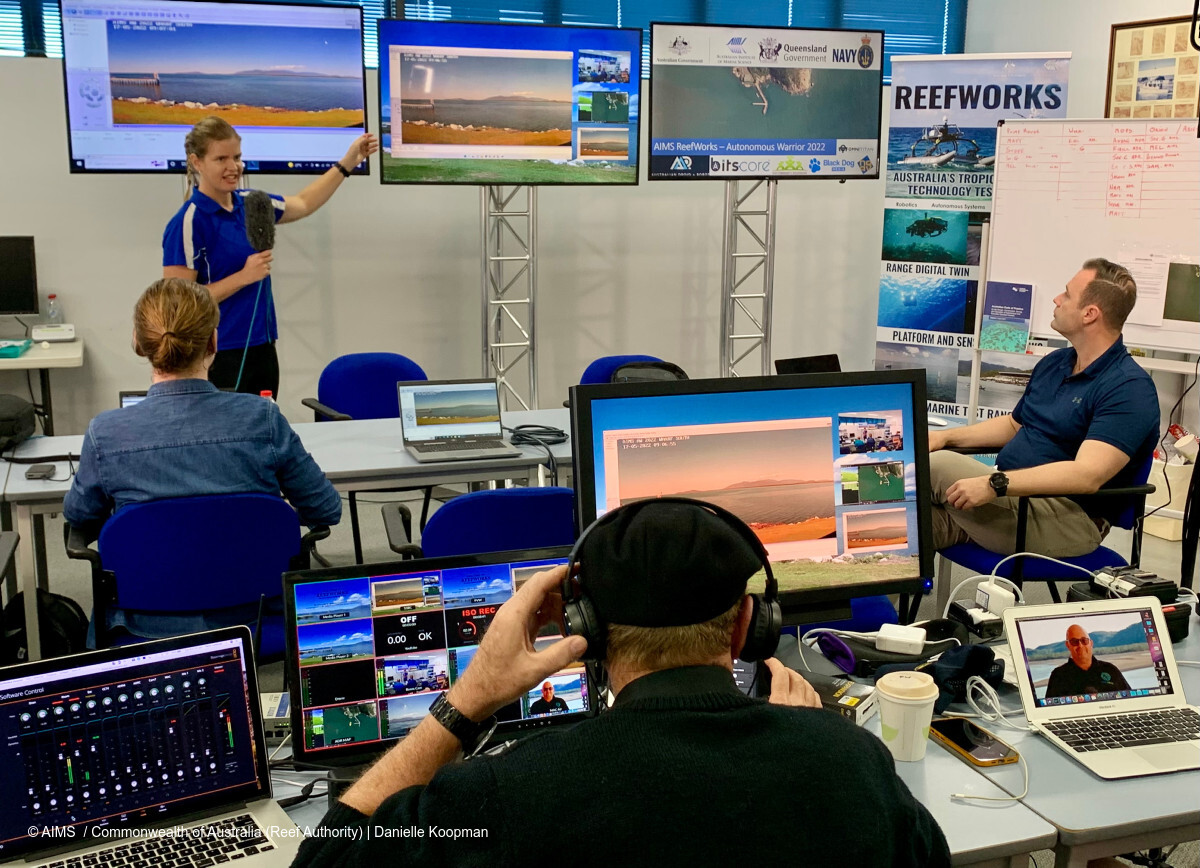
image: Melanie Olsen briefing during a ReefWorks exercise, Townsville, 2022 | AIMS, Danielle Koopman

‘Many drone flyers aren’t aware that flying in national parks, including marine parks, requires permits,’ she says. ‘Additionally, there are individual state rules around how close people and drones can get to wildlife such as whales and turtles.’

Melanie’s number one safety tip is to talk about safety with other drone operators, so it is always front of mind.

‘Share your learnings and knowledge with your peers, CASA, the drone manager, or area manager where applicable. Community forums like Australian Association for Uncrewed Systems can be a great place to share knowledge with like-minded people.

‘I also want to highlight the importance of checking the rules stipulated by marine parks around drone flying in your state, and checking the location you intend to fly on a CASA-verified drone safety app. Just like all drone flyers, when we operate, we need to make sure we meet all the permit requirements.’

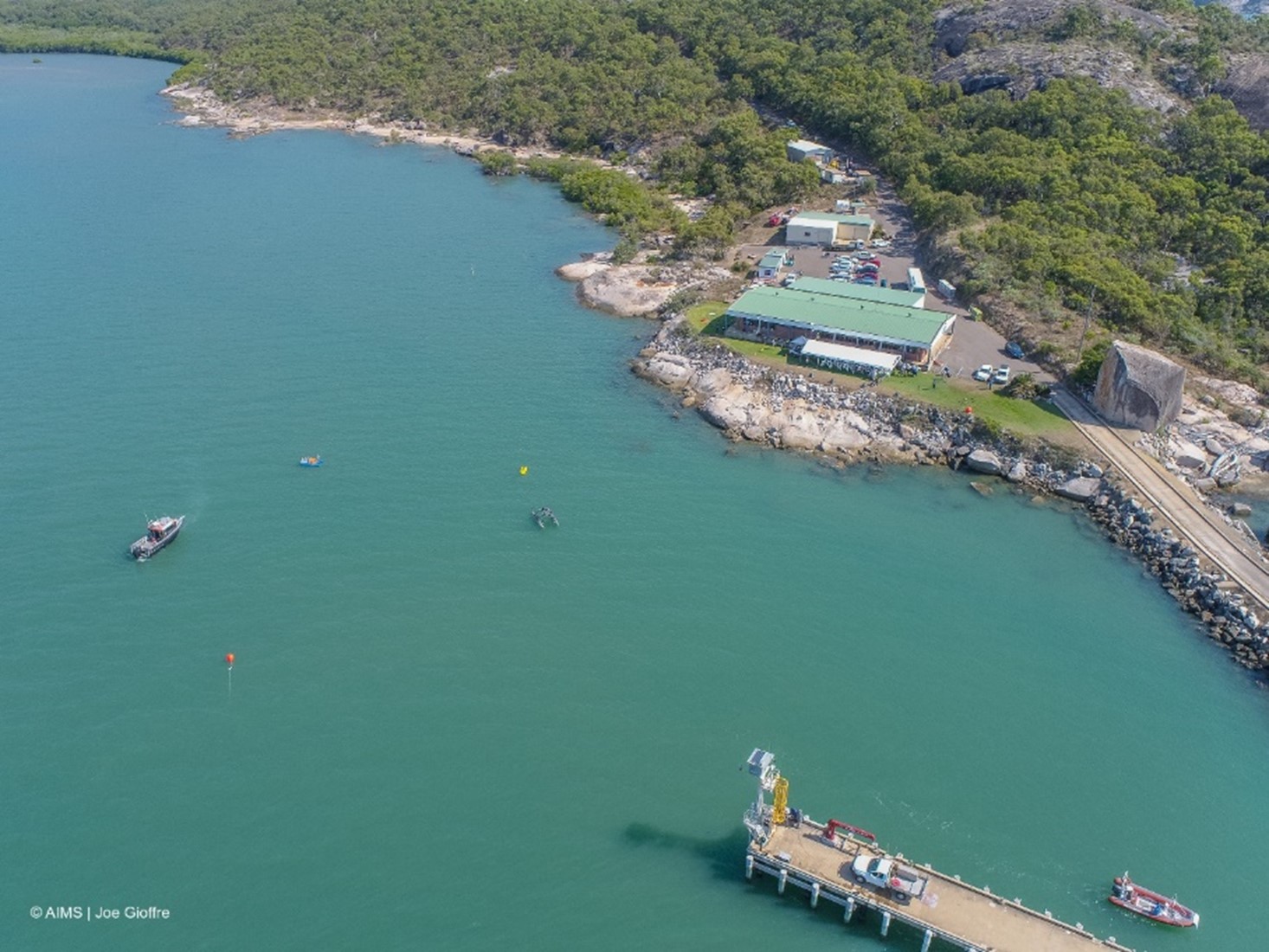
image: TAS event at ReefWorks, Townsville, 2022 | AIMS, Joe Gioffre


In-flight break-up of Robinson R22

A Robinson helicopter broke apart inflight in Western Australia, according to a report by the Australian Transport Safety Bureau.

The bureau says the accident highlights the potentially catastrophic effects of low-g and/or low rotor RPM/rotor stall conditions in helicopters with semi-rigid rotor heads.

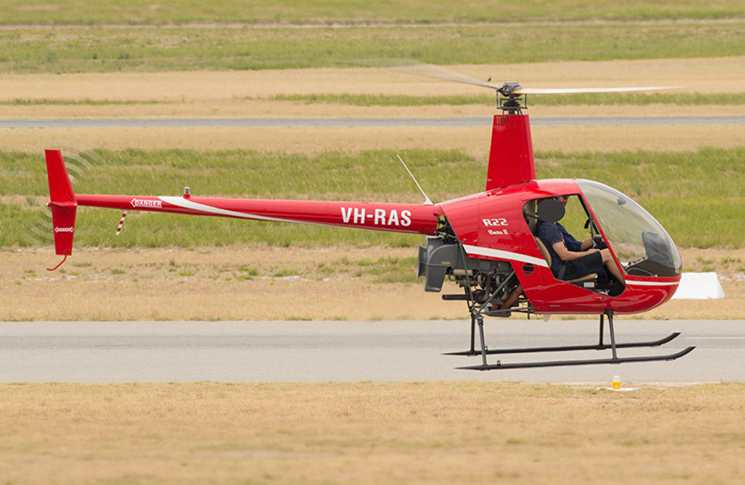
The two-seat Robinson R22 Beta II was conducting a private flight from Koorda to Jandakot on 2 October 2022 and broke-up in-flight shortly after reaching cruise altitude.

Recorded flight data showed that during cruise, the helicopter’s altitude increased by about 100 feet and then rapidly descended, almost vertically. The helicopter collided with terrain, inverted, on a dry salt flat. The pilot and passenger were fatally injured.

The bureau’s examination of the accident site identified signatures consistent with the main rotor assembly having been subjected to excessive teeter and mast bumping – where the main rotor spindle impacts the mast.

‘It was likely the helicopter entered either a low-g and/or a low-rotor RPM/rotor stall condition which, along with delayed and/or inappropriate control inputs, resulted in extreme teetering of the main rotor assembly and the in-flight break-up,’ ATSB Director Transport Safety Kerri Hughes said.

The investigation team from the ATSB explored multiple scenarios to determine the reason for the extreme teetering and mast bumping, and the investigation would have been considerably aided had the helicopter been fitted with an in-cockpit video recorder.

‘Better understanding of the circumstances leading up to extreme teeter and in-flight break-up events such as in this accident will assist investigators in determining appropriate steps for ongoing safety improvement,’ Hughes said.

Robinson introduced cockpit video cameras as standard on new R66 and R44 helicopters from 2021 and 2022 respectively. Further, they are also optional for new R22 helicopters. The manufacturer offers a camera retrofit for in-service R44s and R66s and most R22s.

‘While not required by regulation, we urge owners and operators to consider the benefits of installing cockpit video cameras, which not only aid safety investigations, but can also be used for flight instruction debriefing and as a maintenance tool,’ Hughes said.

The investigation report also highlighted the helicopter’s dual flight control configuration. Robinson recommends removing dual flight controls if the passenger is not helicopter rated or under flight training instruction.

‘When carrying passengers, the helicopter manufacturer recommends removing the passenger-side controls to avoid inadvertent bumping or interference,’ Hughes said.

She stressed there was insufficient evidence to determine if the passenger made an inadvertent control input or if they were operating any of the controls during the flight.

‘Where dual controls cannot be removed, the passenger should be fully briefed to keep their hands and feet clear.’

Hughes notes the accident demonstrates the catastrophic potential of low-g and low rotor RPM/rotor stall conditions in helicopters with semi-rigid rotor heads, such as the R22.

‘A pilot’s ability to identify the developing condition and promptly apply the correct flight control inputs is vital to effective recovery and continued safe operation,’ she said.

Read a related article in Flight Safety Australia here.

Read the full report here.

One last look

Under pressure to rush, this pilot came close to danger.

I had finally reached the navigation stage of my flight training and was excited to go and take a look at some non-controlled airspace.

I was training in a Cessna 172 and to date, most of my flying had been restricted to the Class D airspace at Camden Airport and its associated training area.

Although the airspace around Camden was fairly busy, it didn’t take me very long to build a picture of where the traffic was in my vicinity. Aircraft would typically arrive via the reporting points and the control tower would provide them with instructions of how to join the circuit.

At times, waiting at the runway holding point was a little frustrating. I would watch aircraft fly their way around the entire circuit and file in one after the other to land, while I waited patiently for a gap large enough so the tower could give me a ‘clear for take-off’.

On this particular day, the weather was perfect for flying and there was no concern in the forecast about difficult crosswinds or reduced visibility. The most challenging part of the flight was dealing with the overwhelming amount of new information, as I learnt to navigate from my chart and join an unfamiliar circuit without the assistance of a tower to tell me which direction to land.

I had successfully made it all the way to Bathurst Airport and, although the weather was perfect for flying, it was quiet. During the time I took to refuel the aircraft and reorganise my flight plan, I didn’t see or hear any other aircraft movements, so I wasn’t surprised to hear the aerodrome frequency response unit (ARFU) respond with an automated ‘Bathurst CTAF’ when I gave my taxi call. The ARFU transmits a voice message if the CTAF has not been used for 5 minutes.

I was at the holding point for runway 35 and stopped to take one last look for any traffic. As I took my time to scan around, my instructor exhaled and said, ‘Why are we still stopped? C’mon, let’s go!’.

To be fair, I am a very safety conscious pilot and this, in combination with the overwhelming number of tasks associated with navigating an aircraft, meant that nothing on this flight was going to happen fast. However, as I leaned forward in my seat, I spotted an aircraft on short final for runway 35.

Until I saw this aircraft, there was no other indicator it was in our vicinity. It had not made any radio calls on the Bathurst CTAF and its location was visually obscured from my instructor’s vision, due to the blind spots created by the Cessna cockpit and wing.

Given the lack of radio activity, had I proceeded with the assumption that no traffic was present and rolled onto the runway without undertaking a thorough scan, it is possible we could have collided with the landing aircraft.

It had not made any radio calls on the Bathurst CTAF.

Lessons learnt

  • Radio calls can assist with situational awareness but should be used in combination with a thorough scan for traffic.
  • Be aware of blind spots. The large, high wing of Cessna aircraft and cockpit design meant it was impossible for my instructor to see the incoming aircraft in his seated position. Either move around in your seat to conduct a thorough scan for incoming traffic or position the aircraft at the holding point in a direction that provides more visibility towards those coming in on final.
  • Don’t rush. If you haven’t had enough time to complete your checks, don’t skip over them, even if someone tells you, ‘Let’s go’.

Controlled operations is one of the special topics on our Pilot safety hub.


Have you had a close call?

8 in 10 pilots say they learn best from other pilots and your narrow escape can be a valuable lesson.

We invite you to share your experience to help us improve aviation safety, whatever your role.

Find out more and share your close call here.

Disclaimer

Close calls are contributed by readers like you. They are someone’s account of a real-life experience. We publish close calls so others can learn positive lessons from their stories, and to stimulate discussion. We do our best to verify the information but cannot guarantee it is free of mistakes or errors.

Vertical challenger

0

The designers of what is planned to be Australia’s first certified advanced air mobility aircraft say technology and safety go hand in hand.

Safety was at the forefront of Andrew Moore’s thinking when he set out to design and build an Australian advanced air mobility (AAM) aircraft.

The aircraft would be in the spotlight as an Australian first and Moore knew a key market in his sights, medical transport, would demand the highest levels of reliability.

At the same time, the electric vertical take-off and landing (eVTOL) vehicle would need to have strong economic and ecological advantages.

It’s a balance Moore believes he has struck in Vertiia, which earlier this year became the first Australian-made AAM aircraft to apply for Civil Aviation Safety Authority type certification.

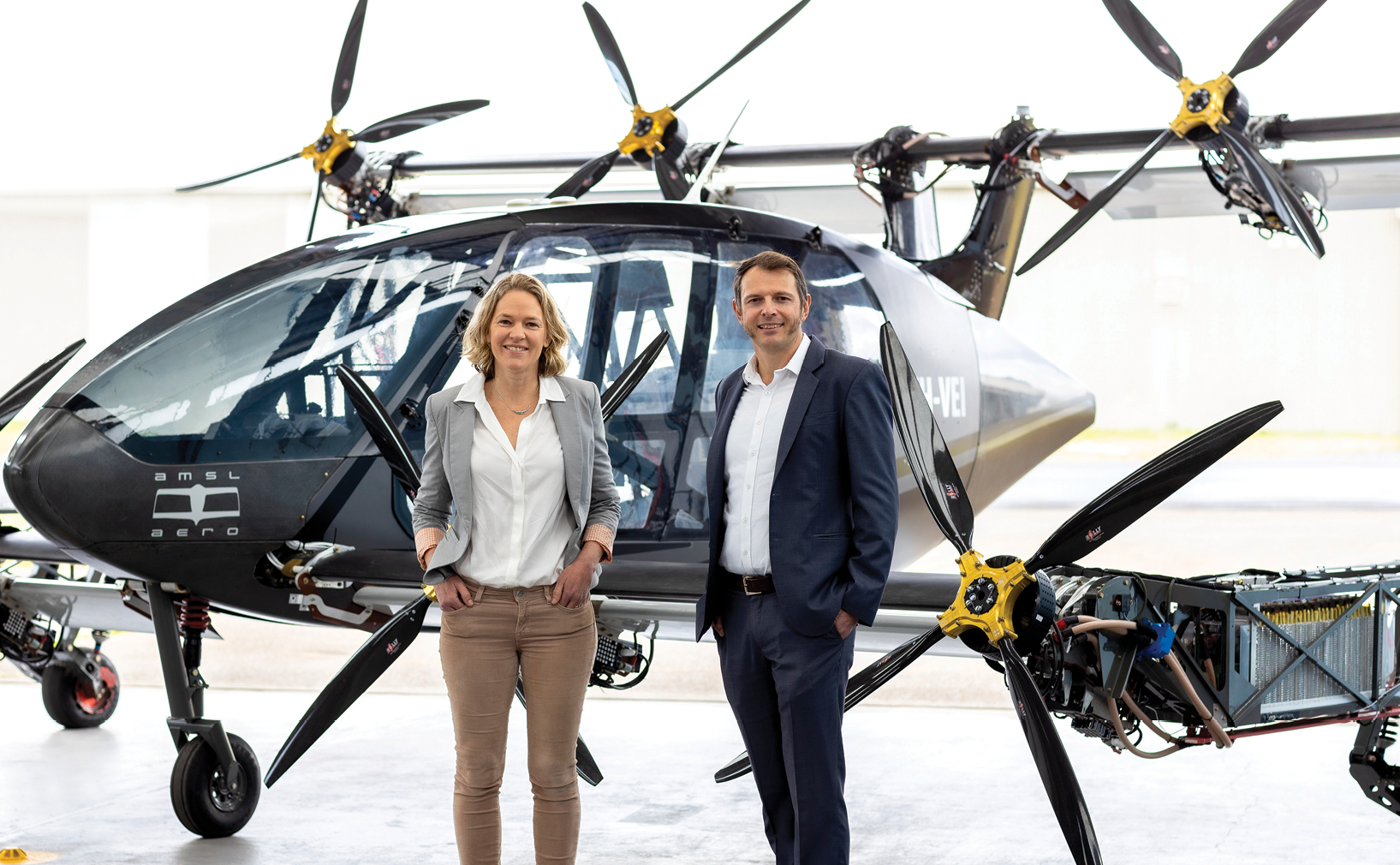
The eVTOL has been under development for several years by AMSL Aero, the NSW company Moore co-founded with Google executive Siobhan Lyndon.

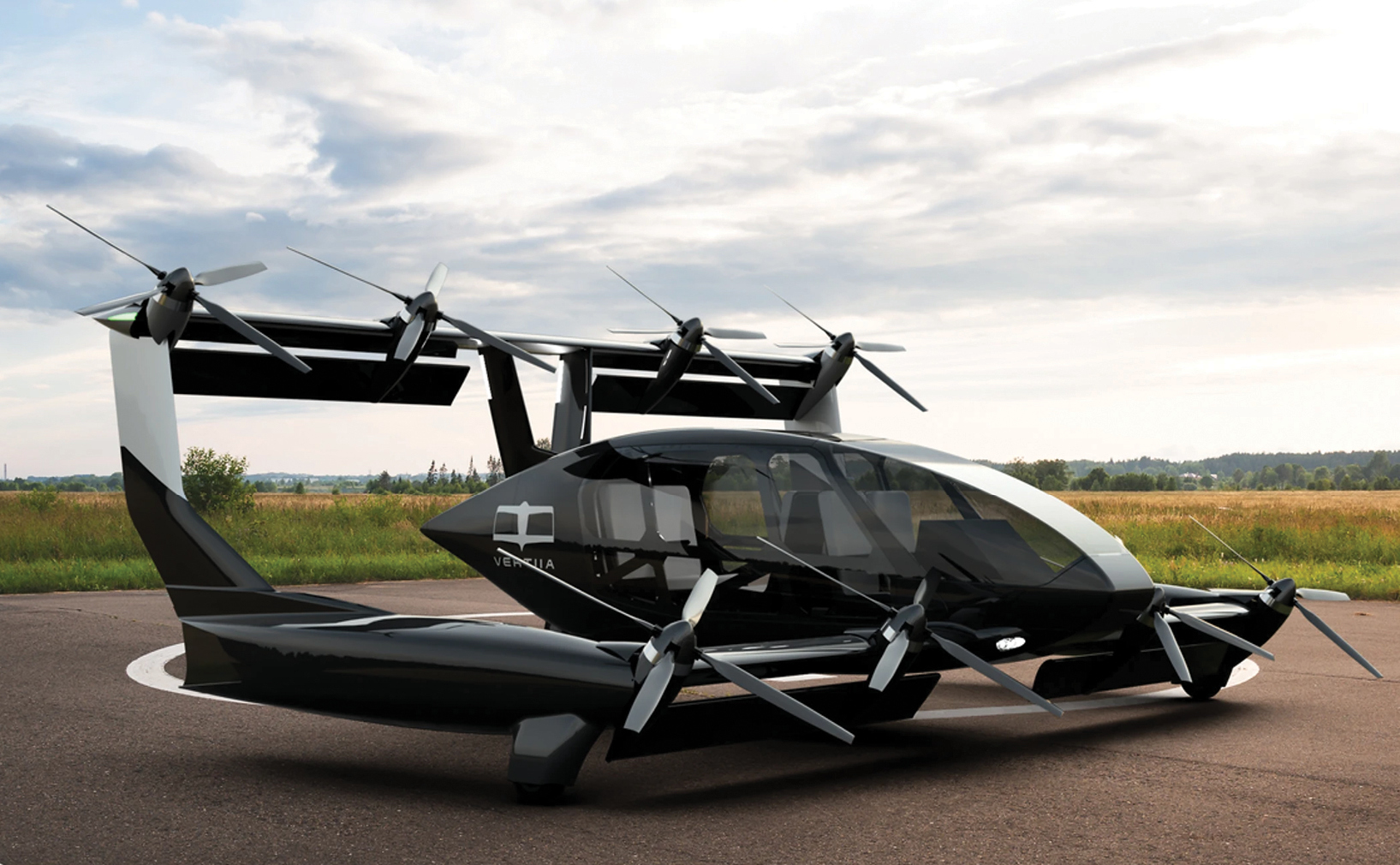
Some of the key design objectives are to be able to accommodate 5 people with a range of 1,000 km using a hydrogen fuel cell to power its 8 electric engines and a cruise speed of 300 km/h (160 kt).

Although the aircraft has been pitched initially at the medical transport market – particularly in rural, regional and remote Australia – there are also air taxi, cargo and other emergency service possibilities.

The Vertiia is part of a new breed of aircraft aiming for zero operational carbon emissions and a smaller noise footprint compared to conventional aircraft.

But the longer-range capability provided by the hydrogen fuel cell sets it apart from some of the shorter-range, battery-only eVTOL aircraft being developed overseas.

Moore sees this as a game changer for operators flying into remote areas and looking for the flexibility of landing without a runway.

‘What we’re developing is an aircraft that can be used as a light air ambulance, as a passenger-carrying aircraft and as a cargo aircraft,’ Moore says.

‘And a key part of what we’re trying to do is help solve the challenges that we see across Australia, which are dealing with the tyranny of distance and making air transport, which is the safest form of transport, accessible and available to everybody.

‘We want to enable a step change in the connectivity of the regions.’

In terms of safety, Moore is looking at the kind of fly-by-wire concepts normally associated with airliners, including triple redundancy.

He says there will be no single points of failure in any of the systems and structure will be ‘highly damage tolerant.’

‘We’re trying to raise the bar even higher on safety by using a digital flight control system,’ he says.

‘This means we can really reduce pilot workload and reduce the chances of pilot error.

‘We can incorporate safety systems that are common today on much larger aircraft.

‘Where we end up is very similar levels of safety to that seen in large airliners because of the systems and the need for triple redundancy through a whole range of systems.’

Safety is also a factor in flight tests, with the first flight of its prototype tethered and operated remotely.

The Vertiia is part of a new breed of aircraft aiming for zero operational carbon emissions.

‘Remote testing decreases the risk to our flight test crew but it increases the complexity of the testing,’ Moore says. ‘That’s OK but it means we have to do a lot of work on the remote testing front and on the approvals and risk assessment process with CASA.’

The company has received backing from both the capital market and governments. Most recently, it received a $5.43 million grant from the Australian Renewable Energy Agency to demonstrate the feasibility of hydrogen as a fuel.

Interest in the company has allowed it to grow and by the end of 2023, AMSL employed more than 50 people as it worked on advancing the flight test development program.

It also recently appointed Royal Australian Navy veteran and former GE Australia boss Max York, who headed GE Aviation’s commercial activities in the Asia-Pacific for 15 years, as its new chief executive.

The overwhelmingly local project also helps put Australia on the global AAM map.

‘We’re not just importing things from overseas. The vast majority of the hard work is being done in Australia,’ Moore says.

‘So all of our digital flight control system is being made locally, all of our electronic motor controllers are being made in Australia and our battery packs.

‘It’s a really good story for Australian industry. Obviously, our composite structures work is all in Australia.’

The company has started the long road to type certification and will need to provide the hard evidence that Vertiia can achieve the appropriate levels of reliability and safety.

Even for a new aircraft based on existing technology, the type certification process is a multi-year journey and there are often unexpected twists and turns.

image: render of the eVTOL | AMSL Aero

As a clean-sheet AAM using an advanced power source, Vertiia will be undiscovered country for both AMSL and CASA.

AMSL faces an exhaustive review of data accompanied by extensive ground and flight testing as it demonstrates compliance to agreed airworthiness requirements and, potentially, new regulations.

Vertiia’s fly-by-wire systems, electric motors, new propellers and innovative airframe mean it is by no means a simple aircraft.

The individual components are complicated in their own right but they will also need to be considered as part of the entire aircraft.

And because the aircraft has characteristics of both a helicopter and a fixed-wing aircraft, there will be requirements that cover both configurations.

CASA Manager Aircraft Certification, Klaus Schwerdtfeger, says nothing will be straightforward or ‘out of the box’ in terms of certification requirements.

‘This is very exciting, but it’s daunting,’ says Schwerdtfeger. ‘It’s going to be extremely challenging. Nobody’s done this in Australia ever and in that sense, it will be breaking new ground. We’re going to need new skills to support this project.’

The most recent aircraft certified by CASA were the GA 8 and the GA 10 Airvans – conventional fixed-wing aircraft. By comparison, Schwerdtfeger says Vertiia ‘is off the chart in terms of complexity and use of new technologies.’

‘Where we end up is very similar levels of safety to that seen in large airliners.’

Where possible, CASA will draw on experience gained by other national aviation authorities (NAAs) such as the US Federal Aviation Administration and the European Union Aviation Safety Agency. Both are currently certifying AAMs and are ahead of Australia in many respects.

‘As much as we can, we try not to be first movers,’ Schwerdtfeger notes. ‘Where appropriate, we quickly adopt or adapt certification standards and guidance material of other NAAs and apply them to Australian-designed aircraft.’ This approach assists with the validation of Australian-certified aircraft by other NAAs, opening up a potential global market for the Australian original equipment manufacturer.

Still early in the development phase is the hydrogen fuel cell technology, which has also attracted interest from Australian carriers Regional Express and Skytrans.

The technology has attracted global interest from airlines, engine makers, airframe manufacturers and start-ups but as yet has no firm airworthiness certification basis.

Test flights of experimental demonstrator aircraft have been made by US-based Universal Hydrogen, Germany’s H2Fly and Britain’s ZeroAvia, including a Dash-8 turboprop equipped with the largest fuel cell ever to power an aircraft.

In Australia, Melbourne’s Swinburne University of Technology late last year (2023) successfully completed the first flight of an Australian-developed electric vertical take-off and landing drone powered by a hydrogen fuel.

The university described the flight as a significant milestone in a project designed to position Australian aerospace and aviation companies to scale up hydrogen use.

Federal Energy Minister Chris Bowen also predicted a green energy hydrogen industry will be up and running in Australia by the end of the decade and has labelled the fuel source and other sustainable aviation fuels as ‘vital to help decarbonise the hard-to-abate aviation sector.’

A key issue for safety authorities such as CASA is reskilling staff to assess and certify the new technology and attracting workers with new skills in what is likely to be a competitive environment.

‘It’s a new world for us and while we’re doing that, we still have the conventional aircraft certification work as well,’ Schwerdtfeger says.

‘That hasn’t dropped off – we still have aircraft that are sometimes 60 years old that people continue to modify or repair and we still support certification of those design changes.’

The overwhelmingly local project also helps put Australia on the global AAM map.